
From my blue chair . . .

Visiting the Elements — Earth
In these times that seem senseless in so many ways, the element of Earth gives me faith.
Surviving is important. Thriving is elegant.
Maya Angelou
Earth - So central to our lives that we take it for granted
Looking at how the essential elements on this beautiful planet can help us respond to these tumultuous times. This is the final in a series on visiting the elements. The last post explored Fire; today we’ll be visiting Earth.
In these times that seem senseless in so many ways, the element of Earth gives me faith. Today, I'm going to muse on the Earth element and share a few practices that call in the Earth element.
Earth is the beautiful planet that is our home. Earth elements include minerals, stone, humus. Earth gives us a sense of ground. It is also the living layer of soil that supports us so beautifully by giving rise to the greening, the trees, and plant life. Earth's magnetic field orients how we move and experience up and down, as well as forward and backward.
Earth is this beautiful planet that is our home. The Earthrise Image of our planet, taken from space in 1968 circulated widely and shifted our collective perspective. This image provided our consciousness with a subject-object move — we were offered the opportunity to look at ourselves from the outside. A planetary world view arose. With that image taken from beyond our atmosphere, a burgeoning sense of awe propelled a movement to protect the environment.
Earth is fundamental and enduring. Earth as an element is the essence of form and structure. Earth offers us nurturing support and the ability to create a strong foundation. Earth as an element is a symbolic representation of Truth. Feeling grounded is a result of being connected to the Earth. When we feel grounded, we are more willing to see things as they are and are more willing to be present with what is. When we speak the Truth, we are calling in the Earth element. Truth, whether it be a hard truth or a beautiful one, is a grounded perspective.
Earth is nurturing. Earth in the form of the soil that blankets our landforms is one of the most complex life-affirming biomaterials on the planet. When it is healthy, one teaspoon of this crumbly humusy layer contains more organisms than there are human beings on the planet. The health of our soil is critical to our survival. Civilizations have risen and fallen based on the health of the soil on which they depended. The failure of the Sumerians, Mayans, Indus Valley civilizations, along with the Roman Empire was, in large part, a failure to contribute to the soil. In the United States, the Dust Bowl in the 30s was a direct result of unsustainable farming practices combined with the inevitable cycles of drought in the Midwest. Conversely, civilizations that developed agricultural practices to manage soil health sustained their populations for a much longer arc: the ancient Egyptians, the Incas, and areas in Asia. Soil is a living organism, a layer that surrounds the Earth and gives life. This nurturing aspect of the Earth element requires the practice of reciprocity. ( Look for the book Soil by Matthew Evans for more on this . . . )
Earth has a magnetic field that orients our physical selves, perspective, and worldview. One of the most remarkable aspects of living on this planet is something we all depend on with each step: Gravity. Gravity asks nothing of us – it only holds. It is what we push off against when we walk. If it weren't for gravity, we would not have uprightness, nor would we fall to the ground. Gravity provides us with the fundamental perspective of above and below. Just watch the astronauts float around in a spaceship, and you will get a glimpse of the human body with no sense of up and down.
The element of Earth offers us a steady gravitational pull, solidity, and a connection to matter. Where air and water are mutable, Earth is substantial. In martial arts, we learn to lower our center of gravity to ground ourselves to be unmovable, but also to spring from the ground to kick and parry. Earth gives rise to the power in any action on this planet.
As I write here, I'm struck by how Earth is so central to our lives that we take it for granted. We remember, and then we forget that the very ground we walk on is a living being that sustains us. Remembering and forgetting are such a part of the human experience, and so too is practice . . .
Foundation Practices to connect with the Earth element:
How do you sit? Enhance your awareness of your connection to the Earth by paying attention to how you sit. Sit upright with your sitz bones nestled firmly on a cushion or even the ground. Your pelvis is slightly forward to allow for an easy curvature of your spine, and then straighten gently towards the sky. Here you sit between heaven and Earth.
Pay attention to your feet as you travel across the surface of this Earth. Consider that you are making use of and defying gravity with each step — a walking miracle.
Guided Meditation - Registering Gravity’s Embrace: Click here for a recording I made a number of years ago. It requires finding a quiet place where you won't be disturbed for 15minutes or so. I find that it alleviates anxiety and invites me to a somatic experience of faith. With gratitude to Reginald Ray.
Engage with the Dirt: Take those gardening gloves off and let the soil get under your fingernails. Walk barefoot on the ground. Revel in the richness of this Earth element. How well are you enjoying and caring for this fundamental element? is this soil being replenished or enriched?
Focus Practices: Grounded Communication
Speaking the Truth: Begin challenging conversations with what you observe with as much clarity as you can. Many of us have the habit of starting with how we feel, which often causes conflict to escalate. Starting with the data and then moving to how you feel sets a trajectory for better outcomes.For more, Clean Talk.
Use sentence stems such as:
I observe . . .
I notice . . .
Finding your Yes and your No. Practice clear communication of yes and no. Even in uncertainty we can find a way forward with this practice. A great resource for this practice is William Ury’s book Getting to Yes.
Look for opportunities to . . .
Communicate an earthbound yes
Communicate an earthbound no
Saying no on behalf of an important yes
Examples:
“I don’t know what is going to happen, but I can say ‘yes’ to going dancing tonight”
“No, I’m not willing to participate in that injustice. “
“No, I’m not going dancing tonight, because I have a project I want to finish.”
May we find an elegant way forward in these uncertain times . . .
June 28th 2025
Putney, Vermont
What Makes Sense
by Carrie Newcomer
I pledge alliance to a drop of dew
Wobbling on a broccoli leaf,
To the silver pattern on a zucchini frond
A perfect spiral at the center of a cabbage head.
I bow my head to the licorice smell of fennel filagree,
The taste of rounded peas and knee-high corn
And the perfect dun of barley hay.
I namaste a row of beans,
To garlic scapes and turnip greens
To the sweetness of sweet potato vines
To the last red radish and first blueberry.
I lift up my face to the summer sky
The sound of larks
And the feel of dirt
To all that keeps making sense
In senseless times.
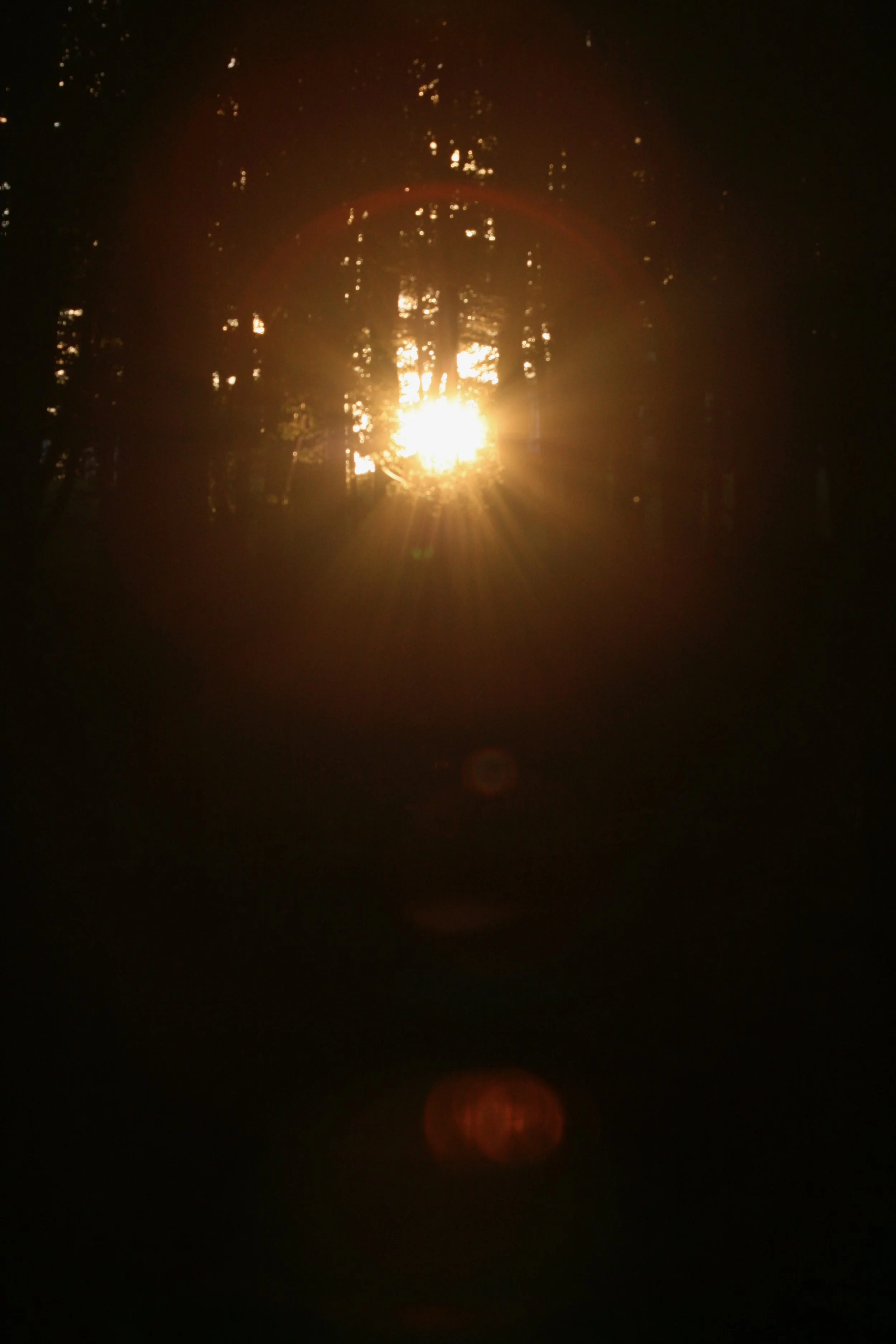
Visiting the Elements — Fire
Fire illuminates, warms, burns, destroys and gives life.
Fire - The stars that guide us and the hearth that holds us
Looking at how the essential elements on this beautiful planet can help us respond to these tumultuous times. This is the second in a series on visiting the elements. The last post explored Air; today I’ll be musing on Fire.
Perhaps humanity's earliest technological advance was the ability to harness the power of Fire. Stealing the element of Fire for the benefit of humanity is a narrative found across cultures, from Prometheus in Greek mythology to Māui in Polynesian stories. In Cherokee myth, Grandmother Spider snuck into the land of Light and took some Fire away in her net. Coyote, Beaver, Dog, Rabbit, Crow, and Possum are all credited with stealing Fire and bringing it to humans. All of these stories hold a deep respect for the power of Fire — There is heroic sacrifice and divine punishment. In each, the transformative power of Fire advances human progress and brings unintended consequences.
The forge is one of the earliest technologies for capturing Fire. When we make use of metal, we are benefiting from the captured Fire in the forge. Smiths learned to temper and form bronze using Fire. Warriors have made use of Fire to create the sword, the dagger, the shield. In this century, we have advanced to developing explosive firepower and nuclear technology that requires a degree of responsibility we have not yet evolved far enough to fully accept. As the stories that have come down through the ages have shown us, Man is compelled by the power of Fire. He plays with Fire at his great benefit and his peril.
In the feminine narratives, women tend Fires. Whenever we cook or warm our homes we are working with the transformative power of Fire that was captured for our benefit. Hestia is the powerful and now lesser-known Goddess of the Hearth in Greek and Roman mythology. The hearth is a fundamental placeholder for the Fire that benefits humanity. Before we invented Fire starters, we had to keep the Fire burning so as not to lose the transformational power of this element. The hearth is a warm and inviting place that is the sacred center of the Home and Temple in many traditions. A place where what we value and care about is kept burning.
Fire helps us stay true to our vision and purpose through its magnetic quality in the heart of our homes and the warmth in our beings. The affirming warmth and support of home. The Fire in our belly. Fire also assists us with developing vision and purpose through the inspiration of light in the heavens. The stars help us to stay on course. Fire in the heavens inspires us to reach beyond our small selves. Illuminating the vast possibility that is beyond Earth's atmosphere and our imaginations.
It is no wonder that in our achievement-oriented culture, we privilege this element above all. We must have “fire in our belly” and “guiding stars” to achieve our longings and callings
Fire Practices
Create a hearth fire in your backyard and invite people to gather around it. Notice what happens in the space around the Fire. Consider the lineage of humans to which you belong who have been gathering around Fires in this way for millennia.
Show up for the moment that the sun rises and or sets during the solstice. What occurs in that moment inside you and around you? Consider that human architects have been orienting around this moment in time cross-culturally for millennia. Stonehenge, Machu Picchu, Hovenweep . . .
"Barn's burned down,
Now I can see the moon.”
Masahide (often attributed to Basho)
And looking to the Fire Masahide alludes to in his famous poem. Think of a time when your barn burned down – when Fire was a destructive force in your life, either actually or metaphorically. What rose up from those ashes? What possibilities emerged? In what way did you see the moon?
On this the 20th day of June 2025, May there be fire in your belly!
Next up in this four part series is the Element of Earth.
See the rest of the four-part series here . . .
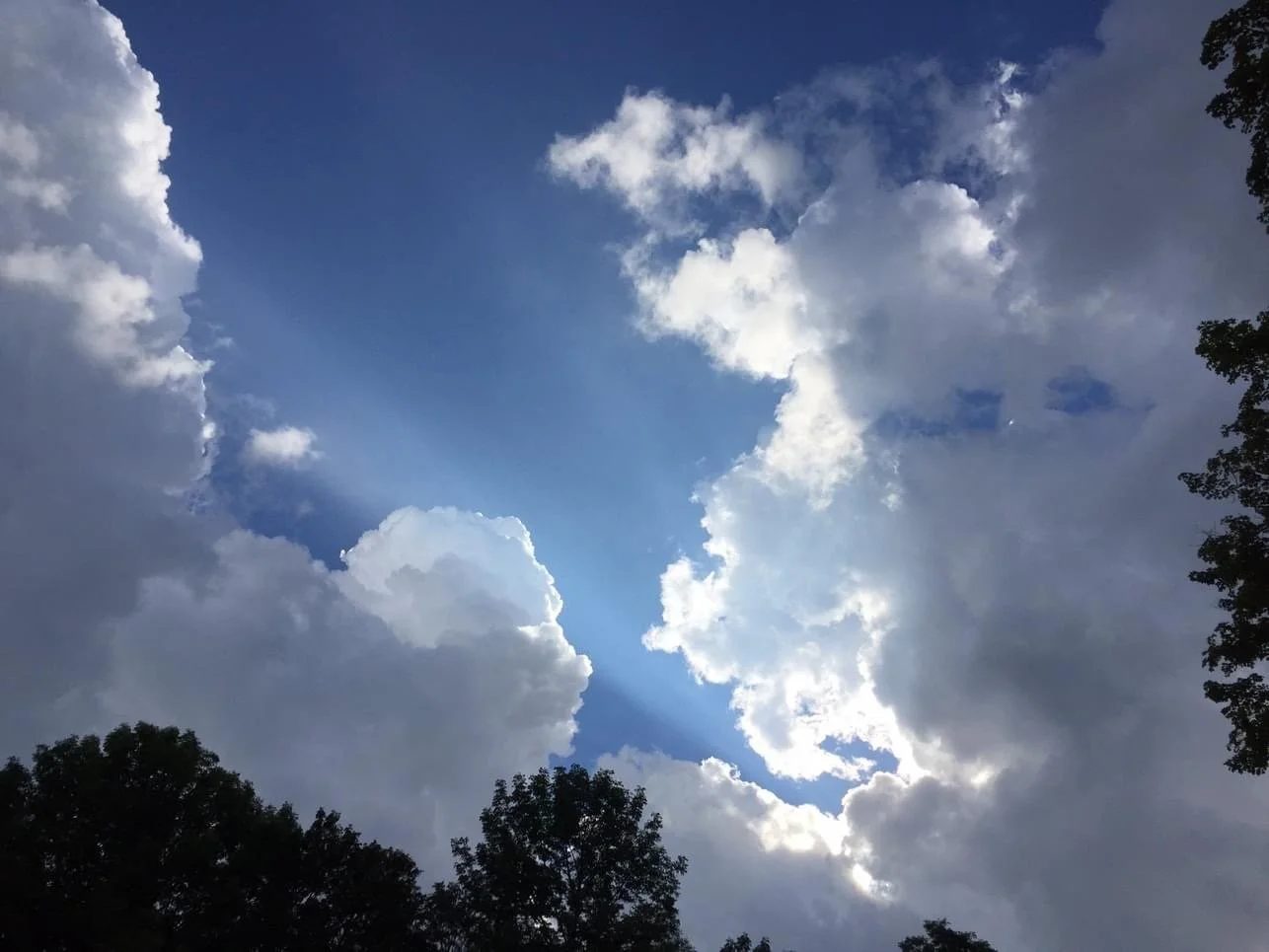
Visiting the Elements — Air
Where water offers us moisture and connection, Air provides us with oxygen and spaciousness.
Dwell in possibility . . .
Emily Dickinson
Air - Breathing and the value of the space between
Looking at how the essential elements on this beautiful planet can help us respond to these tumultuous times. This is the second in a series on visiting the elements. The last post explored Water; today we’ll be visiting Air.
Where water offers us moisture and connection, Air provides us with oxygen and spaciousness.
Being composed of invisible gases, Air reveals itself through movement. It breezes and blows. Winds prevail, gust, and subside. Air, like water, is mutable. Where water responds to gravity, Air responds to differentials in pressure and temperature—moving through updrafts and downdrafts. Water is dense. Air is nebulous. Air is hard to define; it is, after all, the Air we breathe. Unseen, ever-present, Air is always felt by its presence or absence.
Let's look at Air as the substance we breathe, the mysterious element that wraps around our beautiful planet, and as the element that gives us a felt sense of spaciousness.
Fundamentally, Air is atmospheric. Air (from the ancient Greek "aer," meaning wind, atmosphere) isn't something we see. It is a life-giving, invisible gas that makes itself known to us through movement and a felt sense of space. The thin layer of atmosphere is primarily composed of three main gases: nitrogen, approximately 78%; oxygen, about 21%; and Argon, about 0.93%.
With that first breath, Air enters us. We begin to fully participate independently as human beings — we become by breathing in Air. Breathing in and out is participatory. We receive oxygen and offer carbon dioxide with each breath. We need oxygen, and plant life requires carbon dioxide to support its photosynthesis. When you go for a walk in the woods, you are in reciprocity with the plant life through your breathing. This is respiration.
In these BANI times, mindful breathing supports responsiveness over reactivity. It calms and integrates the mind, which is the foundation of creativity, according to Daniel Siegel, a renowned neurobiologist, in his book The Mindful Brain. Breath connects us to the present and to others, expanding our capacity for insight and innovation. Breath literally re-spirits us.
Giving loving attention to the breath, its rhythm and depth, supports us in being our most resourceful and fully human selves.
Breathing is our intimate relationship with the element of Air and life itself. When we take our last breath, the spirit leaves us.
The late neurosurgeon Paul Kalanithi wrote a beautiful memoir, When Breath Becomes Air, about the preciousness of time, life, and breath. (Tissues may be needed . . . )
*. * *
I can't talk about Air without talking about spaciousness.
Between stimulus and response there is a space.
In that space is our power to choose our response.
In our response lies our growth and our freedom.
Attributed to Victor Frankl
Air offers us the experience of spaciousness and expands things with its presence. Air gives us access to the quality of awareness itself. How often do you think or say . . .
"Can you give me a minute?"
"I'd like to sleep on that."
"Let's take a walk; I need some air."
Human beings need space in order to expand their awareness. Our attention tends to be aware of form and unaware of space. When we think of a house, we think of the form of the building itself and the things in it. This is why we tend to fill space so readily, in our rooms, in our calendars, and our minds. When we think of a home, we might think about the space it offers us. Space is where possibilities arise . . .
Learning to shift our focus to space can be a life-changing experience. Here are some ways to do that:
Plan for some nothingness: chunking time to step away from clock time and get into a flow — to do or not do anything in particular with all the lists set aside — is one way to start. I call this 'puttering,' and I try to have four hours of it every weekend, along with at least one hour a day. Sometimes, it turns out to be productive in unexpectedly marvelous ways.
Clearing the clutter in our homes and workspaces is another way. Just cleaning out a drawer in the kitchen or taking the trash off-site gives rise to an energetic shift and a good feeling in me. How about you?
Open Focus Training: If you want to explore Air further, then working with paying attention to the space between is a powerful perspective-shifting practice. Dr. Les Fermi and his colleagues have written extensively on this, and I highly recommend their books and the practices they offer.
A key practice outlined in his book, Open Focus Brain, is the "Expanding Awareness" exercise, which helps shift attention from a narrow, effortful focus to a more diffuse, relaxed state—what Fermi calls Open Focus. This state is associated with synchronized alpha brainwaves and can reduce anxiety and increase possibility thinking.
"Sensing Space" or "Feeling the Space Between" (Click here for a recording I made to guide you)
Find a quiet safe place where you won’t be interrupted for 10-15 minutes or so
Settle In: Sit comfortably, look around you, and just notice your surroundings. Close your eyes and take a few deep breaths.
Shift Attention to Space: Rather than focusing on objects (like sounds, thoughts, or sensations), shift your attention to the space around and between those things.
You can start this way:
Notice the space between your eyes.
Feel the space between your ears.
Notice the space between your chin and your sternum.
Hold up your hands and become aware of the space between your fingers.
Become aware of the space in the room around you.
Notice the spaces between the objects or people in the room.
Extend your awareness to the space outside the room.
And so on
Diffuse Your Focus: Offer a soft gaze by letting your attention become panoramic and soft, not fixed on anything in particular. Allow awareness to spread evenly.
Stay Open and Soft: If thoughts arise, gently bring your attention back to sensing space—between, within, and around you.
Practicing this regularly encourages the brain to operate in a more balanced and coherent mode. Increasing our capacity to shift perspective enables us to find creative solutions and engage in strategic thinking that is so necessary in these challenging times. I also find this practice playful and fun.
To be inspired is to be infused with an ethereal element— Air. Through mindful breathing and spaciousness, our mental capacities increase. Air is associated with ideas. Perhaps inspiration is our human version of photosynthesis.
Next up in this series is Earth . . .
And a poem by a Vermont poet I follow . . .
Inhale by James Crews
You can only exhale for so long,
giving and giving and giving some more
before the whole body cries out
like an empty cup to be filled again
by the in-breaths that will restore
your own supply of air. Find some quiet
corner tonight far away from screens,
which steal both time and mind, and hear
the whisper of the one true voice inside
that grows louder the longer you listen
like a song that was sung into you
along with the first startled breath
you took on the day you were born.

Visiting the Elements — Water
In the midst of this gorgeous ruckus, I have been quiet. Listening for how to respond instead of react.
What do we do now?
In the midst of this gorgeous ruckus, I have been quiet. Listening for how to respond instead of react. I’ve been feeling myself wanting to find and then offer some crystalline drop of wisdom, and I’ve been coming up short. I’m humbled by the truth of not knowing. I’m in awe of the power of the pause, and yet it is difficult to withstand the desire to know in the face of such profound uncertainty. The futurist Jamais Cascio has developed a term for what I call the gorgeous ruckus. He calls what we are all currently experiencing, BANI. Brittle, Anxiety producing, Non-linear and Incomprehensible. This term, born out of his desire to capture how it feels to be experiencing this chaotic world, is helpful though sobering. Click here to hear him describe it in this video. (It’s a little long but worth the watch!) In such chaos the mind twirls, the heart closes, and intention that inspires active hope and creativity loses touch with its North Star. How can we all find our most resourceful responses to a BANI world?
I am alongside entrepreneurs and leaders as they navigate the shattering of norms and structures that is occurring in our world. As Jamais Cascio points out, we are trying to find options when there are no “good” options, no clear path forward. Collectively, we’ve been given everything we need on this beautiful planet — The task is to learn to thrive and to love each other well. We humans continue to struggle with doing the right thing, even when we know what that is and have the technology to accomplish it. My sense is we are not going find a way forward; we need to forge it. I believe we must all attend to the future and become good ancestors.
One thing is certain— even how we approach change has to change! I tend to look for underlying essentials to find leverage points. Fundamental patterns and archetypes inform my methodology, along with many business and change models. So, over the next few weeks I’m going to suggest that we visit the Elements of Nature — Water, Air, Earth and Fire — to find our most resourceful responses.
Starting with Water.
Our bodies are comprised of about 70% water. Water gives us access to our receptivity, fluidity and to our emotional intelligence. Water moves and fills. It nourishes and destroys. Water rushes, flows, rains down and goes calm. It freezes and melts. Water forms into waves and it holds surface tension in the form of drops. Water crashes and drips. It mists.
Water reminds us that whatever is moving through us in this moment will change.
Being near water gives our spirit moisture and our actions fluidity. Water brings empathy to our thoughts. Water carries delight as well as grief.
Practices to connect with the element of water:
Walk alongside water. A river, lake, marsh or the sea. Pay close attention to how being alongside this element connects you with your senses and your emotions.
Be in water. Take a swim, a bath or a shower. Feel how the water soothes, cleanses, energizes you. Perhaps a new idea coalesces during this immersion?
Water your plants mindfully. Drink water and invite yourself to really taste it. Pour water from one container to another. Paint with water colors . . .
Move with or against the flow. Go for a stream walk if you can. One of my favorite pastimes is walking in the very center of a stream. Moving upstream against the rushing water and staying right in the center of its intensity, and then turning downstream and tuning into the very different quality of moving with the flow. Stream walking connects me with something essential, something core. It is like experiencing my essence without any words. Give it a try.
Water is a necessary component to developing resilience — to developing the capacity to respond to the structural shattering we are all experiencing by coming back stronger. Water is transformative: continually evaporating and then returning in new forms.
Water offers us our intuitive, empathetic, emotional intelligence. It connects us to our essential selves, our grief, and to a renegade delight!
I hope this lands in a helpful way.
Next week, I’ll add the element of Air to the mix.
Warmly yours, Lyedie
And here is a poem that is wildly apropos by Rosemerry Wahtola Trommer
This moment I want to remember . . .
when my friend filled the giant
white stone resin tub with great mounds
of frothy eucalyptus lemon
scented bubbles and water as hot
as she could stand and I walked in
to find her laughing, laughing!
head thrown back and eyes alive
with her great luck to find herself
here “in a millionaire’s bathtub,”
her giddy giggles ricocheting
around the tiled room, radiating
gladness and naked joy, and though
only her head was visible above the bubbles,
I saw her, really saw her as herself,
the uncurated version—that glorious
creature we so seldom chance to glimpse
in each other. As I walked away, her voice
followed me up the stairs, full-throated
and citrus bright as she sang out
her bliss, the words indecipherable,
the tune a tune I’d never heard before
but somehow knew by heart.
Steadying ourselves with Beauty, Truth and Goodness
“I wish it need not have happened in my time,” said Frodo. “So do I,” said Gandalf, “and so do all who live to see such times. But that is not for them to decide. All we have to decide is what to do with the time that is given us.” J.R.R. Tolkien, The Fellowship of the Ring
November 2024
“I wish it need not have happened in my time,” said Frodo.
“So do I,” said Gandalf, “and so do all who live to see such times.
But that is not for them to decide. All we have to decide is what
to do with the time that is given us.”
J.R.R. Tolkien, The Fellowship of the Ring
Good morning from my blue chair,
Continuing to work with holding steady along with taking swift action, I’m writing to share my annual November reflective writing practice with you . . .
This November practice invites you to reflect back carefully over the year through the lens of Beauty, Truth and Goodness. On this fresh morning the world does seem to be in a ruckus — and when I dropped into this writing practice myself, I found the ruckus as well as some solace. These are hard times to keep our hearts strong and open. It appears that collectively we are not doing so well with sharing power. There are winners and losers everywhere. So finding the beauty, truth and goodness has become all the more compelling as we seek to steady ourselves and find a way to contribute somehow.
For those of you who have dropped into this practice in years past, you will see that I’ve kept it the same, confident that these questions will always bring a fresh response as we look back over the past year to find the Beauty, Truth and Goodness that is there.
Carve out some time to reflect on the last year in your journal. (Pulling out your calendar to jog your memory might be helpful.) With pen in hand or fingers on your keyboard, soften your gaze as you scan back over the past year and respond to the prompts below. You can do this for the year in one sweep or take each season as I suggest below. The invitation here is to be responding to these prompts four times, beginning with the winter a year ago. (Could take you as long as an hour or so to complete . . . ) Significant milestones or intimate moments in your answers are all appropriate. I think you will find that specificity gives wonderful depth to the process.
For each of the seasons, Winter, Spring, Summer, Fall:
Describe a time that you experienced beauty.
In what way(s) were you the cause of something beautiful?
In what way(s) was a hard truth revealed to you?
In what way(s) did you reveal or speak a hard truth?
In what way(s) was a beautiful truth revealed to you?
In what way(s) did you reveal or speak a beautiful truth?
In what way(s) were you on the receiving end of goodness?
In what way(s) were you the cause of goodness?
Upon completion, give yourself a little time to let your responses settle in you. Take a walk or a bath, if you can, and take in the beauty, truth and goodness that you found when you put pen to page. Stay with the hard truth that may have surfaced and seek support from wise loved ones if you feel the need. You might want to capture some further reflections before moving into the fullness of your day or evening.
I’ll be posting my annual year end practice in December, which will give you an opportunity to look ahead and consider any reorientation, renewed commitments, or actions that all of this may inspire in you.
May we all find our way to contribute. May we all wage peace . . .
Warmly, Lyedie
One final note: Yesterday morning in our writing group a friend read this poem and it landed for me, so I thought I’d share it with you.
How the Light Comes
I cannot tell you
how the light comes.
What I know
is that it is more ancient
than imagining.
That it travels
across an astounding expanse
to reach us.
That it loves
searching out
what is hidden
what is lost
what is forgotten
or in peril
or in pain.
That it has a fondness
for the body
for finding its way
toward flesh
for tracing the edges
of form
for shining forth
through the eye,
the hand,
the heart.
I cannot tell you
how the light comes,
but that it does.
That it will.
That it works its way
into the deepest dark
that enfolds you,
though it may seem
long ages in coming
or arrive in a shape
you did not foresee.
And so
may we this day
turn ourselves toward it.
May we lift our faces
to let it find us.
May we bend our bodies
to follow the arc it makes.
May we open
and open more
and open still
to the blessed light
that comes.
by Jan Richardson
Beauty, Truth and Goodness on this fresh morning, in this broken world . . .
I’m writing to share the first in a series of my annual reflective writing practices with you.
it is a serious thing
just to be alive
on this fresh morning
in this broken world
- Mary Oliver

Good morning from my blue chair,
I’m writing to share the first in a series of my annual reflective writing practices with you. This November practice invites you to reflect back carefully over the year through the lens of Beauty, Truth and Goodness. On this fresh morning the world does seem broken and when I dropped into this writing practice myself, I found the brokenness as well as the wholeness — These are hard times to keep our hearts strong and open. So finding the beauty, truth, and goodness has become all the more compelling as we seek to steady ourselves and find a way to contribute somehow.
For those of you who have dropped into this practice in years past, you will see that I’ve added a new element this year — prompting you to look into both the beautiful and hard truths which are revealing themselves.
Here is the revised practice: Finding the Beauty, Truth and Goodness in the Year
Carve out some time to reflect on the last year in your journal, and then ideally to take a walk or a bath. Pulling out your calendar to jog your memory might be helpful. Then I suggest just softening your gaze back over the past year and responding to the prompts below. You can do this for the year in one sweep or take each season as I suggest below. The invitation here is to be responding to these prompts four times, beginning with the winter a year ago. (Could take you as long as an hour or so to complete . . . ) Significant milestones or intimate moments in your answers are all appropriate. I think you will find that specificity gives wonderful depth to the process.
For each of the seasons, Winter, Spring, Summer, Fall:
Describe a time that you experienced beauty.
In what way(s) were you the cause of something beautiful?
In what way(s) was a hard truth revealed to you?
In what way(s) did you reveal or speak a hard truth?
In what way(s) was a beautiful truth revealed to you?
In what way(s) did you reveal or speak a beautiful truth?
In what way(s) were you on the receiving end of goodness?
In what way(s) were you the cause of goodness?
Upon completion, give yourself a little time to let your responses settle in you. Take a walk or a bath, if you can, and take in the beauty, truth and goodness that you found when you put pen to page. You might want to capture some further reflections before moving into the fullness of your day or evening.
I’ll be posting my annual year end practice in December, which will give you an opportunity to look ahead and consider any reorientation, renewed commitments, or actions that all of this may inspire in you.
May we all find our way to contribute. May we all wage peace . . .
Warmly, Lyedie
Every morning you rise, I want you to remember this:
there are amazing things
to be a part of,
and fight for,
and feel,
because the world
will unlock hundreds
of doors when you
give this day
all the courage, love,
and intensity
you can.
Victoria Erickson (author, The Edge of wonder)
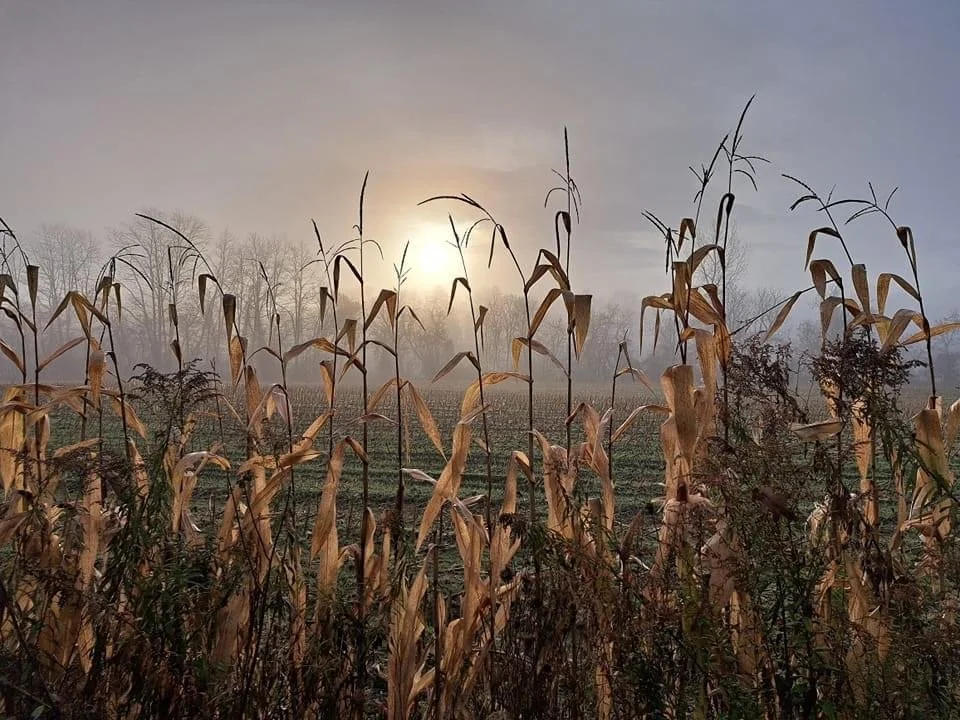
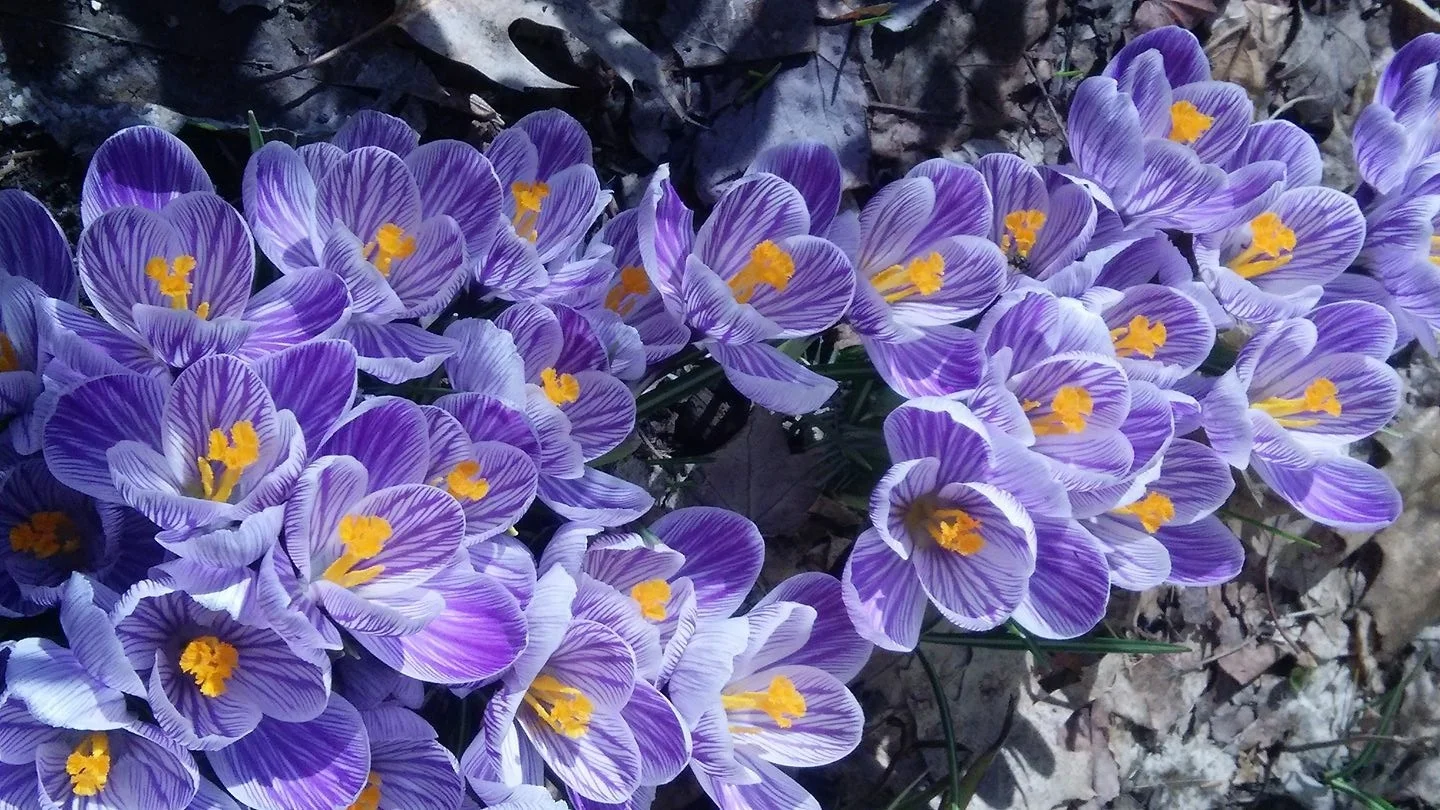
Photo credit goes to Gay Foster with gratitiude
Why Poetry is a Necessary Luxury
The crocuses are bursting forth here in New England, and it has been about a year now since I launched The Longings Project.
Good morning,
Lyedie here again from my blue chair.
The crocuses are bursting forth here in New England, and it has been about a year now since I launched The Longings Project. The irony of having chosen this year to dedicate myself to fulfillment of the personal and professional longings of women is not lost on me — I have to admit, there have been times when I heard a booming voice saying, "How dare you put the longings of women at the forefront!"
Here is the thing I have to say to that booming voice. We can't have true fulfillment without longings. Longings are Point One on the trek to fulfillment. Point One is where we set our direction. When we skip over Point One, we easily set off on rudderless adventures, driven by the winds of necessity and other people's worn itineraries. That is why I dare.
Longings give us access to living life with the heart of the Lover. (One of four members of the archetypal Wisdom Council that I offered you a few weeks back in the Daily Activist's Log) Lover is the one who feels and who loves life. She gives us access to our emotional intelligence and to our playful nature. When the Lover isn't firmly in her seat at your council, life starts to lose color and texture. Your feeling life recedes and the dry winds of 'shoulds' and 'what ifs' begin to pervade. Some people report feeling as if they are just going through the motions, or that they feel lifeless, even dead inside — dreams remain untapped.
Longings are the sparks and tugs of the Lover. Glimpses of the future breaking through into the present, calling us into the next chapter of our lives. Longings speak through our felt sense, the little details of life, the exquisite swelling of our heart, the tears welling up in our eyes. There are times that we can barely feel the spark and the tug of longing, and other times that unrequited longing is burning holes through our lives . . .
One of the languages of longing is poetry. We are living in a moment in time when our very language defends against matters of the heart. Poetry, as David Whyte suggests, is language that melts through this defense and gives us access to the territory of the heart. Often we are quick to jump to instruction manual language that tells how to do it faster, more efficiently, more effectively and we skip right past the poetry that makes it all worth while.
Poets re-acquaint us with the language of longing, inviting us to live closer to ourselves, to our loved ones, and to the mystery that gives rise to a meaningful life. Nayyirah Waheed whispers about the courage it takes to put longing first in a tiny poem that resounds in my heart.
flower work
is
not easy.
remaining
soft in fire
takes
time.
The poet Brooke MacNamara offers us an intimate glimpse into her response to the jug breaking political event of 2016 in her poem Upon Learning Donald Trump Has Been Elected POTUS, I Clean the House
Mold in the toilets must be scrubbed,
and my toddler’s spills demand my supplication.
I always hate the beginning of cleaning,
and the mess gets bigger
before what’s under begins to shine.
Some things must be discarded
but the little gifted sailboat mug
will be glued back together for my boy.
Now, head bowed
and crowned with earned beads of sweat,
I’m humming along and my husband
joins my effort. The bad news is:
unearthing, we don’t know what we’ll find.
The good news is: we don’t know what we’ll find.
My love, help me lift the weight
of the bed we’ve been sleeping in
so we can face what’s been collecting
under it in the dark. In the corner back there,
I see my lost heirloom ring - ring of my lineage -
has been resting against a dead fly
Mary Oliver slyly invites us to kneel down in the grass, even invites us to be idle and blessed, before she flings a heart-of-the-matter question right at us in her poem The Summer Day.
Who made the world?
Who made the swan, and the black bear?
Who made the grasshopper?
This grasshopper, I mean-
the one who has flung herself out of the grass,
the one who is eating sugar out of my hand,
who is moving her jaws back and forth instead of up and down-
who is gazing around with her enormous and complicated eyes.
Now she lifts her pale forearms and thoroughly washes her face.
Now she snaps her wings open, and floats away.
I don't know exactly what a prayer is.
I do know how to pay attention, how to fall down
into the grass, how to kneel down in the grass,
how to be idle and blessed, how to stroll through the fields,
which is what I have been doing all day.
Tell me, what else should I have done?
Doesn't everything die at last, and too soon?
Tell me, what is it you plan to do
with your one wild and precious life?
One thing my life has taught me is that the greatest acts of courage are the small ones. Like remaining soft in fire — Like saying 'no' to the news on occasion, and then saying 'yes' to poetry. Carving out time to spend with poetry has become a necessary luxury for me. Reading poetry invites the Lover to take her seat more firmly at the table of my Wisdom Council. It helps me to stay connected to not just what I care about, but to the full bodied felt sense of caring itself.
Lately, I've been keeping a pile of poetry books beside my blue chair. Yesterday, in the quiet of the morning, I read an old favorite over again out loud to myself. Hearing Rilke's words become my own, and then reverberate in my kitchen gave strength to my resolve to hold fast to dreams, my own and yours.
You see, I want a lot.
Perhaps I want everything:
the darkness that comes with every infinite fall
and the shivering blaze of every step up.
So many live on and want nothing
and are raised to the rank of prince
by the slippery ease of their light judgments.
But what you love to see are faces
that so work and feel thirst....
You have not grown old, and it is not too late
to dive into your increasing depths
where life calmly gives out its own secret.
Rainer Maria Rilke, trans. by Robert Bly
I urge you to make a place for Lover on your Wisdom Council, and to keep your favorite poets by your side. Feel free to contact me if you'd like learn more about how I can assist you on your trek to fulfillment.
Thank you for taking a little of your precious time to read this today. May we all have the courage to be open to the mystery in our every day, to put our strength in service of the good, and to celebrate the joys of fulfillment.
Dare to have your longings, and thanks again!
Lyedie

Soulcraft -Nearing the Winter Solstice
Today I started my day in meditation with a group I recently joined in Putney.
Today I started my day in meditation with a group I recently joined in Putney. I was up late last night and, to be honest, I had to will myself there. It would have been so easy to linger under the covers a little longer and to miss the crisp air and the new snow of the morning. We always begin our meditation with a poem or a quote. Had I pushed the snooze button, I would have missed this one.
Reading from a note in his own hand, written on an old library catalogue card, Bob shared a piece of Wendell Berry's wisdom. On the wings of Bob's voice, a beautiful and precise suggestion for the definition of soul landed in my morning. Fulfilling a longing I didn't know I had.
Soul is fundamentally a biological concept, defined as the primary organizing, sustaining and guiding principle of a living being. Soulcraft is the skill needed in shaping the human soul towards its fulfillment in its unity with the entire universe. The universe and human soul find their fulfillment in each other. Soul gives to the multitude of living forms wondrous powers of sensation and motion. Soul in all its diversity of expression, enables the flowers to bloom in the meadows. It enables all manner of living forms, the birds, the fish, and other living beings to find their way through thousands of miles on their migration journeys back and forth across continents and in the dark depths of the sea. The entire universe is sustained in all its vast interwoven patterns by the mysterious power of soul.
And Bob, the way you are making brilliant use of discarded library catalogue cards just about slays me. Thank you!
Saying, 'Yes'
God Says Yes to Me
God Says Yes to Me
I asked God if it was okay to be melodramatic
and she said yes
I asked her if it was okay to be short
and she said it sure is
I asked her if I could wear nail polish
or not wear nail polish
and she said honey
she calls me that sometimes
she said you can do just exactly
what you want to
Thanks God I said
what if I cavort with squawking saints
forage with a crowd of long legged water angels
sail with a regatta of white pelicans
sing glory hallelujah with the cormorants
drying their wings over the water
and she said Baby I made you for this
cavort as you wish
And is it even okay if I don’t paragraph
my letters
Sweetcakes God said
who knows where she picked that up
what I’m telling you is
Yes Yes Yes
Poem by Kaylin Haught
Praise Song for the New Year
Praise Song for the Day

Click on this image to hear a recording of Praise Song for the Day
Praise Song for the Day
Each day we go about our business,
walking past each other, catching each other’s
eyes or not, about to speak or speaking.
All about us is noise. All about us is
noise and bramble, thorn and din, each
one of our ancestors on our tongues.
Someone is stitching up a hem, darning
a hole in a uniform, patching a tire,
repairing the things in need of repair.
Someone is trying to make music somewhere,
with a pair of wooden spoons on an oil drum,
with cello, boom box, harmonica, voice.
A woman and her son wait for the bus.
A farmer considers the changing sky.
A teacher says, Take out your pencils. Begin.
We encounter each other in words, words
spiny or smooth, whispered or declaimed,
words to consider, reconsider.
We cross dirt roads and highways that mark
the will of some one and then others, who said
I need to see what’s on the other side.
I know there’s something better down the road.
We need to find a place where we are safe.
We walk into that which we cannot yet see.
Say it plain: that many have died for this day.
Sing the names of the dead who brought us here,
who laid the train tracks, raised the bridges,
picked the cotton and the lettuce, built
brick by brick the glittering edifices
they would then keep clean and work inside of.
Praise song for struggle, praise song for the day.
Praise song for every hand-lettered sign,
the figuring-it-out at kitchen tables.
Some live by love thy neighbor as thyself,
others by first do no harm or take no more
than you need. What if the mightiest word is love?
Love beyond marital, filial, national,
love that casts a widening pool of light,
love with no need to pre-empt grievance.
In today’s sharp sparkle, this winter air,
any thing can be made, any sentence begun.
On the brink, on the brim, on the cusp,
praise song for walking forward in that light.
by Elizabeth Alexander
Your waning energy can be a marvelous invitation . . .
Are you heading into mid-life and noticing that your energy levels seem to be waning?
Are you heading into mid-life and noticing that your energy levels seem to be waning? Noticing that you can’t just reach into that deep reserve of physical energy that used to be so readily available? This is a reality that most of us fight against. I certainly did!
But what I've found is that this ebb in energy is actually an invitation to step into a radically different efficiency. Once the reality becomes inescapable and we finally begin to turn our efforts away from recapturing lost youth and towards the future, a new vitality comes online. Many of us injure ourselves repeatedly, or get sick, before we recognize and accept this invitation. We humans have a tendency to move into grace kicking and screaming.
What does accepting this invitation mean in practical terms? First, it means admitting that there has been a dip in your energy levels. Once you get real with yourself, you can start caring for your physical body differently: adjusting diet and exercise, focusing on the body's brilliant design, its virtuosity. Start relying less on brawn. Then it means softening those youthful ambitions enough to listen for what is important to you now. It involves actively downshifting and finding engagement in a deeper, wider sense of meaning that then provides you with an unassailable updraft.It’s not easy, especially at first. It is essential to your well being. It is after all an invitation into one of life's gnarly, necessary and marvelous transformations.
Making the most of the updraft involves developing the ability to attune to your body, reckoning with a natural sense of loss, and recalibrating to the needs of your spirit. It may lead you to courageously planning and implementing graceful exits and well-considered entrances. This is the work of transformation. It is not magic, though the results can seem magical. It requires being realistic, developing new strategies and garnering significant support. Contact me, I'm not offering you any quick fixes here (No 3 Keys or 10 Secrets) but I can help you accept the invitation of this natural ebb in energy and, using some of the latest intel, move into grace.
Your waning energy is an invitation to soften into a new productivity, to activate a radiant eldership. Turn towards your future and join the party. You will be in good company.
You see, I want a lot.
Perhaps I want everything:
the darkness that comes with every infinite fall
and the shivering blaze of every step up.
So many live on and want nothing
and are raised to the rank of prince
by the slippery ease of their light judgments
But what you love to see are faces
that do work and feel thirst . . .
You have not grown old, and it is not too late
to dive into your increasing depths
where life calmly gives out its own secret.
Rainer Maria Rilke, From The Book of Hours
Getting More Productive: Tip #2 - Taking pleasure in the doing . . .
Before I close up my week and slip into the long weekend, I want to keep my promise to offer a tip on productivity.
Before I close up my week and slip into the long weekend, I want to keep my promise to offer a tip on productivity. For this one I’m sharing a childhood memory and a poem with you. May these two offerings enhance your celebrations of Labor Day. I'd like to focus on the beauty of summer and the power of being present in a productive moment.
One of my treasured childhood memories is of working alongside my grandmother at her clothesline on a summer day. Here is a snippet of memoir written back in 1995.
My Nana kept clothespins in a ruffled apron made of blue-green chintz in her laundry room. She’d tie that apron around my waist and then we’d go out together. She’d carry the big basket filled with wet laundry and I’d trundle along behind her, apron pockets loaded with clothespins bumping against my knees. I followed her out, out through the shade of the Linden trees and down a little hill.
There, behind the barn, was an expanse of yard where she and my Papa had strung multiple cotton lines across a wide span. My job was to hand her clothespins from the deep pockets of the apron. The sheets would take on the scent of grass and sun as she shook them out in the air. One by one I’d hand her a clothespin and watch how expertly she worked.
I reveled in standing next to her between layers of wide white sheets. We stood there together amidst a flutter of white, laughing and talking. I’d watch her every move as she stretched each huge cotton rectangle taut along the line and set the pin carefully in the corner. The order was important: sheets, then pillowcases, then the kitchen towels.
I loved everything about Nana and her clotheslines, and summer. Working alongside my Nana was like being inside of a hug.
And a poem . . . .
Daily
These shriveled seeds we plant,
corn kernel, dried bean,
poke into loosened soil,
cover over with measured fingertips
These T-shirts we fold into
perfect white squares
These tortillas we slice and fry to crisp strips
This rich egg scrambled in a gray clay bowl
This bed whose covers I straighten
smoothing edges till blue quilt fits brown blanket
and nothing hangs out
This envelope I address
so the name balances like a cloud
in the center of sky
This page I type and retype
This table I dust till the scarred wood shines
This bundle of clothes I wash and hang and wash again
like flags we share, a country so close
no one needs to name it
The days are nouns: touch them
The hands are churches that worship the world
Naomi Shihab Nye
An Ode to Productivity
To Be of Use
To Be of Use
The people I love the best
jump into work head first
without dallying in the shallows
and swim off with sure strokes almost out of sight.
They seem to become natives of that element,
the black sleek heads of seals
bouncing like half submerged balls.
I love people who harness themselves, an ox to a heavy cart,
who pull like water buffalo, with massive patience,
who strain in the mud and the muck to move things forward,
who do what has to be done, again and again.
I want to be with people who submerge
in the task, who go into the fields to harvest
and work in a row and pass the bags along,
who stand in the line and haul in their places,
who are not parlor generals and field deserters
but move in a common rhythm
when the food must come in or the fire be put out.
The work of the world is common as mud.
Botched, it smears the hands, crumbles to dust.
But the thing worth doing well done
has a shape that satisfies, clean and evident.
Greek amphoras for wine or oil,
Hopi vases that held corn, are put in museums
but you know they were made to be used.
The pitcher cries for water to carry
and a person for work that is real.
by Marge Piercy
Gratitude For the Life of Maya Angelou
This week Maya Angelou departed from this world for another . . .
This week Maya Angelou departed from this world for another . . . Thank you Maya, for having the courage to recover your voice in the midst of adversity and express such beauty, truth and goodness while you were here.
On The Pulse of the Morning
A Rock, A River, A Tree
Hosts to species long since departed,
Mark the mastodon.
The dinosaur, who left dry tokens
Of their sojourn here
On our planet floor,
Any broad alarm of their of their hastening doom
Is lost in the gloom of dust and ages.
But today, the Rock cries out to us, clearly, forcefully,
Come, you may stand upon my
Back and face your distant destiny,
But seek no haven in my shadow.
I will give you no hiding place down here.
You, created only a little lower than
The angels, have crouched too long in
The bruising darkness,
Have lain too long
Face down in ignorance.
Your mouths spelling words
Armed for slaughter.
The rock cries out today, you may stand on me,
But do not hide your face.
Across the wall of the world,
A river sings a beautiful song,
Come rest here by my side.
Each of you a bordered country,
Delicate and strangely made proud,
Yet thrusting perpetually under siege.
Your armed struggles for profit
Have left collars of waste upon
My shore, currents of debris upon my breast.
Yet, today I call you to my riverside,
If you will study war no more.
Come, clad in peace and I will sing the songs
The Creator gave to me when I
And the tree and stone were one.
Before cynicism was a bloody sear across your brow
And when you yet knew you still knew nothing.
The river sings and sings on.
There is a true yearning to respond to
The singing river and the wise rock.
So say the Asian, the Hispanic, the Jew,
The African and Native American, the Sioux,
The Catholic, the Muslim, the French, the Greek,
The Irish, the Rabbi, the Priest, the Sheikh,
The Gay, the Straight, the Preacher,
The privileged, the homeless, the teacher.
They hear. They all hear
The speaking of the tree.
Today, the first and last of every tree
Speaks to humankind. Come to me, here beside the river.
Plant yourself beside me, here beside the river.
Each of you, descendant of some passed on
Traveller, has been paid for.
You, who gave me my first name,
You Pawnee, Apache and Seneca,
You Cherokee Nation, who rested with me,
Then forced on bloody feet,
Left me to the employment of other seekers--
Desperate for gain, starving for gold.
You, the Turk, the Swede, the German, the Scot...
You the Ashanti, the Yoruba, the Kru,
Bought, sold, stolen, arriving on a nightmare
Praying for a dream.
Here, root yourselves beside me.
I am the tree planted by the river,
Which will not be moved.
I, the rock, I the river, I the tree
I am yours--your passages have been paid.
Lift up your faces, you have a piercing need
For this bright morning dawning for you.
History, despite its wrenching pain,
Cannot be unlived, and if faced with courage,
Need not be lived again.
Lift up your eyes upon
The day breaking for you.
Give birth again
To the dream.
Women, children, men,
Take it into the palms of your hands.
Mold it into the shape of your most
Private need. Sculpt it into
The image of your most public self.
Lift up your hearts.
Each new hour holds new chances
For new beginnings.
Do not be wedded forever
To fear, yoked eternally
To brutishness.
The horizon leans forward,
Offering you space to place new steps of change.
Here, on the pulse of this fine day
You may have the courage
To look up and out upon me,
The rock, the river, the tree, your country.
No less to Midas than the mendicant.
No less to you now than the mastodon then.
Here on the pulse of this new day
You may have the grace to look up and out
And into your sister's eyes,
Into your brother's face, your country
And say simply
Very simply
With hope
Good morning.
Maya Angelou (Written for the occasion of Bill Clinton's Inauguration in 1993)
Last Night I Was Sleeping
Last night as I was sleeping,
I dreamt—marvelous error!—
that a spring was breaking
out in my heart….
Last night as I was sleeping,
I dreamt—marvelous error!—
that a spring was breaking
out in my heart.
I said: Along which secret aqueduct,
Oh water, are you coming to me,
water of a new life
that I have never drunk?
Last night as I was sleeping,
I dreamt—marvelous error!—
that I had a beehive
here inside my heart.
And the golden bees
were making white combs
and sweet honey
from my old failures.
Last night as I was sleeping,
I dreamt—marvelous error!—
that a fiery sun was giving
light inside my heart.
It was fiery because I felt
warmth as from a hearth,
and sun because it gave light
and brought tears to my eyes.
Last night as I slept,
I dreamt—marvelous error!—
that it was God I had
here inside my heart.
Antonio Machado
- Being Resourceful
- Gratitude
- Morning Page
- Time Management
- Meditation
- Tai Chi Mudras
- Grace
- Women's Leadership
- Time
- Vitality
- Practices
- Visiting the Elements
- Rest
- Energy
- Radiance
- Listening
- Work
- Peace
- Integral Theory
- Poetry
- Seasons
- Communication
- Women
- Productivity
- Nature
- Activism
- Creative Process
- Attention
- one
- Citizenship
- Joy
- Entrepreneurship
- Balance
- Artists
- Habits