
From my blue chair . . .
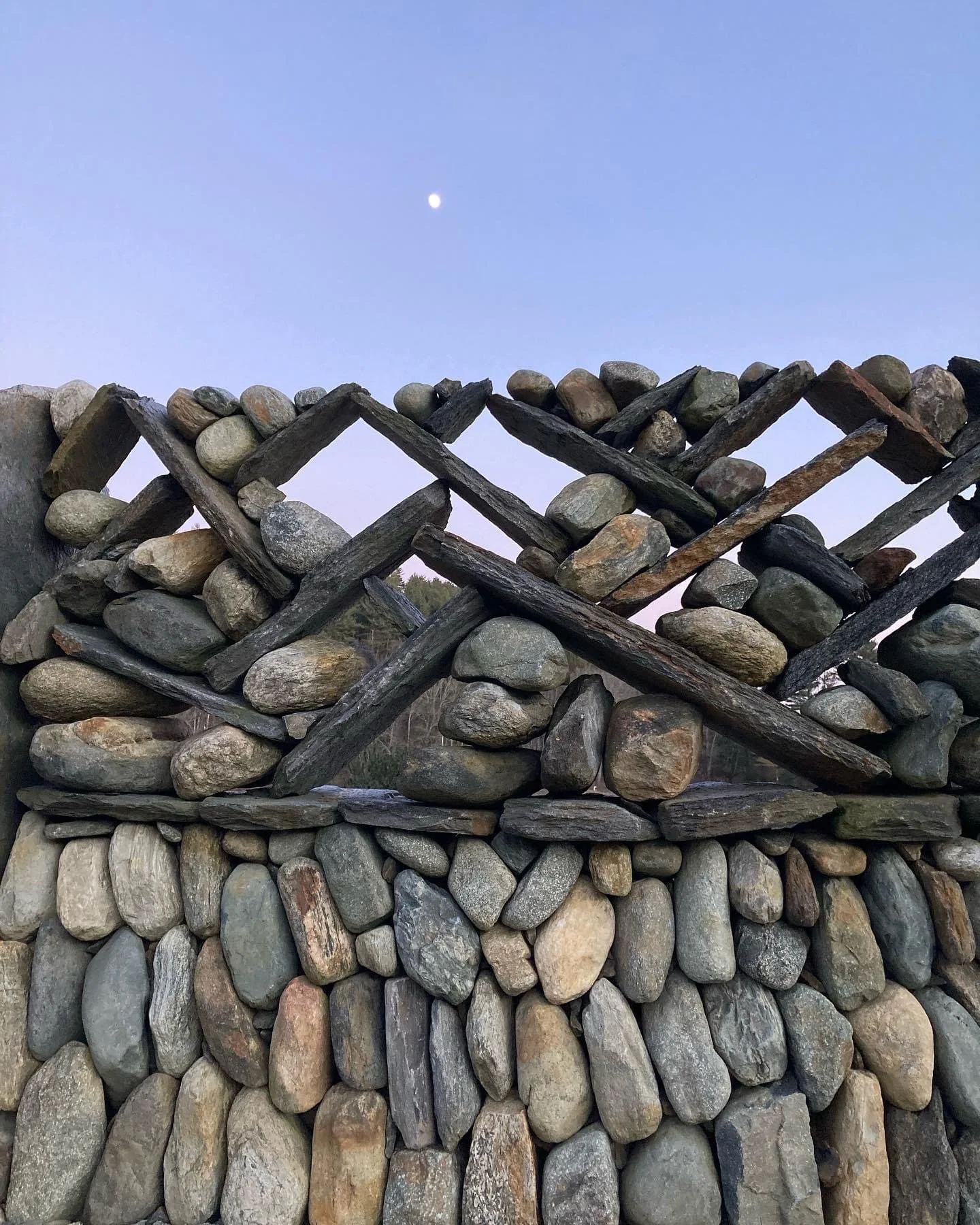
Cultivating Steadiness
Lately I’ve been appreciating steadiness.
June 2024
This is the first of a two part series — Steadiness and Swiftness
On cultivating steadiness . . .
Lately I’ve been appreciating steadiness.
A few weeks ago, I was talking with my sister on the phone. We talk fairly often and we began this conversation by touching in on the weather and the news-that-sure-looks-bad . . . Then I blithely started asking her about the progress she was making on fixing up her apartment, her garden, and projects at work. She let me go on for a bit — then she gently but firmly stopped me in my tracks, “Lyeds, right now I’m just working on steadiness.” She took me right down with that one — humbled me beautifully.
What great pointing directions she gave me that morning! The value of steadiness has been showing up ever since.
Being steady— a steady presence, making steady progress, being a steadfast ally requires being able to manage our nervous system so that we can access our most resourceful selves. Holding steady within ourselves and on behalf of others is kind of a radical guiding star intention in a culture that privileges hastily made progress and being busy getting things done.
So I thought I’d share a few tiny-little-practices to cultivate steadiness:
Step outside for a few minutes in the morning. Locate a place near your doorway to stand and face towards the sun that rises every morning with remarkable consistency. Tune in to the rhythm of your heartbeat and the steady rising and falling of your breathing. Allow your breath to drop down towards your belly until each one is a full belly breath. Notice any impulse to rush into the day. Whisper to yourself, “There is time enough for this precious moment to be savored . . . “ Savoring, I’ve discovered has a steadying influence. (2 minutes, preferably barefoot)
Look for opportunities to be alongside big old trees whenever you can. Let them be the shoulder you can rely on, and the inspiration to attune to their steady presence.
Think of the people in your life who offer a steadying presence, furry friends and winged companions, too. Offer them some regard for that gift that often goes unnoticed.
Whenever you reach for banisters, railings, grab bars, gunwales on a boat, recognize that someone put them there to steady you. The world is full of them.
Consider the brilliance of the invention of the centerboard in a sail boat. Imagine yourself at the helm of a day-sailer in a fresh breeze— when the wind picks up heeling you over as you gain forward motion you have that centerboard to put down to stay balanced and centered. With this imaginary centerboard you can seize the opportunity that a fresh breeze offers and keep from taking on water, or tipping over altogether.
These are just suggestions. There are many ways to cultivate inner steadiness and foster steady relational fields. I’ve discovered that steadiness is achieved by showing up with a mixture of substantial-ness and the rhythms of routine. And then there is always my imaginary centerboard.
Let me know what you discover if exploring this inspires you.
And finally, a poem by Emilie Lygren
The News
Each morning we listen for what is breaking—
the sound of a thousand tragedies fills the air,
shattering that never stops,
headlines, a fleet of anchors tangled at our feet.
We watch, worried
if we turn away even for an instant,
it will all crumble the rest of the way.
Forget with me for a moment.
Take an unguarded breath.
Do it now, the world needs your attention here, too,
on the rise and fall of your shoulders,
the rustle of leaves outside the window,
the warm space between your gaze and mine.

2022 Tiny-little-practices-that-make-a-difference — On rushing, and what did Da Vinci mean anyway?
Are you finding yourself rushing through things?
Are you finding yourself rushing through things?
When I was a young mother, and my daughter Jaime was in kindergarten she observed me rush around most mornings; making breakfast, making lunch, trying to get the girls dressed, myself ready for work, and all of us out the door on time. I can assure you it wasn’t a pretty scene — lots of zigging and zagging, frustrations being expressed, and there were those outfit changes (theirs as well as mine).
One day, Jaime piped up. Clearly and quietly said, “You know mom, I’ve been noticing that when you rush around like that it actually makes things take longer.” She had been watching carefully and she hadn’t missed a thing! In her five year old wisdom, she had found the right time to make this observation such that I could hear it, and now 35 years later I still hold the impression of that moment of truth. Out of the mouths of babes . . .
So when I sat down to write this blog post, I noticed that I had a bit of a rush going. The thought was that it should be done already. The feeling tone was in the anxiety realm: with all the uncertainty in the world, what can I offer that is of real use? And underneath the desire to be of use, was even the call to offer something brilliant! It was Friday afternoon, the sensations in my body were a slightly speedy jumpiness that had me out ahead of myself that wasn’t allowing me to focus. My brow was furrowed with trying to figure out what to write about. I was rushing in that way that Jaime noticed makes things take longer.
So, I paused and made use of a practice for unresourceful rushing when approaching tasks that I’ve developed recently for clients. My definition of unresourceful is: Being rendered incapable of using what is at hand wisely or efficiently. As the rushing started to dissipate, I realized that I could offer it as the first of the tiny little practices for 2022. So here goes.
Leonardo Da Vinci was on to something when he said, “Time stays long enough for anyone who will use it.” But how do we use it well when it feels as if it is slipping away too fast? How do we use it well when our insides feel like a rushing river in rapids? And what the hell did Leonardo mean any way?
Here is a tiny little practice to develop quietude in the midst of activity which can give rise to a deeper efficiency — perhaps even experience a glimpse of what Leonardo meant. :)
There are a number of elements that contribute to to unresourceful rushing. When we get future oriented and then stir in a little anxiety (like the pressure to be brilliant) we come up and out of our center and the pace at which our body operates picks up. Driven by this future orientation the Friday afternoon neuro-chemical cocktail of cortisol and adrenaline shifted me into rush mode. This rendered me less able to resourcefully respond to the task at hand — Any chance I had at brilliance was disintegrating like wet tissue paper.
In general, when you are rushing you are operating up and out of most of your body. Think back and notice where your attention and energy is at those times. Chances are that it is floating at shoulder level or above and distinctly forward. Are you even aware of your spine or the back of your head? Can you feel the region of your heart, your butt on the chair?
You can attend to this high up and forward orientation simply by shifting your weight back and settling down into your body. To assist with this, place the palm of your hand on your belly and take a few breaths where you are elongating the out-breath. Elongating the out-breath while inviting your attention down towards your belly decreases the levels of cortisol and adrenaline, naturally settling your nervous system. It is a subtle yet remarkable shift that gives you access to more of yourself, to quietude.
Then return to the activity at hand. Start by giving the activity a specific amount of focused time and attention, say 15-30 minutes to start. Set a timer for that amount of time. Then place your hand on your belly and take a few breaths calling your attention in on the in-breath and settle down into your belly on the out-breath. Then imagine putting a set of blinders on and give the task your full attention until it is done or the timer has chimed, whichever comes first. If the task isn’t complete yet then evaluate and set the timer again. Continue until you have reached completion or the sense of rushing has dissipated and you are feeling resourcefully engaged in the process.
When we are rushing we are not able to find or forge a sense of engagement. Research in physics and philosophy is unveiling the truth that mystics like Leonardo have known for centuries, that time is a construct that is rather elastic. This practice can open up your sense of time, presence the gift that the mystery is offering up in the very moment, and allow for focus. Your relationship with time will shift when you engage in an activity from an inner quietude.
Here is a poem by Chelan Harkin to support this practice. I hope you enjoy both as you meet the gorgeous ruckus that is life on this beautiful planet.
The Flower
The flower
never had a to-do list,
not one day of her life.
She just pointed her whole self
toward light.
The rest
took care of itself.
Lyedie Geer
Putney Vermont
Spring 2022

Tiny-little-practices-that-make-a difference — Celebrating completion . . .
In my last post I ended with a promise to myself, that once I completed the blog I was writing to you, I would celebrate by heading to the beach to build sandcastles with my grandchildren.
In my last post I ended with a promise to myself, that once I completed the blog I was writing to you, I would celebrate by heading to the beach to build sandcastles with my grandchildren. Done, and what fun we had!! I also promised that next in the series of tiny-little-practices-that-make-a difference would be on celebrating completion, so here it is.
When was the last time you finished a task and danced a little jig? Do you pause to fully appreciate endings? Have you noticed how quickly you move on to the next thing? Perhaps, you are off to the next thing even before you’ve completed the one you are in? Lately I’ve been noticing that most of us, myself included, neglect celebrating.
Forewarning: Celebrating is both practical and glorious. Completing things takes focus and seriousness. Celebration requires releasing into at least a little bit of silliness. :)
Pausing to celebrate even the tiny accomplishments gives rise to being able to enjoy steering a sequence of tasks to completion, the essence of successful project management. All the project management systems in the world won’t help you if you can’t wrestle the small tasks to completion and then celebrate. But beyond that, there is the glorious sense of peace and fulfillment that comes with being able to celebrate completions.
So here is a tiny little mid-summer practice to develop your celebration muscle.
Step 1: For the purpose of developing this as a practice, pick one area in your life to celebrate completing an accomplishment more consciously. Keep it small and simple, something you do regularly.
You could use the one f-ing thing from the tiny-little practice I posted in June. Perhaps it is in the realm of chores at home, or tasks related to work. For example: Completing doing the dishes, weeding the garden, answering all your emails, closing the books on the day, completing a painting or drawing, posting that blog . . .
Step 2: Decide specifically what it is that signals completion.
Specificity is your friend with this step. For example: With the dishes it might be that the counters are clear and clean, in the garden it might be weeding a specific row or bed, with emails it might be that you have answered all the flagged messages or your inbox is empty, with closing the books it might be the act of stapling those slips together or making the deposit, a painting or drawing might be completed with the flourish of your signature.
Step 3: Then choose a way to exaggerate the feeling of being complete. This should feel a little grand and verge on being embarrassing to do at first!
Raise your hands above your head and shout, “Yes!”
Dance a little jig
Play a tune from a playlist of upbeat music that you absolutely love
Tell a trusted friend, “Hey, I got it done!”
Step 4: Then pause. Pause and let the good feeling of completion reverberate down through you heart center before you move on to the next thing. A few slightly deeper breaths will help to metabolize the value of your completion. This step is important, so don’t rush through it.
Step 5: Once you have allowed for a true pause, move on while taking note of how this tiny practice contributes to enjoying a more substantial sense of self. My clients have found that it also contributes to getting stuff done . . .
Let me know how it goes if you are so inclined!
Now it is time for me to dance a little jig right here in my office . . . :)

Tiny-little-practices-that-make-a-difference — Choosing and then doing the one f*cking thing . . .
Here is a practice to develop your grit.
Here is a practice to develop your grit. I love this practice for getting engaged in what is meaningful, reducing brain fog, and wrestling effectively with the tyranny-of-the-lists. Choose the one fucking thing . . . and then hold yourself accountable to doing that thing—earlier is better than later.
Yes, I’m swearing here to call in your warrior aspect. I revel in the way using this word can unleash a spurt of empowering anger, as long as it is not overused in our everyday language. (I used to say to my kids when they would start to sling swear words around willy-nilly, “Save the swear words for when you need the emphasis.”) The sword-like quality of good clean anger is a great ally when being decisive and getting things done is called for.
While sipping your morning coffee or tea, scan out across all the ways that your life is calling to you and then ask yourself, “If all else takes over and my day gets away from me, What is the one fucking thing I’m going to do today?”
Criteria for determining your one fucking thing:
First and foremost — Make it small and doable. For the purposes of this practice, don’t choose a whole fucking project. Then fulfill two of the criteria below:
It falls into the important but not necessarily urgent category
It furthers something you care deeply about
Accomplishing it will give your spirits a lift
It will make things better later
Perhaps you have been avoiding it and therefore it is weighing you down
It is fun and you aren’t allowing it for yourself
A great addition to this practice is to find a trusted friend who will gently or fervently ask you, “What is your one fucking thing today?” This also makes it more fun!
If you are living under the tyranny-of-the-lists, and you’re up for a radical move, try tucking your list away for a few days or a week, and just focus on the one fucking thing. Once you get the hang of identifying your one fucking thing, you will most likely find that it has an almost magical quality. In systems theory it is referred to as a strange attractor, it generates engagement and a flow that will allow you to intuitively accomplish what you are using those lists to manage. Three things to do today and then the one fucking thing, is the task management system that has allowed me to enjoy being an entrepreneur, after years of living and working less successfully under the tyranny-of-the-lists.
My one fucking thing for today is to get this blog post completed. I plan to celebrate this accomplishment by taking my four fabulous grandchildren to build sandcastles at the beach.
Oh and the next tiny little practice is celebration . . .
Wolf and Woman
- Nikita Gill
Some days
I am more wolf than woman
And I am still learning
how to stop apologizing
For my wild
Exploring Habits
I’ve noticed that when people think about habits they are usually focusing on what they perceive as bad habits and looking to break them.
I’ve noticed that when people think about habits they are usually focusing on what they perceive as bad habits and looking to break them.
Good habits / Bad habits, either way they structure our lives.
Habits are activities that have connected to our autonomic nervous system and have quietly transformed what we do into routine. Habits are structural in the way that they impact our lives. And the beauty of that is that we don’t have to expend energy deciding over and over again. I don’t have to decide whether to have my first cup of coffee in the morning, or whether to give my daughter a hug and a quick kiss before she gets on the school bus, or whether to review and update my list of tasks for tomorrow at the end of my work day.
Recently I had the pleasure of hearing Gretchen Rubin speak about her new book on making and breaking habits. One thing she said really stuck with me, “What we do everyday matters more than what we do once in a while.” I got a subtle and significant perspective shift when I went from thinking about habits to thinking about what we do everyday, and my practice design “elf” awakened.
So, if daily habits are the architecture that structure our lives then the practice of tracking and appreciating what we do on a daily basis for a week could be very illuminating. Tracking something puts your attention on it and attention is a form of currency. (This is what I call a Noticing Practice.)
Start a list of your daily habits. Add to it every day for a week. Then at the end of a week give yourself 15 or 20 minutes to reflect on your list. A few key questions might then be:
What abilities am I maintaining and even building with my habits of doing?
What neural pathways am I maintaining and building with my habits of thinking?
What are the things that I’m doing every day that presence* what matters most to me?
Then pick a few new habits to invite into the daily-ness of life.
And if, during your noticing practice you trip upon a few habits that you want to break, Gretchen Rubin’s Four Tendencies Framework is a great resource.
If you’d like support with venturing further into inviting new habits into your daily life, or breaking a few, you can contact me by clicking here.
*Note: I’m using presence as a verb here, meaning to be able to sense and bring into the present. See Otto Scharmer’s Presencing Institute
Harnessing the Energy of Spring
It is a glorious May morning and I'm just in from a walk.
May 2nd, Walpole, New Hampshire
It is a glorious May morning and I'm just in from a walk. While I was out there I got inspired to offer up a few simple practices for harnessing the energy that spring offers. My hope is that you enjoy them, and they are helpful to you in some way.
Many of us are looking to further our intentionality, resourcefulness and the ability to enjoy life. Working with the cycles of nature can help us to understand how to sustain these capacities over time. The practices below are intended to build your capacity:
- To initiate more intentional communications with others
- To work actively with the cycles of the creative process that are inherent in nature
- To be more resourceful
Harnessing the Energy of Spring (A few practices)
Recent breakthroughs in the field of neurobiology are telling us just how connected we are to the natural world and to each other. The palpable uptick of spring is a gorgeous example of this truth. Our bodies and minds are attuned to the waking up energy at play in the natural world. This provides great support for initiating communication, moving up and out in purposeful ways.
Take a Daily Infusion: Carve out time on a daily basis for an infusion of spring. This could be just 7-10 minutes of your lunch break or a longer stretch if your schedule allows. The idea is to go outside and commune with spring as it bursts forth. Leave your mobile phone behind and refrain from engaging in conversation. Dedicate this time to being fully receptive and aware of what is occurring in the natural world — the rain falling, sun warming, buds swelling, ferns unfurling, sap rising. Let it all bring a smile to your face. Invite it infuse your energy level and mood as you go on with your day. Doing this on a daily basis will support the initiating practices outlined below
Reflection: Take note of how being receptive to the uptick of Spring actually shifts your well-being, how it changes your energy level and emotional state.
Look for Opportunities to Break out of Winter’s Grip: As you go through your day, look for ways to break out of the stasis of winter and to push forward into new possibility. The stasis of winter is something we often experience internally as a kind of inertia. When you are on the verge of breaking out of it you might feel euphoric (and a even a little reckless) from the uptick that spring is giving your limbic system. But it is just as likely that you will experience at least a twinge of anxiety and feel your courage quicken. At those times consciously attune yourself to the energy of spring, the “yes” energy of inspiration and yearning; go with that.
Two Ways to Break out of Winter’s Grip:
1. Start Something: Start a project (small or large) that is dear to your heart, one that you have been considering but that has been in the grip of winter's inertia. Initiate that new project at work. Make that recipe that appears daunting. Throw that dinner party. Send that letter of intent. Teach your child how to knit. Hurl yourself into preparing that garden bed.
Reflection: How much energy do you gain by applying your attention and energy to something that is meaningful to you?
2. Break Through and Melt Ice: Communicate intentionally by saying what you see and what you’d like to see. Tell someone what you notice is happening in the space between you. Begin with the data; describe what you observe in as objective and straight forward a way as you can. Then express your warmth and what you hope for, what you would really like to experience and perhaps why. (It could be that there is something you'd like to see more of, or something you’d like to have less of, or perhaps there is something you wish was different than it is.) Be as real as you can, be your authentic self, listen to their response, stand in your intention. This may feel risky at first and I encourage you to start with the small stuff. Sentence stems are a great help:
I notice that . . .
I see that . . .
Followed by
What I’d really like to . . .
What is important to me is . . .
Here are some examples:
I notice that we don't have dinner as a family the way we used to . . . I really miss it and it is important to me that we get back on track by having dinner together at least three times a week.
I notice that when you ask me to make changes in the work I submit for approval, even though I value your input, I get defensive. . . . I'd really like to be able to accept criticism more gracefully and be open to feedback so that we can collaborate more effectively .
I notice that when you greet me at the end of the day with that quick little kiss on my cheek . . . that I really want you to linger there with me a little longer.
Reflections:
What does it take for you to say what you see and to offer your tender hopes to another?
What happens when you do?
How could you become more adept at these conversations?
Go ahead. The idea here is to work with the inherent full-bodied invitation of spring. Experience how spring works with you to support your intentions. Notice how spring invites us, by its very nature, to be restless in our frozen old habits, to envision new patterns and potential, and to move up and out into the fullness of life. I urge you to harness the energy it offers to do what really matters to you.
Feel free to let me know how it goes.
As a life and leadership coach I help my clients develop capacities they need to meet their objectives, and to fulfill their promise. Developing a new capacity is building a new muscle; it takes repeated effort and awareness through practice.
May spring bring be all that you hope for!
Warmly, Lyedie
- Being Resourceful
- Gratitude
- Morning Page
- Time Management
- Meditation
- Tai Chi Mudras
- Grace
- Women's Leadership
- Time
- Vitality
- Practices
- Visiting the Elements
- Rest
- Energy
- Radiance
- Listening
- Work
- Peace
- Integral Theory
- Poetry
- Seasons
- Communication
- Women
- Productivity
- Nature
- Activism
- Creative Process
- Attention
- one
- Citizenship
- Joy
- Entrepreneurship
- Balance
- Artists
- Habits