
From my blue chair . . .

Something new has coalesced . . .
For months now, I’ve been asking, “What is mine to do, in this gorgeous ruckus?”

Spring 2026
For months now, I’ve been asking, “What is mine to do, in this gorgeous ruckus?” “What is needed now that I can offer?” and the idea for my next project finally dropped in — simple and all at once, the way ideas sometimes do — and I’m here to share it with you because your input and participation will give it life.
The Hearthfire Project, a series of online gatherings, hatched with the simple image of a central open fire, a hearth: People gathering around it. Taking inspiration and encouragement from the warmth of the fire and the generative companionship of the circle.
While it felt new, it coalesced from the Ancients.
Hestia — goddess of the hearth in ancient Greece and Rome — was for centuries one of the most revered figures in the pantheon. Not because she was the most politically powerful, or the most dramatic, but because she held the center of civic society. She tended the fire. Her round temples held an eternal flame at their center. She was the one around whom others could gather and be restored and inspired.
Over time, she was eclipsed. The more assertive goddesses — Athena with her strategy, Artemis with her fierce independence — rose to prominence. Hestia quietly receded.
What Hestia represented — the sovereign leader who holds space with warmth and inspiring continuity — is the kind of leadership we need to empower in civic society now. Not instead of strategic brilliance or the ability to be decisive under pressure, but alongside them. A presence and a place that holds true to vision and purpose.
I’ve been thinking about what was lost when Hestia receded into the mysteries. And what can be gained by bringing her narrative forward again.
There’s a quote from Nobel Prize-winning chemist Ilya Prigogine that I keep returning to: that in complex systems far from equilibrium, small islands of coherence have the capacity to shift the entire system toward a higher order. I believe that’s true. And I believe a small, deliberate gathering around a real question — a fire tended with care — is just that kind of island.
That is what I want to create with the Hearthfire Project. This brings Hestia’s much-needed narrative forward while creating islands of coherence.
This feels like mine to do . . .
I’m finding delight at the prospect of it.

Turning Toward Next
The year is turning again now.
December 2025
The year is turning again now. As promised, I’m posting an updated version of my annual reflection practice. This practice offers a way to fully embrace all that this darkening-before-the-light time of year has to offer. To engage this practice, carve out a protected chunk of time to be still and listen to the voice in you that arises when you put pen to the page. Be willing to peer into the uncertainty of these times as they are playing out in your life. I trust that this practice will illuminate or clarify what is next for you and give you purchase on your path to fulfillment. Please feel free to share it!
The idea here is to take some time to close up the year and begin to turn towards next year. Part 1, the practice of closing up your year, gives rise to good beginnings. The practice of turning towards what is next (Part 2) by listening for your emerging future, gives a very different flavor to our usual New Year's Resolutions. As my wing women have described, this practice is both gentle and powerful — there is both grace and grit here.
This practice will acquaint you with your inner Wisdom Council, which is a most wonderful and effective way to experience and get access to the fundamental capacities of grace and grit. The Wisdom Council is an archetypal ever-present inner "committee" that is always with you, and as you will discover, we all have one!
So, do you already have a practice or ritual way to close up the year and open to what is next? If not, I highly recommend it. If so, you already know how wonderful and beneficial it is and you might want to try this.
Part One - Closing Up the Year
Download the Wisdom Council inquiry questions and then carve out a little uninterrupted time (+/- 30 minutes) to cozy up with a cup of tea to really take stock with the first part of this practice. Give it your full attention to facilitate closure to the year in a very remarkable way. Have your journal handy, or just some paper and a pencil will do. Free write into these questions by putting your pencil to the page and just write whatever comes up for a few minutes without lifting the pencil. Remind yourself that your responses are for your eyes only, unless you want to share with a trusted friend, companion, or spouse.
Part Two - Turning Towards the Next
Give yourself as much as a week, or as little as an hour, before picking up Part Two, wherein the Wisdom Council questions will have you look ahead with the clarity and compassion of the closure afforded you by of Part One.
(Be sure to Bookmark this page so that you can refer back to it easily later . . . )
Note: Wisdom Council inquiries are powerful stuff. Please let these questions, and your responses to them, penetrate your heart, mind, and will-to-act. Let them begin to do their work as the year turns and unfolds in the coming months.
I have found that the most resourceful decisions arise out of incubation in deep stillness. May you find some of that deep stillness as the year turns and may the year ahead astonish us with all its beauty, truth and goodness!
Warmly, Lyedie
December 2025
Putney, Vermont
Photo credit: Elizabeth Ungerleider

Steadying ourselves with Beauty, Truth and Goodness
“I wish it need not have happened in my time,” said Frodo. “So do I,” said Gandalf, “and so do all who live to see such times. But that is not for them to decide. All we have to decide is what to do with the time that is given us.” J.R.R. Tolkien, The Fellowship of the Ring
November 2024
“I wish it need not have happened in my time,” said Frodo.
“So do I,” said Gandalf, “and so do all who live to see such times.
But that is not for them to decide. All we have to decide is what
to do with the time that is given us.”
J.R.R. Tolkien, The Fellowship of the Ring
Good morning from my blue chair,
Continuing to work with holding steady along with taking swift action, I’m writing to share my annual November reflective writing practice with you . . .
This November practice invites you to reflect back carefully over the year through the lens of Beauty, Truth and Goodness. On this fresh morning the world does seem to be in a ruckus — and when I dropped into this writing practice myself, I found the ruckus as well as some solace. These are hard times to keep our hearts strong and open. It appears that collectively we are not doing so well with sharing power. There are winners and losers everywhere. So finding the beauty, truth and goodness has become all the more compelling as we seek to steady ourselves and find a way to contribute somehow.
For those of you who have dropped into this practice in years past, you will see that I’ve kept it the same, confident that these questions will always bring a fresh response as we look back over the past year to find the Beauty, Truth and Goodness that is there.
Carve out some time to reflect on the last year in your journal. (Pulling out your calendar to jog your memory might be helpful.) With pen in hand or fingers on your keyboard, soften your gaze as you scan back over the past year and respond to the prompts below. You can do this for the year in one sweep or take each season as I suggest below. The invitation here is to be responding to these prompts four times, beginning with the winter a year ago. (Could take you as long as an hour or so to complete . . . ) Significant milestones or intimate moments in your answers are all appropriate. I think you will find that specificity gives wonderful depth to the process.
For each of the seasons, Winter, Spring, Summer, Fall:
Describe a time that you experienced beauty.
In what way(s) were you the cause of something beautiful?
In what way(s) was a hard truth revealed to you?
In what way(s) did you reveal or speak a hard truth?
In what way(s) was a beautiful truth revealed to you?
In what way(s) did you reveal or speak a beautiful truth?
In what way(s) were you on the receiving end of goodness?
In what way(s) were you the cause of goodness?
Upon completion, give yourself a little time to let your responses settle in you. Take a walk or a bath, if you can, and take in the beauty, truth and goodness that you found when you put pen to page. Stay with the hard truth that may have surfaced and seek support from wise loved ones if you feel the need. You might want to capture some further reflections before moving into the fullness of your day or evening.
I’ll be posting my annual year end practice in December, which will give you an opportunity to look ahead and consider any reorientation, renewed commitments, or actions that all of this may inspire in you.
May we all find our way to contribute. May we all wage peace . . .
Warmly, Lyedie
One final note: Yesterday morning in our writing group a friend read this poem and it landed for me, so I thought I’d share it with you.
How the Light Comes
I cannot tell you
how the light comes.
What I know
is that it is more ancient
than imagining.
That it travels
across an astounding expanse
to reach us.
That it loves
searching out
what is hidden
what is lost
what is forgotten
or in peril
or in pain.
That it has a fondness
for the body
for finding its way
toward flesh
for tracing the edges
of form
for shining forth
through the eye,
the hand,
the heart.
I cannot tell you
how the light comes,
but that it does.
That it will.
That it works its way
into the deepest dark
that enfolds you,
though it may seem
long ages in coming
or arrive in a shape
you did not foresee.
And so
may we this day
turn ourselves toward it.
May we lift our faces
to let it find us.
May we bend our bodies
to follow the arc it makes.
May we open
and open more
and open still
to the blessed light
that comes.
by Jan Richardson

Summer Mudra — Fire element
Continuing with my offering of Tai Chi Mudras that my teacher, Virginia Scholl, has been sharing with my Tai Chi class.
Here Virginia goes through the Summer Mudra 3 times, with the last in silence. Follow along with the transcript to the left.
Summer Mudra — The Element of Fire
Continuing with my offering of Tai Chi Mudras that my teacher, Virginia Scholl, has been sharing with my Tai Chi class.
Summer is the season of fire according to Tai Chi Philosophy, it is a full yang season wherein we collect the warmth to last all year. The ability to love is essential to fire. To come from the heart with our inner fire. To radiate our true fire out into the world.
May the flame
Within me
Shine forth
May it open my heart
So that the warmth and radiance
I put out into the world,
Comes from a place of compassion.
When the fire element is balanced within us,
we are accessible and responsive to others,
and able to communicate clearly with them.
We are able to love deeply
and be loved deeply.
We can live with abundant spirit
and walk the unique path chartered
by our own, no-other-like-it heart.
The fire phase encourages us to mature
and to flourish, to lighten up
and explore the adventures of life.
Fire helps us to be spontaneous and express
our true nature to the world.
The warmth, passion and joy of Fire
are available to us each moment
that we stay alive to ourselves
and to the fullness of life in others and in all nature.
~ Ann Bailey

Developing Swiftness
I take great pleasure in inviting my clients to see themselves as an instrument — an instrument of creativity and love.
Swiftness - The second of my June two part series
I take great pleasure in inviting my clients to see themselves as an instrument — an instrument of creativity and love. And then to begin to hone their instrument on behalf of their deepest longings. That is the essence of my work. Lofty stuff, I know.
This is my way-in to capacity building. It is metaphorical and true. We develop ourselves by honing that instrument of Self. Swiftness and steadiness are capacities that we can hone. Steadiness, the subject of my last post, lays the ground for us to fulfill those longings and contribute to the world. Swiftness is a robust response to the world on behalf of seizing opportunity or mitigating harm. Honing these two expands our ability to pace ourselves — expands the range of our instrument of Self.
Swiftness, as I’m defining it here, is being able to move quickly — to make astonishingly good use of time without rushing. Swiftness isn’t a steady state to aspire to. Swiftness is something you reach into when you need it.
Swiftness is needed when you have only half an hour to get the kids on the bus to school and they still need breakfast.
Swiftness is called for when you need to get out of harms way. Swiftness is necessary to halt an injustice as it unfolds.
Swiftness give us access to immediacy in communication and action.
We reach into it to catch opportunities as they arise — chances to make a difference, ideas before they disappear, real estate, jobs, love interests . . .
When you initiate swiftness your focus narrows and your sense of time tends to change. Time becomes more elastic and seems to stretch out. You manage to be able to accomplish something more quickly than your rational mind might anticipate.
EMTs know about it
Musicians know about it
Journalists know about it
Waitresses know about it
Mountain bikers know about it
Soccer and basketball players know about it
Wolves and birds of prey know about it . . . so do deer and bunnies
Tinkerbell is masterful at it . . . :)
Swiftness requires leaping into “the zone”. It is a warrior skill worth honing in our everyday lives. From a playful point of view it is Warrior magic with Tink as its patron saint.
Here are a few suggested practices to develop swiftness:
To develop the capacity for swift action — somatic practices
Get up in the morning and hurl yourself out the door for a fast walk. Make it short and quick ( 10 minutes). Observe what happens in your body when you ask it to go from rest to speediness. How much resistance do you feel? Notice your heart rate rising. Appreciate the burst of energy you initiated.
Initiate a few jumping jacks, or try jumping rope for a few minutes. Notice how quickly you can get your arm and legs moving. How often do you ask of this from your body, mind, and emotions?
Play pickle ball or tennis — Go after the ball . . .
Kick boxing will help develop swiftness as well as assertiveness - Bad ass :)
Practice showing up as an unexpected glimmer . . . 🌟
For some swiftness is readily available. For others, whose nervous systems tend towards freeze or fawn, it may take some practice to develop the neural pathways for swiftness. Swiftness is most resourceful when it rises up out of a grounded observant state, springs into efficient action and then returns to a certain satisfied calm. From steadiness to swiftness and back to steadiness is a resourceful way to operate.
To develop the capacity for swift communication — Clear and direct
Practice distilling down what you want to say as quickly and clearly as you can. Here are four elements that can help do that when you are anticipating hard communications. Try asking yourself these questions and journal your answers. Adapted from Clean Talk, a dialogue process from Dialogos
What do I see happening here? Start with the data . . .
How do I feel about it?
I think my feelings are a result of this perception . . .
What I would like to see happen is . . .
What am I clear about here? What can I communicate now? Be willing to say, I don’t know. Be willing to ask clarifying questions. Ask for or define next steps.
Practice communicating as soon as you can. Identify what you are clear about. Be willing to communicate uncertainty or unknowns.
Here are some things to reflect on: How swiftly do you communicate? When something is hard, do you put it off? When you have something to celebrate do you hold back? Check to see whether you are being honest with yourself about whether you are looking for right timing, or procrastinating.
Swiftness doesn’t require rushing, it requires clarity. It requires communicating what it is that you are clear about, not pretending that you are clear when you are not. These are some of the practical elements of developing swiftness. But Tinkerbell’s mastery is in how she delights in astonishment! 🧚🏽♂️
Then there is the fine art and science of knowing when to act swiftly and when to hold steady. That is a conversation for another day . . . :)

Cultivating Steadiness
Lately I’ve been appreciating steadiness.
June 2024
This is the first of a two part series — Steadiness and Swiftness
On cultivating steadiness . . .
Lately I’ve been appreciating steadiness.
A few weeks ago, I was talking with my sister on the phone. We talk fairly often and we began this conversation by touching in on the weather and the news-that-sure-looks-bad . . . Then I blithely started asking her about the progress she was making on fixing up her apartment, her garden, and projects at work. She let me go on for a bit — then she gently but firmly stopped me in my tracks, “Lyeds, right now I’m just working on steadiness.” She took me right down with that one — humbled me beautifully.
What great pointing directions she gave me that morning! The value of steadiness has been showing up ever since.
Being steady— a steady presence, making steady progress, being a steadfast ally requires being able to manage our nervous system so that we can access our most resourceful selves. Holding steady within ourselves and on behalf of others is kind of a radical guiding star intention in a culture that privileges hastily made progress and being busy getting things done.
So I thought I’d share a few tiny-little-practices to cultivate steadiness:
Step outside for a few minutes in the morning. Locate a place near your doorway to stand and face towards the sun that rises every morning with remarkable consistency. Tune in to the rhythm of your heartbeat and the steady rising and falling of your breathing. Allow your breath to drop down towards your belly until each one is a full belly breath. Notice any impulse to rush into the day. Whisper to yourself, “There is time enough for this precious moment to be savored . . . “ Savoring, I’ve discovered has a steadying influence. (2 minutes, preferably barefoot)
Look for opportunities to be alongside big old trees whenever you can. Let them be the shoulder you can rely on, and the inspiration to attune to their steady presence.
Think of the people in your life who offer a steadying presence, furry friends and winged companions, too. Offer them some regard for that gift that often goes unnoticed.
Whenever you reach for banisters, railings, grab bars, gunwales on a boat, recognize that someone put them there to steady you. The world is full of them.
Consider the brilliance of the invention of the centerboard in a sail boat. Imagine yourself at the helm of a day-sailer in a fresh breeze— when the wind picks up heeling you over as you gain forward motion you have that centerboard to put down to stay balanced and centered. With this imaginary centerboard you can seize the opportunity that a fresh breeze offers and keep from taking on water, or tipping over altogether.
These are just suggestions. There are many ways to cultivate inner steadiness and foster steady relational fields. I’ve discovered that steadiness is achieved by showing up with a mixture of substantial-ness and the rhythms of routine. And then there is always my imaginary centerboard.
Let me know what you discover if exploring this inspires you.
And finally, a poem by Emilie Lygren
The News
Each morning we listen for what is breaking—
the sound of a thousand tragedies fills the air,
shattering that never stops,
headlines, a fleet of anchors tangled at our feet.
We watch, worried
if we turn away even for an instant,
it will all crumble the rest of the way.
Forget with me for a moment.
Take an unguarded breath.
Do it now, the world needs your attention here, too,
on the rise and fall of your shoulders,
the rustle of leaves outside the window,
the warm space between your gaze and mine.

Spring Mudra - Elements of Wood and Wind
Continuing with my offering of Tai Chi Mudras that my teacher, Virginia Scholl, has been sharing with my Tai Chi class.
Spring Mudra – The Elements of Wood and Wind
Continuing with my offering of Tai Chi Mudras that my teacher, Virginia Scholl, has been sharing with my Tai Chi class.
Spring is the season of wood and wind according to Tai Chi Philosophy, it is also associated with waking up, pushing up and out from the depths, a renewed energy. A youthful masculine energy emerges at this time of year — grandiose and pushy at times! This is a time of new beginnings when life bursts forth in uninhibited joy, when hope returns and everything is growing towards the light.
There is incredible drive and determination available during this season of wood and wind. This energy can take us away with it, giving rise to impatience and impulsivity. Conversely it can be hard to meet, resulting in feeling overwhelmed and even a bit depressed in the presence of the all the greening and blooming. If we, like the trees around us, are well rooted deep in the earth and in our past, we can stand tall in the present moment and reach toward our visions for the future.
Practicing this Mudra supports me helps me to fully accept the invitation spring offers. I urge you to try following along with Virginia in this video. It takes only a few minutes, even if you slow it way down. It is a lovely way to begin or end your day
Whispering these words to yourself quietly as you learn the movements:
Holding these seeds in my hands and planting.
The roots push down, stems push up into, buds, and flowers.
Then falling back down to earth
to bring what is inside to the outside.
And standing in this present moment, I acknowledge
Where I have come from and where I am going
With strength and kindness to bring me home.
Here Virginia goes through the Spring Mudra 3 times, with the last in silence. To activate subtitles, click the CC square in bottom bar.

Accepting Winter's Invitation - Activating the Stillness
Breaking News: Winter is releasing its grip.
February 4th
Breaking News:
Winter is releasing its grip. Here we are, midway between the Winter Solstice and the Spring Equinox. On this archeoastrological day of Imbolc . . . you can trust that delicate awakenings are occurring in the deep.
I am continuing with my offering of Tai Chi Mudras that my teacher, Virginia Scholl, has been sharing with my Tai Chi class. Winter is the season of water according to Tai Chi Philosophy, it is also associated with going into the depths and with stillness. Practicing this Mudra helps me to accept the invitation that is inherent in winter. Especially, if you find this time of year difficult, I urge you to try following along with Virginia in this video. It takes only a few minutes, even if you slow it way down. It is a lovely way to begin or end your day.
Whispering these words to yourself quietly as you learn the movements:
May I rest in the stillness of winter
May I cherish my dreams and my intuition
Guide me from fear to courage
And teach me to look deep in the mirror of my soul
Here Virginia goes through the Winter Mudra 3 times, with the last in silence. To activate subtitles, click the CC square in bottom bar.
Turning Towards Next:
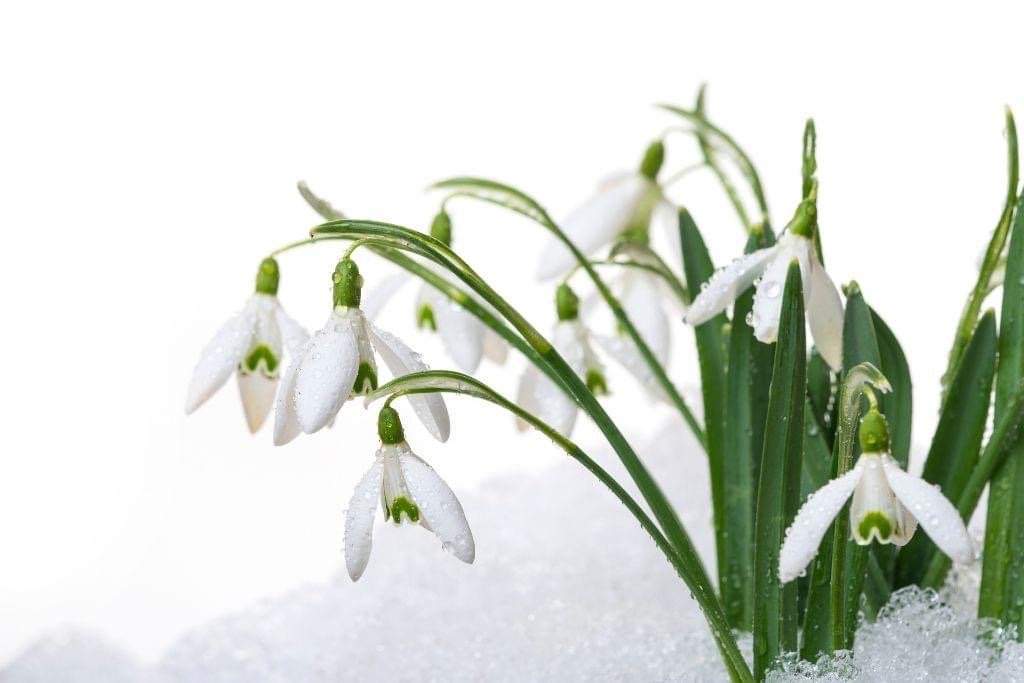
The resolutions of the calendar new year are shedding their grandiosity. This is a good time to gently turn into the rising energy of the year and see what is emerging in you and in your life. Gardeners pull out their seed catalogues — I find it is a good time give a few hours to turn towards what is next by consulting with the Wisdom Council. You can find those reflection questions by clicking here. Perhaps it is time to sort the seeds of your new years resolutions and decide which ones to nourish with your attention and energy?
Perhaps you feel some new stirrings and desires that are wanting to emerge...
The days are lengthening.
The sun is strengthening.
The energy is shifting, but it is very subtle at this threshold. It takes courage to stay with the intimate stillness of winter. It takes holding power, being a source of warmth for yourself and others . . . and sensing into messages that are gestating in the stillness of winter.
I hope you are wintering well!
Warmly, Lyedie
And please note: Next up is Spring!
Thanks to Elizabeth Ungerleider for her photo

Beauty, Truth and Goodness on this fresh morning, in this broken world . . .
I’m writing to share the first in a series of my annual reflective writing practices with you.
it is a serious thing
just to be alive
on this fresh morning
in this broken world
- Mary Oliver

Good morning from my blue chair,
I’m writing to share the first in a series of my annual reflective writing practices with you. This November practice invites you to reflect back carefully over the year through the lens of Beauty, Truth and Goodness. On this fresh morning the world does seem broken and when I dropped into this writing practice myself, I found the brokenness as well as the wholeness — These are hard times to keep our hearts strong and open. So finding the beauty, truth, and goodness has become all the more compelling as we seek to steady ourselves and find a way to contribute somehow.
For those of you who have dropped into this practice in years past, you will see that I’ve added a new element this year — prompting you to look into both the beautiful and hard truths which are revealing themselves.
Here is the revised practice: Finding the Beauty, Truth and Goodness in the Year
Carve out some time to reflect on the last year in your journal, and then ideally to take a walk or a bath. Pulling out your calendar to jog your memory might be helpful. Then I suggest just softening your gaze back over the past year and responding to the prompts below. You can do this for the year in one sweep or take each season as I suggest below. The invitation here is to be responding to these prompts four times, beginning with the winter a year ago. (Could take you as long as an hour or so to complete . . . ) Significant milestones or intimate moments in your answers are all appropriate. I think you will find that specificity gives wonderful depth to the process.
For each of the seasons, Winter, Spring, Summer, Fall:
Describe a time that you experienced beauty.
In what way(s) were you the cause of something beautiful?
In what way(s) was a hard truth revealed to you?
In what way(s) did you reveal or speak a hard truth?
In what way(s) was a beautiful truth revealed to you?
In what way(s) did you reveal or speak a beautiful truth?
In what way(s) were you on the receiving end of goodness?
In what way(s) were you the cause of goodness?
Upon completion, give yourself a little time to let your responses settle in you. Take a walk or a bath, if you can, and take in the beauty, truth and goodness that you found when you put pen to page. You might want to capture some further reflections before moving into the fullness of your day or evening.
I’ll be posting my annual year end practice in December, which will give you an opportunity to look ahead and consider any reorientation, renewed commitments, or actions that all of this may inspire in you.
May we all find our way to contribute. May we all wage peace . . .
Warmly, Lyedie
Every morning you rise, I want you to remember this:
there are amazing things
to be a part of,
and fight for,
and feel,
because the world
will unlock hundreds
of doors when you
give this day
all the courage, love,
and intensity
you can.
Victoria Erickson (author, The Edge of wonder)
Photo credit goes to Gay Foster with gratitiude

Activating Mountain Energy - Practices for invoking late autumn Grace
Here I am continuing with my offering of Tai Chi Mudras that my teacher, Virginia Scholl has been sharing with my Tai Chi class.
Here I am continuing with my offering of Tai Chi Mudras that my teacher, Virginia Scholl has been sharing with my Tai Chi class. Late Autumn is the season of Metal according to Tai Chi Philospohy, it is also associated with Mountain Energy. I’m struck by how this Mudra invokes a sovereign capacity that many of my clients are stepping into as they develop their ability to take leadership in their personal and professional lives. The sovereign capacity, as I define it here, is the ability to hold a vision through the ebbs and flows of time, to affirm self and others, to be deeply trustworthy.
So below you will find a video for the Metal/Mountain Mudra and a few sovereign building practices I’ve gleaned from practicing the Metal Mudra.
Here are a few practices to develop the sovereignty of metal / mountain energy in your daily life.
Endeavor to take a lesson from the trees — how they stand tall as they gently let go of their leaves - to relinquish that which has been brought to full harvest
Allow the sharp edged thoughts that arise in your mind to descend down into your heart where your compassion can soften and transform them
Look for the hidden treasures, even in these darkening times. And ask yourself if you’d be willing to receive these gifts
Look back out over the year as if you are on a mountain top. See all that you have received and all that you have lost from a heightened perspective that is also grounded by a wide base.
Invite yourself to trust that you are part of the great unfolding: Consider the time it took to form mountains, the time it took for the tree to form the leaves that are now drifting to the ground, the time it takes for grief to work its way through us.
Be the mountain in all its grace and sovereignty
To activate subtitles, click the CC square in bottom bar.
May the diamond clarity of mind
Descend to my heart
To reveal the treasures of my life
Accepting what I have received and what I have lost
And trusting what is invisible and what is hidden
Know that you are always eligible for grace . . .
More on Metal / Mountain Energy from my teacher’s teacher . . .
Of all the five element, perhaps it is Metal that we Westerners find most difficult to comprehend, The word usually evokes in us something rigid, sharp and uncompromising; something harsh, demanding or judgemental.
From a Chinese perspective, Metal is associated with the season of Autumn. It is a time of loss and grief, yet in its clarity and purity it brings us closest to the place of spirit and the work of bringing spirit into form. This is the abode of the sage, the Hermit and the Mentor, those who understand the lessons of receiving and releasing when experience turns into understanding. Autumn presides over all separations and asks us to turn inward, to examine what we have brought to full harvest, to decide what we need to keep and what we need to relinquish. It teaches us to know the balance between appreciating the beauty of life and mourning its loss. This is the time of year when we search for something uncorrupted; a time to turn inwards, a time to find the jewels, the treasures we hold within ourselves.
. . . Like the season itself, Metal spirit asks us to find what is of essential worth, what is of real value in our lives. Although its lessons are not easy ones, Metal’s spirit knows we are always eligible for grace. It teaches us to let go without giving up, without losing trust. It reminds us that with acceptance and surrender, we are able to let go of the old so that something new can be born.
Metal’s spirit knows we are always
Eligible for grace
It reminds us that we are never past healing
And never beyond hope
It has a purity that precludes judgement
And teaches us to trust our innate value
Metal asks us to find
What is of essential worth in our lives;
To understand the dynamic
Between appreciating the beauty of life
And mourning its loss
It is the holy grail
As well as the search for it
Cielle Tewksbury, November 2009

Activating Earth Energy - Practices for bringing strength to our compassion
I’ve found that life becomes distinctly more wonderful when we begin to work and play in accord with the seasons.
Life starts all over again
when it gets crisp in the fall.
~ F. Scott Fitzgerald
I’ve found that life becomes distinctly more wonderful when we begin to work and play in accord with the seasons. So I thought I’d share.
In Tai Chi the elements are closely associated with the seasons and the practice helps me find this accord. In the last few weeks my Tai Chi teacher, Virginia Scholl, has been attuning us to the transition from summer to fall by offering this Earth Mudra (see video below) to our small class. Surrounded by the bounty of autumn, we have been bringing in the earth energy I associate with heart centered warrior-ship. This energy, and the capacities that it gives rise to, are often needed by people who care deeply — Capacities like being centered, grounded, balanced, intentional in word and deed. This Mudra provides somatic support for bringing strength to our compassion. This is what I call grit.
Here are a few practices to develop earth energy in your daily life.
Endeavor to take on less and then stay with the projects you start.
Express yourself more clearly by saying what you observe, how it makes you feel and why, and what you would like to see happen. (Clean talk)
Listen to your own inner voices and take their messages seriously.
Lower your center of gravity so as to feel more centered in your self and be less thrown off balance by other people’s problems, needs, demands, or opinions.
Let the earth and the very substance of your body give you a sense of solidity; so that when you meet an obstacle, you can stay clear on your intention and work to find a way to solve the problem and move ahead.
Look for where the activities you are engaged in are generating results. Take a few moments to register these. Savor them and see them as your bountiful harvest. This will help you see the world as fertile ground for your good work.
Hold your ground. Feel your grit . . . :)
To activate subtitles, click the CC square in bottom bar.
Holding and being held by the earth
May I be centered, balanced, and rooted
And in my desire to nurture and care for others
May I remember to extend that same care to myself
Enjoy!
(Practices adapted from Tai Chi wisdom as written by Lorie Dechar; Bronze sculpture by Linda Hoffman)

Look for the Glimmers
Here is a little noticing practice for living in this gorgeous ruckus.
Here is a little noticing practice for living in the midst of this gorgeous ruckus.
As you go through your day look for the glimmers*. Your list may be long — filled with things to figure out, problems to solve, tasks to accomplish, people to get back to, groceries to shop for, but there’s always room for a glimmer. What constitutes a glimmer you might say . . .
A glimmer is the opposite of a trigger
A glimmer is a small moment of goodness, truth, or beauty
Glimmers inspire your thinking
Glimmers warm your heart
Glimmers cue a degree of safety, serve to regulate your nervous system
Glimmers can transform busyness into fullness. Each day brings with it hundreds of glimmers. Noticing glimmers is a powerful healing practice that adds up over time. Becoming a glimmer seeker will change your brain and your life
Remember to look for the glimmers. It is easy to forget until you make it a habit.
Warmly,
Lyedie
Photo by Elizabeth Ungerleider, with gratitude
* The concept of glimmers from Sarah Jackson, with gratitude

Turning Toward Next with Grace and Grit
As this year turns into the next one, I send you warm and light-filled greetings.
Hello, Lyedie here.
As this year turns into the next one,
I send you warm and light-filled greetings.
Lyedie
May you grow still enough to hear the small noises earth makes in preparing for the long sleep of winter, so that you yourself may grow calm and grounded deep within.
May you grow still enough to hear the trickling of water seeping into the ground, so that your soul may be softened and healed, and guided in its flow.
May you grow still enough to hear the splintering of starlight in the winter sky and the roar at earth’s fiery core.
May you grow still enough to hear the stir of a single snowflake in the air, so that your inner silence may turn into hushed expectation.
— Brother David Steindl-Rast
Click here to receive the gift of my annual year-end practice.

Where was the Beauty, Truth and Goodness in this tumultuous year?
I’m writing to share my annual reflective writing practice with you — Finding the Beauty, Truth and Goodness in the year.
Good morning,
I’m writing to share my annual reflective writing practice with you — Finding the Beauty, Truth and Goodness in the year.

Last week, the Gingko tree out in front of my office here in Putney was shining a brilliant yellow and then one morning when I came to work, she had shed her leaves creating a glorious circle of yellow in the bright green grass on the common. This is her autumnal habit, prompted by the first night that the temperature descends to precisely 29 degrees. My autumnal habit is to reflect back as I collect the leaves from the ground with a practice I developed that is inspired by a passage I found in Jean Yves Leloup’s translation of the Gospel of Mary Magdalene*. This late autumn reflection prepares me to turn towards next as the solstice and calendar year-end approaches.
Here is the practice: Finding the Beauty, Truth and Goodness in the Year
Carve out some time to reflect on the last year in your journal. Pulling out your calendar to jog your memory might be helpful. Then just soften your gaze back over the past year and respond to the prompts below for each of the four seasons. The invitation here is to respond to these six prompts four times, beginning with the winter a year ago. (Could take you as long as an hour or so to complete . . . ) Significant milestones or intimate moments in your answers are all appropriate. I think you will find that specificity gives wonderful depth to the process.
For each of the seasons, Winter, Spring, Summer, Fall:
Describe a time that you experienced beauty.
In what way(s) were you the cause of something beautiful?
In what way(s) was the truth revealed to you?
In what way(s) did you reveal or speak the truth?
In what way(s) were you on the receiving end of goodness?
In what way(s) were you the cause of goodness?
Upon completion, give yourself a little time to let your responses settle in you. I invite you to feel the interplay of these three fundamental threads in the tapestry of your life. Take a walk or a bath and take in the beauty, truth and goodness that you found when you put pen to page.
I’ll be posting my annual year end practice, Turning Towards Next, in December, which will give you an opportunity to look ahead and consider any reorientation, renewed commitments, or actions that all of this may inspire in you.
Enjoy, and may we all wage peace . . .
Warmly, Lyedie
November 11, 2022
Putney, Vermont
*(Click here to find that passage on the About page of my website)
Do you have the patience to wait
until your mud settles,
and the water is clear?
Can you remain unmoving
until the right action
arises by itself?
— Lao Tzu, Tao Te Ching
Photo credit: Elizabeth Ungerleider

A Riff and a Practice from the Archives . . .
I just realized, it’s been five years since I turned my longing into a project and dedicated my coaching practice to the longings of women.
June 15th 2022
I just realized, it’s been five years since I turned my longing into a project and dedicated my coaching practice to the longings of women. So, to mark the occasion, I dug into the archives and found this treatise on longings from that spring of 2016. Admittedly, a lot has changed since then — And I remain steadfast in my belief that staying connected to the call of our deepest longings provides us each with a beacon in these times and gives us access to becoming warriors of the human spirit.
Here is my riff on the language of longings and the offer of a reflection practice for these languid days of summer written in April of 2016. I think I just may have become less wordy since then . . . :-)
Longings Are a Yearning Toward Wholeness
Longings are a deeply felt full-bodied conversation that is always going on between self and spirit, self and the world, self and others. They are a specific kind of desire that take up residence in our bodies, our emotions, and in our thoughts. Longings are a yearning towards wholeness that is involuntary. You may find yourself feeling stuck or somehow disconnected simply because you are not currently acquainted with your deepest longings. With a recklessly ambivalent relationship to desire, our culture has obscured the feminine art of listening for and attending to our longings. Following these instructions will initiate you into a practice of full-bodied listening. This is an invitation to attune to the language and voices of an essential conversation that you need to hear amidst the din and the ruckus of everyday life.
Longings speak their very own language. They “speak” in images, poetry, song, and occasionally in commands. Longings communicate in the turn of the phrase, in the movement of dance, soft clay, wet paint, bread dough, broken dishes, split infinitives. Especially when we are at the height of our sexual prowess, longings express themselves in sexual desire that demands our attention and can be quite mischievous in nature. Being afraid of this dims our capacity for sensuality. Longings do not come in tidy packages; you will find that they are not subject to the rules of rationality.
Longings often present themselves as wishful thinking, fierce desire or smoldering ambition. Often, we feel them deeply in our body-mind in the form of yearning, aching, pining, craving, hunger, thirst, a pang. In its earliest definitions longing means to summon. Longings swell our hearts with unexpected enthusiasm, or the tenderness of an unresolved loss that needs our attention. Truth is, our deepest longings are often the quiet ones.
Longings that have gone underground surface when something reminds us of them. When my life fills with work imperatives, my longing for the domestic side of life shows up as a strong tug just under my breastbone whenever I see a young women with a baby sleeping against her chest, cherry tomatoes and peas in a garden, and sheets hung neatly on a clothesline − I attend to that longing by keeping an altar at my kitchen sink, ritually unloading the dishwasher as a start to my day, air drying my laundry whenever possible, and coaching women who are wrestling with work and life balance issues in the mother / warrior phase of life.
The Practice:
Begin - Become Fully Acquainted With Your Longings (Without having to do anything about it right away)
A Week or So of Noticing and Reflecting
This is a Step One Practice. In the spiral of the creative process it is a beginning that is always good to circle around to, it keeps us fresh and new. The thing to pay attention to here is to learn the language of your longings so that you can hear how life calls to you. This practice will naturally inspire you towards your authentic response to that call. If you approach it with curiosity, some gritty daily discipline, and a smidge of courage, it will open up your emotional intelligence, sensual receptivity, and playful nature. You may feel as if you are recovering a long lost lover, or perhaps even discovering her for the first time. Hold your discoveries from this practice close to your heart and allow them to incubate. Share them only with a trusted few. Keep them safe and consider carefully when and how to bring them out into the light of day.
Start by Noticing. Invite yourself to slow down on certain occasions as you go through your day. The occasions you want to slow down for are when something sparks a heart centered tug (desire, elation or sadness) in you. Slow down and invite all of your senses into that moment. What sparks your longing could be almost anything: a person, place, or thing, a song, the sound of a specific musical instrument, a bird call, a dance, a painting, a smell, a poem, a gesture, an activity, an idea, a color, a texture . . . Get really curious about the nature of this tug. Pay close attention to specificity; the specific things that spark your longing, and the specific nature of the longing as it arises within you. Choose one particular instance to reflect on at the end of the day or first thing next morning.
(Here are some examples from my practice reflections over the years: There is an eight word line in one of Joni Mitchell’s songs that pierces my heart and sends a shudder through my body every time I hear it . . . The smell that emits from the ground-ivy in my freshly mown lawn makes me want to dance with joy . . . The moist edges of that man’s lips inspires a exquisite gurgle in my pelvic region that almost hurts. )
Reflect on What You Notice: Jot down some notes about what you noticed in a journal dedicated to this purpose. Use these questions as a start.
Choose one longing that you discovered today that is of particular interest. Briefly describe the spark and the tug using language as sense filled and specific to the experience as you can.
What thoughts are associated with it?
Were your thoughts past, present, or future oriented?
Does it have a specific idea or ambition associated with it, or is it telling you about something that you love with no logical direction or instruction? (Describe briefly)
What is it that you know in your gut about this longing today?
What is it that remains a mystery to you today?
Review: At the end of your week review your notes and look for themes in the content of your longings, and their languages.
Honor What You Discover: Another way to further bring these tender wishes and dreams out into the air and sunlight is by making an altar for your longings. Collect a few things that represent your longings to you. Arrange them beautifully in a place that it is safe (away from curiously unaware children and any unsupportive adults) and where you can tend to it easily. A place where you just inevitably encounter it every day as a part of your routine is good. (My altar started almost inadvertently on the windowsill of my kitchen sink, back in 1983. A good friend of mine kept hers on the dashboard of her car for years.)
The Call to Action: At some point longings start to point us in a direction and we experience a call to action. Projects, goals, new directions start to come into focus. It all starts to coalesce into the golden thread of a call. Urgency, passion and determination, will come on line. Whether the call is to make a quilt for your granddaughter, end a relationship, start something new, finish that book you started, or relocate to another continent, it is good to gather your forces and get some support as you initiate action and move into the arena of the creative process.
Responding to the Call of Your Longings
Wise women have known for centuries that longings can wreak havoc in our lives when we don’t meet them with our practical integrated self. Acting to fulfill a longing, by its very nature, can upset the familiar “normal” of our lives and often precipitates change. Interpreting, tending, and fulfilling longings skillfully is a critical part of learning how to live authentically, and dare greatly without just making a big mess of things. Understanding how the phases of our lives color our longings, and how to skillfully respond accordingly requires the support and structure of a guide, mentor or coach. We are talking about the mysteries here, and the call to step into a new level of learning to trust yourself and the world.
The Longings Project was born out of my longing to witness (in my lifetime) the beauty, truth and goodness that will be unleashed when more women are able to fulfill their deepest longings. I guess you could say it is my Maja Project. Although I do have a sense of urgency about this, I also believe that longings are expressions of our most intimate selves and they require protection during their incubation phase. Please be gentle with yourself, and with your tender longings as you gain their acquaintance. Timing is of the essence in matters of longing and slower is often more expedient at the beginning of almost anything. When you find you need help with attending to, interpreting, or fulfilling your longings please feel free to contact me. We can start with a free 20-minute phone conversation during which we’ll cover:
What it will mean for you to respond to the call of your longings.
Why now?
Your next steps.
What is it that is longing for you?
I can also answer any questions you may have about engaging in the coaching process and how my unique combination of encouragement and practical support can help you live more closely connected to your gorgeous longing and step into your most radiant self.

2022 Tiny-little-practices-that-make-a-difference — On rushing, and what did Da Vinci mean anyway?
Are you finding yourself rushing through things?
Are you finding yourself rushing through things?
When I was a young mother, and my daughter Jaime was in kindergarten she observed me rush around most mornings; making breakfast, making lunch, trying to get the girls dressed, myself ready for work, and all of us out the door on time. I can assure you it wasn’t a pretty scene — lots of zigging and zagging, frustrations being expressed, and there were those outfit changes (theirs as well as mine).
One day, Jaime piped up. Clearly and quietly said, “You know mom, I’ve been noticing that when you rush around like that it actually makes things take longer.” She had been watching carefully and she hadn’t missed a thing! In her five year old wisdom, she had found the right time to make this observation such that I could hear it, and now 35 years later I still hold the impression of that moment of truth. Out of the mouths of babes . . .
So when I sat down to write this blog post, I noticed that I had a bit of a rush going. The thought was that it should be done already. The feeling tone was in the anxiety realm: with all the uncertainty in the world, what can I offer that is of real use? And underneath the desire to be of use, was even the call to offer something brilliant! It was Friday afternoon, the sensations in my body were a slightly speedy jumpiness that had me out ahead of myself that wasn’t allowing me to focus. My brow was furrowed with trying to figure out what to write about. I was rushing in that way that Jaime noticed makes things take longer.
So, I paused and made use of a practice for unresourceful rushing when approaching tasks that I’ve developed recently for clients. My definition of unresourceful is: Being rendered incapable of using what is at hand wisely or efficiently. As the rushing started to dissipate, I realized that I could offer it as the first of the tiny little practices for 2022. So here goes.
Leonardo Da Vinci was on to something when he said, “Time stays long enough for anyone who will use it.” But how do we use it well when it feels as if it is slipping away too fast? How do we use it well when our insides feel like a rushing river in rapids? And what the hell did Leonardo mean any way?
Here is a tiny little practice to develop quietude in the midst of activity which can give rise to a deeper efficiency — perhaps even experience a glimpse of what Leonardo meant. :)
There are a number of elements that contribute to to unresourceful rushing. When we get future oriented and then stir in a little anxiety (like the pressure to be brilliant) we come up and out of our center and the pace at which our body operates picks up. Driven by this future orientation the Friday afternoon neuro-chemical cocktail of cortisol and adrenaline shifted me into rush mode. This rendered me less able to resourcefully respond to the task at hand — Any chance I had at brilliance was disintegrating like wet tissue paper.
In general, when you are rushing you are operating up and out of most of your body. Think back and notice where your attention and energy is at those times. Chances are that it is floating at shoulder level or above and distinctly forward. Are you even aware of your spine or the back of your head? Can you feel the region of your heart, your butt on the chair?
You can attend to this high up and forward orientation simply by shifting your weight back and settling down into your body. To assist with this, place the palm of your hand on your belly and take a few breaths where you are elongating the out-breath. Elongating the out-breath while inviting your attention down towards your belly decreases the levels of cortisol and adrenaline, naturally settling your nervous system. It is a subtle yet remarkable shift that gives you access to more of yourself, to quietude.
Then return to the activity at hand. Start by giving the activity a specific amount of focused time and attention, say 15-30 minutes to start. Set a timer for that amount of time. Then place your hand on your belly and take a few breaths calling your attention in on the in-breath and settle down into your belly on the out-breath. Then imagine putting a set of blinders on and give the task your full attention until it is done or the timer has chimed, whichever comes first. If the task isn’t complete yet then evaluate and set the timer again. Continue until you have reached completion or the sense of rushing has dissipated and you are feeling resourcefully engaged in the process.
When we are rushing we are not able to find or forge a sense of engagement. Research in physics and philosophy is unveiling the truth that mystics like Leonardo have known for centuries, that time is a construct that is rather elastic. This practice can open up your sense of time, presence the gift that the mystery is offering up in the very moment, and allow for focus. Your relationship with time will shift when you engage in an activity from an inner quietude.
Here is a poem by Chelan Harkin to support this practice. I hope you enjoy both as you meet the gorgeous ruckus that is life on this beautiful planet.
The Flower
The flower
never had a to-do list,
not one day of her life.
She just pointed her whole self
toward light.
The rest
took care of itself.
Lyedie Geer
Putney Vermont
Spring 2022

Turning Toward Next in the Midst of All This Uncertainty . . .
The year is turning again now.
December 2021
Turning Towards Next in the Midst of All This Uncertainty
The year is turning again now. As promised, I’m posting my annual reflection practice. This practice offers a way to fully embrace all that this darkening-before-the-light time of year has to offer. To engage this practice, carve out a protected chunk of time to be still and listen to the voice in you that arises when you put pen to the page. Be willing to peer into the uncertainty of these times as they are playing out in your life. I trust that this practice will illuminate or clarify what is next for you and give you purchase on your path to fulfillment. Please feel free to share it!
The idea here is to take some time to close up the year and begin to turn towards next year. Part 1, the practice of closing up — your day, week, month, year — gives rise to good beginnings. The practice of turning towards what is next (Part 2) by listening for your emerging future, gives a very different flavor to our usual New Year's Resolutions. As my wing women have described, this practice is both gentle and powerful — there is both grace and grit here.
This practice will acquaint you with your inner Wisdom Council, which is a most wonderful and effective way to experience and get access to the fundamental capacities of grace and grit. The Wisdom Council is an archetypal ever-present inner "committee" that is always with you, and as you will discover, we all have one!
So, do you already have a practice or ritual way to close up the year and open to what is next? If not, I highly recommend it. If so, you already know how wonderful and beneficial it is and you might want to try this.
Part One - Closing Up the Year
Download the Wisdom Council inquiry questions and then carve out a little uninterrupted time (+/- 30 minutes) to cozy up with a cup of tea to really take stock with the first part of this practice. Give it your full attention to facilitate closure to the year in a very remarkable way. Have your journal handy, or just some paper and a pencil will do. Free write into these questions by putting your pencil to the page and just write whatever comes up for a few minutes without lifting the pencil. Remind yourself that your responses are for your eyes only, unless you want to share with a trusted friend, companion, or spouse.
Part Two - Turning Towards the Next
Give yourself as much as a week, or as little as an hour, before picking up Part Two, wherein the Wisdom Council questions will have you look ahead with the clarity and compassion of the closure afforded you by of Part One.
Click here to download the questions in pdf format
Please feel free to be guided through the practice with the audio recordings below if you’d like.
(Be sure to Bookmark this page so that you can refer back to it easily later . . . )
Note: Wisdom Council inquiries are powerful stuff. Please let these questions, and your responses to them, penetrate your heart, mind, and will-to-act. Let them begin to do their work as the year turns and unfolds in the coming months.
I have found that the most resourceful decisions arise out of incubation in deep stillness. May you find some of that deep stillness as the year turns and may the year ahead astonish us with all its beauty, truth and goodness!
Warmly, Lyedie
December 2021
Putney, Vermont
May you grow still enough to hear the small noises earth makes in preparing for the long sleep of winter, so that you yourself may grow calm and grounded deep within.
May you grow still enough to hear the trickling of water seeping into the ground, so that your soul may be softened and healed, and guided in its flow.
May you grow still enough to hear the splintering of starlight in the winter sky and the roar at earth’s fiery core.
May you grow still enough to hear the stir of a single snowflake in the air, so that your inner silence may turn into hushed expectation.
— Brother David Steindl-Rast
Photo credit: Elizabeth Ungerleider

Finding Beauty, Truth and Goodness in a Year of Grief
I’m writing to share an annual reflective writing practice again with you — Finding the Beauty, Truth and Goodness in the year.
Good morning from my blue chair,
I’m writing to share an annual reflective writing practice again with you — Finding the Beauty, Truth and Goodness in the year.
Yesterday, the Gingko tree out in front of my office here in Putney was shining a brilliant yellow and this morning she shed all her leaves at once in a snow-like flurry. This is her autumnal habit, prompted by the first night that the temperature descends to precisely 29 degrees. My autumnal habit is to reflect back over the year as I collect the leaves from the ground. This has been a particularity exquisite year for me. Painful, beautiful, and heart opening, it has been both difficult and fulfilling. Just a few days after Thanksgiving 2020, my dear mum’s delicate heart gently gave up and she passed away peacefully. With a lot of good help and a measure of luck, we managed to care for her in her Florida home while navigating all the complexity of the pandemic. Today, I’m gently giving myself permission to relive her last weeks. Reliving the beauty, the hard truth, and the goodness of that time we had together tending to mum as she went out ahead of us.
For many, this has been a year full of loss. Working with grief is a capacity these times are calling forth in us. During these tumultuous times, loss is not only felt when we lose a loved one. Many of us are also grieving for a lost way of life, for relationships we thought we could depend on, and for the health of the planet, among other things. Dropping-in to the reflective writing practice I’m offering here may squeeze some necessary grief up onto the surface of your attention. If so, embrace it as best you can. Scroll down to the musings on grief that bubbled up for me, which I’m sharing in the hope it may be helpful somehow.
Here is the practice: Finding the Beauty, Truth and Goodness in the Year
Carve out some time to reflect on the last year in your journal. Pulling out your calendar to jog your memory might be helpful. Then I suggest just softening your gaze back over the past year and responding to the prompts below for each of the four seasons. The invitation here is to be responding to these six prompts four times, beginning with the winter a year ago. (Could take you as long as an hour or so to complete . . . . ) Significant milestones or intimate moments in your answers are all appropriate. I think you will find that specificity gives wonderful depth to the process.
For each of the seasons, Winter, Spring, Summer, Fall:
Describe a time that you experienced beauty.
In what way(s) were you the cause of something beautiful?
In what way(s) was the truth revealed to you?
In what way(s) did you reveal or speak the truth?
In what way(s) were you on the receiving end of goodness?
In what way(s) were you the cause of goodness?
Upon completion, give yourself a little time to let your responses settle in you. I’ll be posting my annual year end practice in early December, which will give you an opportunity to look ahead and consider any reorientation, renewed commitments, or actions that all of this may inspire in you.
Enjoy this and all that you uncover as you put pen to page.
* * *
Selected Notes from my Beauty, Truth and Goodness journal writing session today:
This year, I have been learning to live without my mother here on the planet. That is the arc that stretches across my year long experience. Throughout this year I have been carrying a softness, a tenderness in the region of my heart that often wells up with a wavelike force and then subsides. Along with the tears that brimmed over in the grocery store aisles and at other surprising and inopportune times, a certain strength has emerged that perhaps I gained from having been with the truth of having witnessed her last breath. I don’t really know, though — the source of the strength remains a mystery to me.
This year I have been walking with grief and also joy. Held by the rhythms of life and the reliable embrace of gravity holding me onto this earth. Steadied by my work, good friends and family. Comforted by regular visits with the natural world. Cheered by the flurry of Gingko leaves.
Winter -
Beauty: Turning inward and tromping in the woods visiting old trees — oak, cherry, white pine, mulberry —
Goodness: Dear friends rallied around me with song and comfort food
Truth: Needing time alone - Daddy’s health faltered
Spring -
Beauty: Gloriously beautiful Sarasa chamber music concert at Brattleboro Music School in May
Goodness: Tentatively unfolding into reveling in the palest greens, spring breezes, and the company of loved ones. Spontaneous gifts left on my porch
Truth: That day I reminded myself that she isn’t there to answer the phone. Recognizing the need to pace myself
Summer -
Beauty: Feeling deeply filled up by being out on my paddle board on South Pond in the evenings
Goodness: Joy in spending time with my rowdy kindle of grandchildren — and then with a dear friend on the Vineyard for a few precious days
Truth: Feeling the impact of my family being so far flung - Portland OR, Colorado, Florida and Norway . . .
Fall -
Beauty: Returning to the hearth fire, collecting Ginkgo leaves
Goodness: Helping my dad travel for the first time in years. Remembering the last bowls of fruit my mother carefully prepared for us
Truth: This morning I spied an owl up in a now leafless tree at the edge of the field I walk past most mornings. Has it been there quietly all along? Onward we go . . .
Musings on grief:
How stunningly hard it is to live through grief. How deeply personal the experience is. How grief forges our hearts if we let it . . .
How grief is a many splendor ed thing — a direct result of love, a doorway to caring more about each other and this extraordinary planet that is our home.
How when I feel my grief, when it visits me and I can allow it to well up, my mother as well as my late sister, Katie, come in closer in some inexplicable way. So, too does the natural world I find myself so deeply connected to.
Grief comes in waves. With mum I watched it come towards me for years. With the sudden death of my sister Katie, almost forty years ago, it came in rogue form, — out of nowhere, quick and devastating. Now they are both part of the ebbing and flowing ocean that is my grief.
Feeling held by life allows me the courage to feel grief and to let it wash through me. For that I’m deeply grateful.
* * *
Sending strength to your heart as I complete this post. Thank you for taking the time to read it.
Warmly, Lyedie
November 11th 2021
Putney, VT
Photo credit: Leslie Williams

Tiny-little-practices-that-make-a difference — Celebrating completion . . .
In my last post I ended with a promise to myself, that once I completed the blog I was writing to you, I would celebrate by heading to the beach to build sandcastles with my grandchildren.
In my last post I ended with a promise to myself, that once I completed the blog I was writing to you, I would celebrate by heading to the beach to build sandcastles with my grandchildren. Done, and what fun we had!! I also promised that next in the series of tiny-little-practices-that-make-a difference would be on celebrating completion, so here it is.
When was the last time you finished a task and danced a little jig? Do you pause to fully appreciate endings? Have you noticed how quickly you move on to the next thing? Perhaps, you are off to the next thing even before you’ve completed the one you are in? Lately I’ve been noticing that most of us, myself included, neglect celebrating.
Forewarning: Celebrating is both practical and glorious. Completing things takes focus and seriousness. Celebration requires releasing into at least a little bit of silliness. :)
Pausing to celebrate even the tiny accomplishments gives rise to being able to enjoy steering a sequence of tasks to completion, the essence of successful project management. All the project management systems in the world won’t help you if you can’t wrestle the small tasks to completion and then celebrate. But beyond that, there is the glorious sense of peace and fulfillment that comes with being able to celebrate completions.
So here is a tiny little mid-summer practice to develop your celebration muscle.
Step 1: For the purpose of developing this as a practice, pick one area in your life to celebrate completing an accomplishment more consciously. Keep it small and simple, something you do regularly.
You could use the one f-ing thing from the tiny-little practice I posted in June. Perhaps it is in the realm of chores at home, or tasks related to work. For example: Completing doing the dishes, weeding the garden, answering all your emails, closing the books on the day, completing a painting or drawing, posting that blog . . .
Step 2: Decide specifically what it is that signals completion.
Specificity is your friend with this step. For example: With the dishes it might be that the counters are clear and clean, in the garden it might be weeding a specific row or bed, with emails it might be that you have answered all the flagged messages or your inbox is empty, with closing the books it might be the act of stapling those slips together or making the deposit, a painting or drawing might be completed with the flourish of your signature.
Step 3: Then choose a way to exaggerate the feeling of being complete. This should feel a little grand and verge on being embarrassing to do at first!
Raise your hands above your head and shout, “Yes!”
Dance a little jig
Play a tune from a playlist of upbeat music that you absolutely love
Tell a trusted friend, “Hey, I got it done!”
Step 4: Then pause. Pause and let the good feeling of completion reverberate down through you heart center before you move on to the next thing. A few slightly deeper breaths will help to metabolize the value of your completion. This step is important, so don’t rush through it.
Step 5: Once you have allowed for a true pause, move on while taking note of how this tiny practice contributes to enjoying a more substantial sense of self. My clients have found that it also contributes to getting stuff done . . .
Let me know how it goes if you are so inclined!
Now it is time for me to dance a little jig right here in my office . . . :)

Tiny-little-practices-that-make-a-difference — Choosing and then doing the one f*cking thing . . .
Here is a practice to develop your grit.
Here is a practice to develop your grit. I love this practice for getting engaged in what is meaningful, reducing brain fog, and wrestling effectively with the tyranny-of-the-lists. Choose the one fucking thing . . . and then hold yourself accountable to doing that thing—earlier is better than later.
Yes, I’m swearing here to call in your warrior aspect. I revel in the way using this word can unleash a spurt of empowering anger, as long as it is not overused in our everyday language. (I used to say to my kids when they would start to sling swear words around willy-nilly, “Save the swear words for when you need the emphasis.”) The sword-like quality of good clean anger is a great ally when being decisive and getting things done is called for.
While sipping your morning coffee or tea, scan out across all the ways that your life is calling to you and then ask yourself, “If all else takes over and my day gets away from me, What is the one fucking thing I’m going to do today?”
Criteria for determining your one fucking thing:
First and foremost — Make it small and doable. For the purposes of this practice, don’t choose a whole fucking project. Then fulfill two of the criteria below:
It falls into the important but not necessarily urgent category
It furthers something you care deeply about
Accomplishing it will give your spirits a lift
It will make things better later
Perhaps you have been avoiding it and therefore it is weighing you down
It is fun and you aren’t allowing it for yourself
A great addition to this practice is to find a trusted friend who will gently or fervently ask you, “What is your one fucking thing today?” This also makes it more fun!
If you are living under the tyranny-of-the-lists, and you’re up for a radical move, try tucking your list away for a few days or a week, and just focus on the one fucking thing. Once you get the hang of identifying your one fucking thing, you will most likely find that it has an almost magical quality. In systems theory it is referred to as a strange attractor, it generates engagement and a flow that will allow you to intuitively accomplish what you are using those lists to manage. Three things to do today and then the one fucking thing, is the task management system that has allowed me to enjoy being an entrepreneur, after years of living and working less successfully under the tyranny-of-the-lists.
My one fucking thing for today is to get this blog post completed. I plan to celebrate this accomplishment by taking my four fabulous grandchildren to build sandcastles at the beach.
Oh and the next tiny little practice is celebration . . .
Wolf and Woman
- Nikita Gill
Some days
I am more wolf than woman
And I am still learning
how to stop apologizing
For my wild
- Being Resourceful
- Gratitude
- Morning Page
- Time Management
- Meditation
- Tai Chi Mudras
- Grace
- Women's Leadership
- Time
- Vitality
- Practices
- Visiting the Elements
- Rest
- Energy
- Radiance
- Listening
- Work
- Peace
- Integral Theory
- Poetry
- Seasons
- Communication
- Women
- Productivity
- Nature
- Activism
- Creative Process
- Attention
- one
- Citizenship
- Joy
- Entrepreneurship
- Balance
- Artists
- Habits