
From my blue chair . . .

Something new has coalesced . . .
For months now, I’ve been asking, “What is mine to do, in this gorgeous ruckus?”

Spring 2026
For months now, I’ve been asking, “What is mine to do, in this gorgeous ruckus?” “What is needed now that I can offer?” and the idea for my next project finally dropped in — simple and all at once, the way ideas sometimes do — and I’m here to share it with you because your input and participation will give it life.
The Hearthfire Project, a series of online gatherings, hatched with the simple image of a central open fire, a hearth: People gathering around it. Taking inspiration and encouragement from the warmth of the fire and the generative companionship of the circle.
While it felt new, it coalesced from the Ancients.
Hestia — goddess of the hearth in ancient Greece and Rome — was for centuries one of the most revered figures in the pantheon. Not because she was the most politically powerful, or the most dramatic, but because she held the center of civic society. She tended the fire. Her round temples held an eternal flame at their center. She was the one around whom others could gather and be restored and inspired.
Over time, she was eclipsed. The more assertive goddesses — Athena with her strategy, Artemis with her fierce independence — rose to prominence. Hestia quietly receded.
What Hestia represented — the sovereign leader who holds space with warmth and inspiring continuity — is the kind of leadership we need to empower in civic society now. Not instead of strategic brilliance or the ability to be decisive under pressure, but alongside them. A presence and a place that holds true to vision and purpose.
I’ve been thinking about what was lost when Hestia receded into the mysteries. And what can be gained by bringing her narrative forward again.
There’s a quote from Nobel Prize-winning chemist Ilya Prigogine that I keep returning to: that in complex systems far from equilibrium, small islands of coherence have the capacity to shift the entire system toward a higher order. I believe that’s true. And I believe a small, deliberate gathering around a real question — a fire tended with care — is just that kind of island.
That is what I want to create with the Hearthfire Project. This brings Hestia’s much-needed narrative forward while creating islands of coherence.
This feels like mine to do . . .
I’m finding delight at the prospect of it.

Turning Toward Next
The year is turning again now.
December 2025
The year is turning again now. As promised, I’m posting an updated version of my annual reflection practice. This practice offers a way to fully embrace all that this darkening-before-the-light time of year has to offer. To engage this practice, carve out a protected chunk of time to be still and listen to the voice in you that arises when you put pen to the page. Be willing to peer into the uncertainty of these times as they are playing out in your life. I trust that this practice will illuminate or clarify what is next for you and give you purchase on your path to fulfillment. Please feel free to share it!
The idea here is to take some time to close up the year and begin to turn towards next year. Part 1, the practice of closing up your year, gives rise to good beginnings. The practice of turning towards what is next (Part 2) by listening for your emerging future, gives a very different flavor to our usual New Year's Resolutions. As my wing women have described, this practice is both gentle and powerful — there is both grace and grit here.
This practice will acquaint you with your inner Wisdom Council, which is a most wonderful and effective way to experience and get access to the fundamental capacities of grace and grit. The Wisdom Council is an archetypal ever-present inner "committee" that is always with you, and as you will discover, we all have one!
So, do you already have a practice or ritual way to close up the year and open to what is next? If not, I highly recommend it. If so, you already know how wonderful and beneficial it is and you might want to try this.
Part One - Closing Up the Year
Download the Wisdom Council inquiry questions and then carve out a little uninterrupted time (+/- 30 minutes) to cozy up with a cup of tea to really take stock with the first part of this practice. Give it your full attention to facilitate closure to the year in a very remarkable way. Have your journal handy, or just some paper and a pencil will do. Free write into these questions by putting your pencil to the page and just write whatever comes up for a few minutes without lifting the pencil. Remind yourself that your responses are for your eyes only, unless you want to share with a trusted friend, companion, or spouse.
Part Two - Turning Towards the Next
Give yourself as much as a week, or as little as an hour, before picking up Part Two, wherein the Wisdom Council questions will have you look ahead with the clarity and compassion of the closure afforded you by of Part One.
(Be sure to Bookmark this page so that you can refer back to it easily later . . . )
Note: Wisdom Council inquiries are powerful stuff. Please let these questions, and your responses to them, penetrate your heart, mind, and will-to-act. Let them begin to do their work as the year turns and unfolds in the coming months.
I have found that the most resourceful decisions arise out of incubation in deep stillness. May you find some of that deep stillness as the year turns and may the year ahead astonish us with all its beauty, truth and goodness!
Warmly, Lyedie
December 2025
Putney, Vermont
Photo credit: Elizabeth Ungerleider

Visiting the Elements — Earth
In these times that seem senseless in so many ways, the element of Earth gives me faith.
Surviving is important. Thriving is elegant.
Maya Angelou
Earth - So central to our lives that we take it for granted
Looking at how the essential elements on this beautiful planet can help us respond to these tumultuous times. This is the final in a series on visiting the elements. The last post explored Fire; today we’ll be visiting Earth.
In these times that seem senseless in so many ways, the element of Earth gives me faith. Today, I'm going to muse on the Earth element and share a few practices that call in the Earth element.
Earth is the beautiful planet that is our home. Earth elements include minerals, stone, humus. Earth gives us a sense of ground. It is also the living layer of soil that supports us so beautifully by giving rise to the greening, the trees, and plant life. Earth's magnetic field orients how we move and experience up and down, as well as forward and backward.
Earth is this beautiful planet that is our home. The Earthrise Image of our planet, taken from space in 1968 circulated widely and shifted our collective perspective. This image provided our consciousness with a subject-object move — we were offered the opportunity to look at ourselves from the outside. A planetary world view arose. With that image taken from beyond our atmosphere, a burgeoning sense of awe propelled a movement to protect the environment.
Earth is fundamental and enduring. Earth as an element is the essence of form and structure. Earth offers us nurturing support and the ability to create a strong foundation. Earth as an element is a symbolic representation of Truth. Feeling grounded is a result of being connected to the Earth. When we feel grounded, we are more willing to see things as they are and are more willing to be present with what is. When we speak the Truth, we are calling in the Earth element. Truth, whether it be a hard truth or a beautiful one, is a grounded perspective.
Earth is nurturing. Earth in the form of the soil that blankets our landforms is one of the most complex life-affirming biomaterials on the planet. When it is healthy, one teaspoon of this crumbly humusy layer contains more organisms than there are human beings on the planet. The health of our soil is critical to our survival. Civilizations have risen and fallen based on the health of the soil on which they depended. The failure of the Sumerians, Mayans, Indus Valley civilizations, along with the Roman Empire was, in large part, a failure to contribute to the soil. In the United States, the Dust Bowl in the 30s was a direct result of unsustainable farming practices combined with the inevitable cycles of drought in the Midwest. Conversely, civilizations that developed agricultural practices to manage soil health sustained their populations for a much longer arc: the ancient Egyptians, the Incas, and areas in Asia. Soil is a living organism, a layer that surrounds the Earth and gives life. This nurturing aspect of the Earth element requires the practice of reciprocity. ( Look for the book Soil by Matthew Evans for more on this . . . )
Earth has a magnetic field that orients our physical selves, perspective, and worldview. One of the most remarkable aspects of living on this planet is something we all depend on with each step: Gravity. Gravity asks nothing of us – it only holds. It is what we push off against when we walk. If it weren't for gravity, we would not have uprightness, nor would we fall to the ground. Gravity provides us with the fundamental perspective of above and below. Just watch the astronauts float around in a spaceship, and you will get a glimpse of the human body with no sense of up and down.
The element of Earth offers us a steady gravitational pull, solidity, and a connection to matter. Where air and water are mutable, Earth is substantial. In martial arts, we learn to lower our center of gravity to ground ourselves to be unmovable, but also to spring from the ground to kick and parry. Earth gives rise to the power in any action on this planet.
As I write here, I'm struck by how Earth is so central to our lives that we take it for granted. We remember, and then we forget that the very ground we walk on is a living being that sustains us. Remembering and forgetting are such a part of the human experience, and so too is practice . . .
Foundation Practices to connect with the Earth element:
How do you sit? Enhance your awareness of your connection to the Earth by paying attention to how you sit. Sit upright with your sitz bones nestled firmly on a cushion or even the ground. Your pelvis is slightly forward to allow for an easy curvature of your spine, and then straighten gently towards the sky. Here you sit between heaven and Earth.
Pay attention to your feet as you travel across the surface of this Earth. Consider that you are making use of and defying gravity with each step — a walking miracle.
Guided Meditation - Registering Gravity’s Embrace: Click here for a recording I made a number of years ago. It requires finding a quiet place where you won't be disturbed for 15minutes or so. I find that it alleviates anxiety and invites me to a somatic experience of faith. With gratitude to Reginald Ray.
Engage with the Dirt: Take those gardening gloves off and let the soil get under your fingernails. Walk barefoot on the ground. Revel in the richness of this Earth element. How well are you enjoying and caring for this fundamental element? is this soil being replenished or enriched?
Focus Practices: Grounded Communication
Speaking the Truth: Begin challenging conversations with what you observe with as much clarity as you can. Many of us have the habit of starting with how we feel, which often causes conflict to escalate. Starting with the data and then moving to how you feel sets a trajectory for better outcomes.For more, Clean Talk.
Use sentence stems such as:
I observe . . .
I notice . . .
Finding your Yes and your No. Practice clear communication of yes and no. Even in uncertainty we can find a way forward with this practice. A great resource for this practice is William Ury’s book Getting to Yes.
Look for opportunities to . . .
Communicate an earthbound yes
Communicate an earthbound no
Saying no on behalf of an important yes
Examples:
“I don’t know what is going to happen, but I can say ‘yes’ to going dancing tonight”
“No, I’m not willing to participate in that injustice. “
“No, I’m not going dancing tonight, because I have a project I want to finish.”
May we find an elegant way forward in these uncertain times . . .
June 28th 2025
Putney, Vermont
What Makes Sense
by Carrie Newcomer
I pledge alliance to a drop of dew
Wobbling on a broccoli leaf,
To the silver pattern on a zucchini frond
A perfect spiral at the center of a cabbage head.
I bow my head to the licorice smell of fennel filagree,
The taste of rounded peas and knee-high corn
And the perfect dun of barley hay.
I namaste a row of beans,
To garlic scapes and turnip greens
To the sweetness of sweet potato vines
To the last red radish and first blueberry.
I lift up my face to the summer sky
The sound of larks
And the feel of dirt
To all that keeps making sense
In senseless times.

Visiting the Elements — Fire
Fire illuminates, warms, burns, destroys and gives life.
Fire - The stars that guide us and the hearth that holds us
Looking at how the essential elements on this beautiful planet can help us respond to these tumultuous times. This is the second in a series on visiting the elements. The last post explored Air; today I’ll be musing on Fire.
Perhaps humanity's earliest technological advance was the ability to harness the power of Fire. Stealing the element of Fire for the benefit of humanity is a narrative found across cultures, from Prometheus in Greek mythology to Māui in Polynesian stories. In Cherokee myth, Grandmother Spider snuck into the land of Light and took some Fire away in her net. Coyote, Beaver, Dog, Rabbit, Crow, and Possum are all credited with stealing Fire and bringing it to humans. All of these stories hold a deep respect for the power of Fire — There is heroic sacrifice and divine punishment. In each, the transformative power of Fire advances human progress and brings unintended consequences.
The forge is one of the earliest technologies for capturing Fire. When we make use of metal, we are benefiting from the captured Fire in the forge. Smiths learned to temper and form bronze using Fire. Warriors have made use of Fire to create the sword, the dagger, the shield. In this century, we have advanced to developing explosive firepower and nuclear technology that requires a degree of responsibility we have not yet evolved far enough to fully accept. As the stories that have come down through the ages have shown us, Man is compelled by the power of Fire. He plays with Fire at his great benefit and his peril.
In the feminine narratives, women tend Fires. Whenever we cook or warm our homes we are working with the transformative power of Fire that was captured for our benefit. Hestia is the powerful and now lesser-known Goddess of the Hearth in Greek and Roman mythology. The hearth is a fundamental placeholder for the Fire that benefits humanity. Before we invented Fire starters, we had to keep the Fire burning so as not to lose the transformational power of this element. The hearth is a warm and inviting place that is the sacred center of the Home and Temple in many traditions. A place where what we value and care about is kept burning.
Fire helps us stay true to our vision and purpose through its magnetic quality in the heart of our homes and the warmth in our beings. The affirming warmth and support of home. The Fire in our belly. Fire also assists us with developing vision and purpose through the inspiration of light in the heavens. The stars help us to stay on course. Fire in the heavens inspires us to reach beyond our small selves. Illuminating the vast possibility that is beyond Earth's atmosphere and our imaginations.
It is no wonder that in our achievement-oriented culture, we privilege this element above all. We must have “fire in our belly” and “guiding stars” to achieve our longings and callings
Fire Practices
Create a hearth fire in your backyard and invite people to gather around it. Notice what happens in the space around the Fire. Consider the lineage of humans to which you belong who have been gathering around Fires in this way for millennia.
Show up for the moment that the sun rises and or sets during the solstice. What occurs in that moment inside you and around you? Consider that human architects have been orienting around this moment in time cross-culturally for millennia. Stonehenge, Machu Picchu, Hovenweep . . .
"Barn's burned down,
Now I can see the moon.”
Masahide (often attributed to Basho)
And looking to the Fire Masahide alludes to in his famous poem. Think of a time when your barn burned down – when Fire was a destructive force in your life, either actually or metaphorically. What rose up from those ashes? What possibilities emerged? In what way did you see the moon?
On this the 20th day of June 2025, May there be fire in your belly!
Next up in this four part series is the Element of Earth.
See the rest of the four-part series here . . .
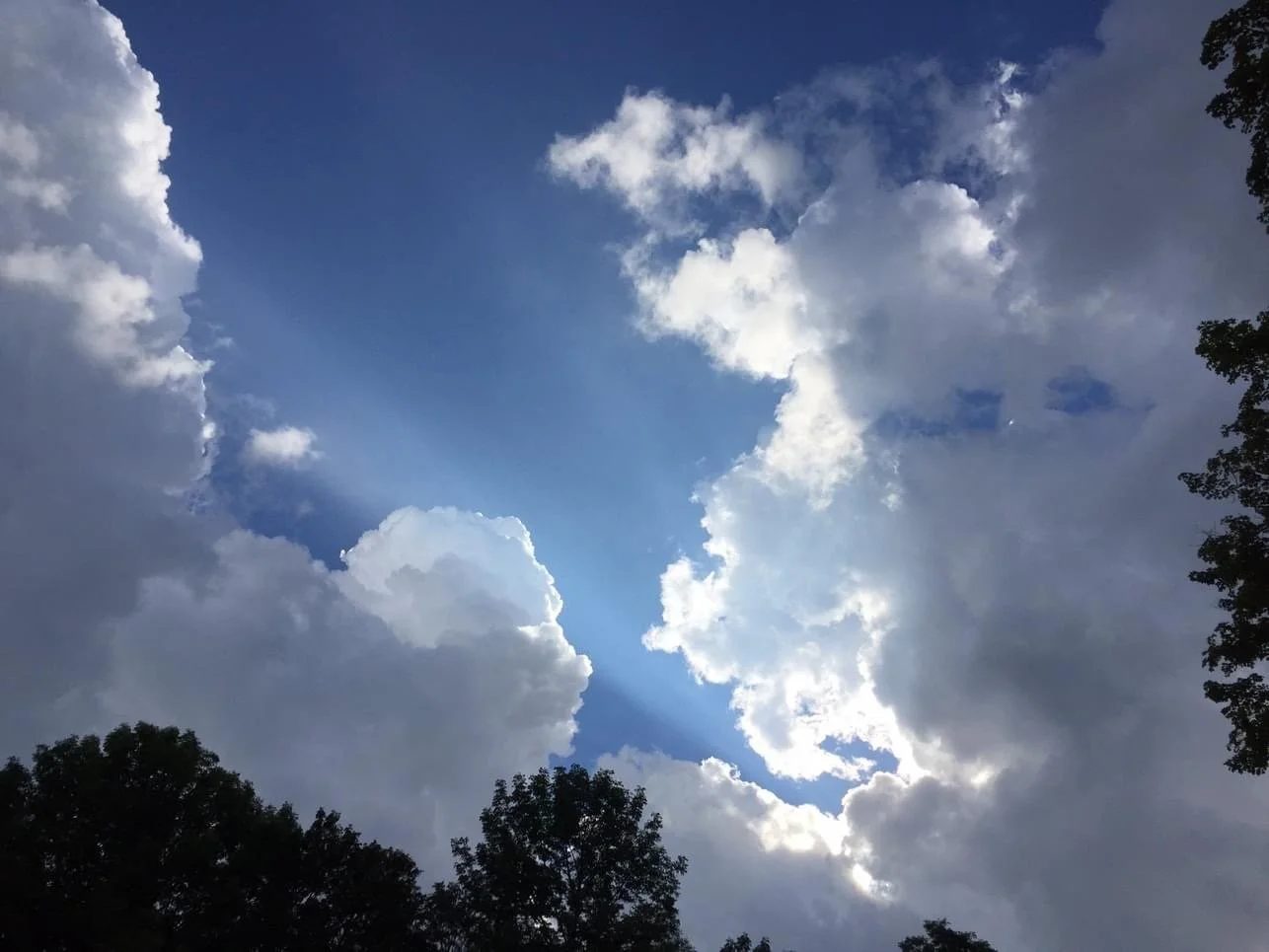
Visiting the Elements — Air
Where water offers us moisture and connection, Air provides us with oxygen and spaciousness.
Dwell in possibility . . .
Emily Dickinson
Air - Breathing and the value of the space between
Looking at how the essential elements on this beautiful planet can help us respond to these tumultuous times. This is the second in a series on visiting the elements. The last post explored Water; today we’ll be visiting Air.
Where water offers us moisture and connection, Air provides us with oxygen and spaciousness.
Being composed of invisible gases, Air reveals itself through movement. It breezes and blows. Winds prevail, gust, and subside. Air, like water, is mutable. Where water responds to gravity, Air responds to differentials in pressure and temperature—moving through updrafts and downdrafts. Water is dense. Air is nebulous. Air is hard to define; it is, after all, the Air we breathe. Unseen, ever-present, Air is always felt by its presence or absence.
Let's look at Air as the substance we breathe, the mysterious element that wraps around our beautiful planet, and as the element that gives us a felt sense of spaciousness.
Fundamentally, Air is atmospheric. Air (from the ancient Greek "aer," meaning wind, atmosphere) isn't something we see. It is a life-giving, invisible gas that makes itself known to us through movement and a felt sense of space. The thin layer of atmosphere is primarily composed of three main gases: nitrogen, approximately 78%; oxygen, about 21%; and Argon, about 0.93%.
With that first breath, Air enters us. We begin to fully participate independently as human beings — we become by breathing in Air. Breathing in and out is participatory. We receive oxygen and offer carbon dioxide with each breath. We need oxygen, and plant life requires carbon dioxide to support its photosynthesis. When you go for a walk in the woods, you are in reciprocity with the plant life through your breathing. This is respiration.
In these BANI times, mindful breathing supports responsiveness over reactivity. It calms and integrates the mind, which is the foundation of creativity, according to Daniel Siegel, a renowned neurobiologist, in his book The Mindful Brain. Breath connects us to the present and to others, expanding our capacity for insight and innovation. Breath literally re-spirits us.
Giving loving attention to the breath, its rhythm and depth, supports us in being our most resourceful and fully human selves.
Breathing is our intimate relationship with the element of Air and life itself. When we take our last breath, the spirit leaves us.
The late neurosurgeon Paul Kalanithi wrote a beautiful memoir, When Breath Becomes Air, about the preciousness of time, life, and breath. (Tissues may be needed . . . )
*. * *
I can't talk about Air without talking about spaciousness.
Between stimulus and response there is a space.
In that space is our power to choose our response.
In our response lies our growth and our freedom.
Attributed to Victor Frankl
Air offers us the experience of spaciousness and expands things with its presence. Air gives us access to the quality of awareness itself. How often do you think or say . . .
"Can you give me a minute?"
"I'd like to sleep on that."
"Let's take a walk; I need some air."
Human beings need space in order to expand their awareness. Our attention tends to be aware of form and unaware of space. When we think of a house, we think of the form of the building itself and the things in it. This is why we tend to fill space so readily, in our rooms, in our calendars, and our minds. When we think of a home, we might think about the space it offers us. Space is where possibilities arise . . .
Learning to shift our focus to space can be a life-changing experience. Here are some ways to do that:
Plan for some nothingness: chunking time to step away from clock time and get into a flow — to do or not do anything in particular with all the lists set aside — is one way to start. I call this 'puttering,' and I try to have four hours of it every weekend, along with at least one hour a day. Sometimes, it turns out to be productive in unexpectedly marvelous ways.
Clearing the clutter in our homes and workspaces is another way. Just cleaning out a drawer in the kitchen or taking the trash off-site gives rise to an energetic shift and a good feeling in me. How about you?
Open Focus Training: If you want to explore Air further, then working with paying attention to the space between is a powerful perspective-shifting practice. Dr. Les Fermi and his colleagues have written extensively on this, and I highly recommend their books and the practices they offer.
A key practice outlined in his book, Open Focus Brain, is the "Expanding Awareness" exercise, which helps shift attention from a narrow, effortful focus to a more diffuse, relaxed state—what Fermi calls Open Focus. This state is associated with synchronized alpha brainwaves and can reduce anxiety and increase possibility thinking.
"Sensing Space" or "Feeling the Space Between" (Click here for a recording I made to guide you)
Find a quiet safe place where you won’t be interrupted for 10-15 minutes or so
Settle In: Sit comfortably, look around you, and just notice your surroundings. Close your eyes and take a few deep breaths.
Shift Attention to Space: Rather than focusing on objects (like sounds, thoughts, or sensations), shift your attention to the space around and between those things.
You can start this way:
Notice the space between your eyes.
Feel the space between your ears.
Notice the space between your chin and your sternum.
Hold up your hands and become aware of the space between your fingers.
Become aware of the space in the room around you.
Notice the spaces between the objects or people in the room.
Extend your awareness to the space outside the room.
And so on
Diffuse Your Focus: Offer a soft gaze by letting your attention become panoramic and soft, not fixed on anything in particular. Allow awareness to spread evenly.
Stay Open and Soft: If thoughts arise, gently bring your attention back to sensing space—between, within, and around you.
Practicing this regularly encourages the brain to operate in a more balanced and coherent mode. Increasing our capacity to shift perspective enables us to find creative solutions and engage in strategic thinking that is so necessary in these challenging times. I also find this practice playful and fun.
To be inspired is to be infused with an ethereal element— Air. Through mindful breathing and spaciousness, our mental capacities increase. Air is associated with ideas. Perhaps inspiration is our human version of photosynthesis.
Next up in this series is Earth . . .
And a poem by a Vermont poet I follow . . .
Inhale by James Crews
You can only exhale for so long,
giving and giving and giving some more
before the whole body cries out
like an empty cup to be filled again
by the in-breaths that will restore
your own supply of air. Find some quiet
corner tonight far away from screens,
which steal both time and mind, and hear
the whisper of the one true voice inside
that grows louder the longer you listen
like a song that was sung into you
along with the first startled breath
you took on the day you were born.

Visiting the Elements — Water
In the midst of this gorgeous ruckus, I have been quiet. Listening for how to respond instead of react.
What do we do now?
In the midst of this gorgeous ruckus, I have been quiet. Listening for how to respond instead of react. I’ve been feeling myself wanting to find and then offer some crystalline drop of wisdom, and I’ve been coming up short. I’m humbled by the truth of not knowing. I’m in awe of the power of the pause, and yet it is difficult to withstand the desire to know in the face of such profound uncertainty. The futurist Jamais Cascio has developed a term for what I call the gorgeous ruckus. He calls what we are all currently experiencing, BANI. Brittle, Anxiety producing, Non-linear and Incomprehensible. This term, born out of his desire to capture how it feels to be experiencing this chaotic world, is helpful though sobering. Click here to hear him describe it in this video. (It’s a little long but worth the watch!) In such chaos the mind twirls, the heart closes, and intention that inspires active hope and creativity loses touch with its North Star. How can we all find our most resourceful responses to a BANI world?
I am alongside entrepreneurs and leaders as they navigate the shattering of norms and structures that is occurring in our world. As Jamais Cascio points out, we are trying to find options when there are no “good” options, no clear path forward. Collectively, we’ve been given everything we need on this beautiful planet — The task is to learn to thrive and to love each other well. We humans continue to struggle with doing the right thing, even when we know what that is and have the technology to accomplish it. My sense is we are not going find a way forward; we need to forge it. I believe we must all attend to the future and become good ancestors.
One thing is certain— even how we approach change has to change! I tend to look for underlying essentials to find leverage points. Fundamental patterns and archetypes inform my methodology, along with many business and change models. So, over the next few weeks I’m going to suggest that we visit the Elements of Nature — Water, Air, Earth and Fire — to find our most resourceful responses.
Starting with Water.
Our bodies are comprised of about 70% water. Water gives us access to our receptivity, fluidity and to our emotional intelligence. Water moves and fills. It nourishes and destroys. Water rushes, flows, rains down and goes calm. It freezes and melts. Water forms into waves and it holds surface tension in the form of drops. Water crashes and drips. It mists.
Water reminds us that whatever is moving through us in this moment will change.
Being near water gives our spirit moisture and our actions fluidity. Water brings empathy to our thoughts. Water carries delight as well as grief.
Practices to connect with the element of water:
Walk alongside water. A river, lake, marsh or the sea. Pay close attention to how being alongside this element connects you with your senses and your emotions.
Be in water. Take a swim, a bath or a shower. Feel how the water soothes, cleanses, energizes you. Perhaps a new idea coalesces during this immersion?
Water your plants mindfully. Drink water and invite yourself to really taste it. Pour water from one container to another. Paint with water colors . . .
Move with or against the flow. Go for a stream walk if you can. One of my favorite pastimes is walking in the very center of a stream. Moving upstream against the rushing water and staying right in the center of its intensity, and then turning downstream and tuning into the very different quality of moving with the flow. Stream walking connects me with something essential, something core. It is like experiencing my essence without any words. Give it a try.
Water is a necessary component to developing resilience — to developing the capacity to respond to the structural shattering we are all experiencing by coming back stronger. Water is transformative: continually evaporating and then returning in new forms.
Water offers us our intuitive, empathetic, emotional intelligence. It connects us to our essential selves, our grief, and to a renegade delight!
I hope this lands in a helpful way.
Next week, I’ll add the element of Air to the mix.
Warmly yours, Lyedie
And here is a poem that is wildly apropos by Rosemerry Wahtola Trommer
This moment I want to remember . . .
when my friend filled the giant
white stone resin tub with great mounds
of frothy eucalyptus lemon
scented bubbles and water as hot
as she could stand and I walked in
to find her laughing, laughing!
head thrown back and eyes alive
with her great luck to find herself
here “in a millionaire’s bathtub,”
her giddy giggles ricocheting
around the tiled room, radiating
gladness and naked joy, and though
only her head was visible above the bubbles,
I saw her, really saw her as herself,
the uncurated version—that glorious
creature we so seldom chance to glimpse
in each other. As I walked away, her voice
followed me up the stairs, full-throated
and citrus bright as she sang out
her bliss, the words indecipherable,
the tune a tune I’d never heard before
but somehow knew by heart.
Steadying ourselves with Beauty, Truth and Goodness
“I wish it need not have happened in my time,” said Frodo. “So do I,” said Gandalf, “and so do all who live to see such times. But that is not for them to decide. All we have to decide is what to do with the time that is given us.” J.R.R. Tolkien, The Fellowship of the Ring
November 2024
“I wish it need not have happened in my time,” said Frodo.
“So do I,” said Gandalf, “and so do all who live to see such times.
But that is not for them to decide. All we have to decide is what
to do with the time that is given us.”
J.R.R. Tolkien, The Fellowship of the Ring
Good morning from my blue chair,
Continuing to work with holding steady along with taking swift action, I’m writing to share my annual November reflective writing practice with you . . .
This November practice invites you to reflect back carefully over the year through the lens of Beauty, Truth and Goodness. On this fresh morning the world does seem to be in a ruckus — and when I dropped into this writing practice myself, I found the ruckus as well as some solace. These are hard times to keep our hearts strong and open. It appears that collectively we are not doing so well with sharing power. There are winners and losers everywhere. So finding the beauty, truth and goodness has become all the more compelling as we seek to steady ourselves and find a way to contribute somehow.
For those of you who have dropped into this practice in years past, you will see that I’ve kept it the same, confident that these questions will always bring a fresh response as we look back over the past year to find the Beauty, Truth and Goodness that is there.
Carve out some time to reflect on the last year in your journal. (Pulling out your calendar to jog your memory might be helpful.) With pen in hand or fingers on your keyboard, soften your gaze as you scan back over the past year and respond to the prompts below. You can do this for the year in one sweep or take each season as I suggest below. The invitation here is to be responding to these prompts four times, beginning with the winter a year ago. (Could take you as long as an hour or so to complete . . . ) Significant milestones or intimate moments in your answers are all appropriate. I think you will find that specificity gives wonderful depth to the process.
For each of the seasons, Winter, Spring, Summer, Fall:
Describe a time that you experienced beauty.
In what way(s) were you the cause of something beautiful?
In what way(s) was a hard truth revealed to you?
In what way(s) did you reveal or speak a hard truth?
In what way(s) was a beautiful truth revealed to you?
In what way(s) did you reveal or speak a beautiful truth?
In what way(s) were you on the receiving end of goodness?
In what way(s) were you the cause of goodness?
Upon completion, give yourself a little time to let your responses settle in you. Take a walk or a bath, if you can, and take in the beauty, truth and goodness that you found when you put pen to page. Stay with the hard truth that may have surfaced and seek support from wise loved ones if you feel the need. You might want to capture some further reflections before moving into the fullness of your day or evening.
I’ll be posting my annual year end practice in December, which will give you an opportunity to look ahead and consider any reorientation, renewed commitments, or actions that all of this may inspire in you.
May we all find our way to contribute. May we all wage peace . . .
Warmly, Lyedie
One final note: Yesterday morning in our writing group a friend read this poem and it landed for me, so I thought I’d share it with you.
How the Light Comes
I cannot tell you
how the light comes.
What I know
is that it is more ancient
than imagining.
That it travels
across an astounding expanse
to reach us.
That it loves
searching out
what is hidden
what is lost
what is forgotten
or in peril
or in pain.
That it has a fondness
for the body
for finding its way
toward flesh
for tracing the edges
of form
for shining forth
through the eye,
the hand,
the heart.
I cannot tell you
how the light comes,
but that it does.
That it will.
That it works its way
into the deepest dark
that enfolds you,
though it may seem
long ages in coming
or arrive in a shape
you did not foresee.
And so
may we this day
turn ourselves toward it.
May we lift our faces
to let it find us.
May we bend our bodies
to follow the arc it makes.
May we open
and open more
and open still
to the blessed light
that comes.
by Jan Richardson

Summer Mudra — Fire element
Continuing with my offering of Tai Chi Mudras that my teacher, Virginia Scholl, has been sharing with my Tai Chi class.
Here Virginia goes through the Summer Mudra 3 times, with the last in silence. Follow along with the transcript to the left.
Summer Mudra — The Element of Fire
Continuing with my offering of Tai Chi Mudras that my teacher, Virginia Scholl, has been sharing with my Tai Chi class.
Summer is the season of fire according to Tai Chi Philosophy, it is a full yang season wherein we collect the warmth to last all year. The ability to love is essential to fire. To come from the heart with our inner fire. To radiate our true fire out into the world.
May the flame
Within me
Shine forth
May it open my heart
So that the warmth and radiance
I put out into the world,
Comes from a place of compassion.
When the fire element is balanced within us,
we are accessible and responsive to others,
and able to communicate clearly with them.
We are able to love deeply
and be loved deeply.
We can live with abundant spirit
and walk the unique path chartered
by our own, no-other-like-it heart.
The fire phase encourages us to mature
and to flourish, to lighten up
and explore the adventures of life.
Fire helps us to be spontaneous and express
our true nature to the world.
The warmth, passion and joy of Fire
are available to us each moment
that we stay alive to ourselves
and to the fullness of life in others and in all nature.
~ Ann Bailey
Developing Swiftness
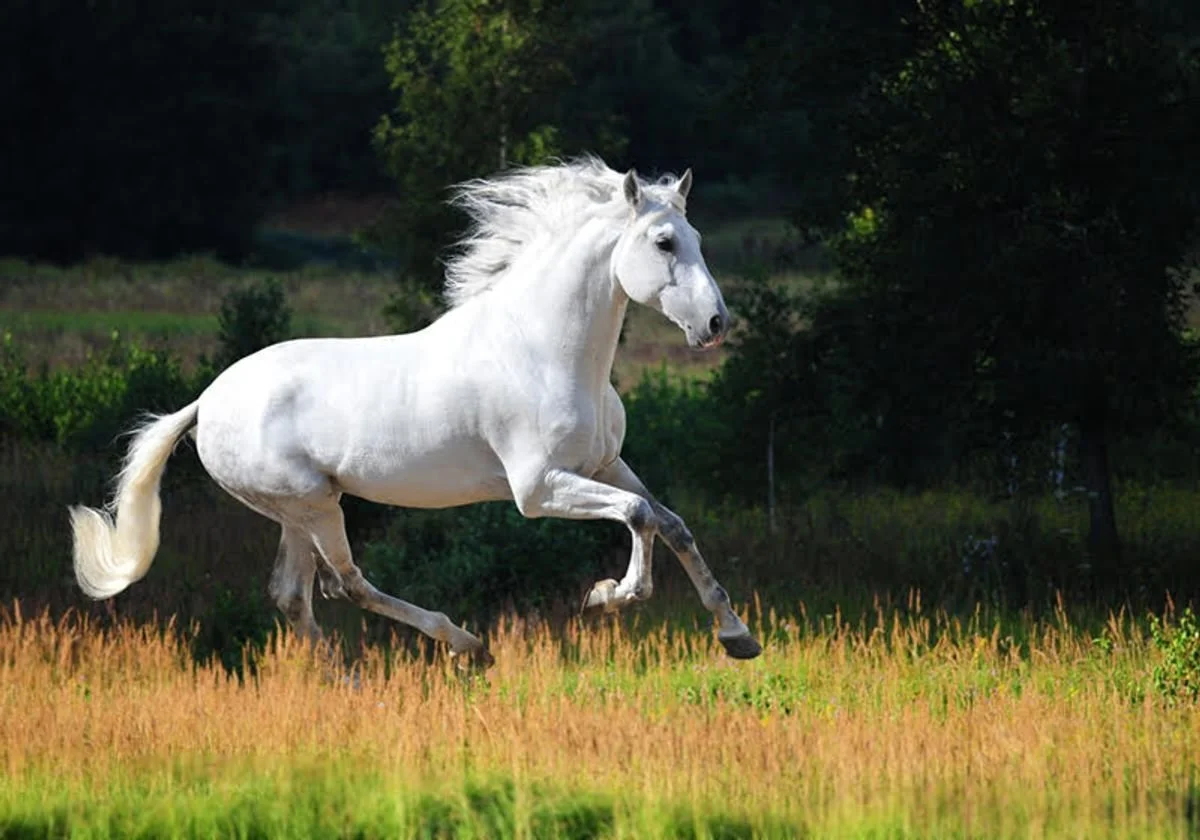
I take great pleasure in inviting my clients to see themselves as an instrument — an instrument of creativity and love.
Swiftness - The second of my June two part series
I take great pleasure in inviting my clients to see themselves as an instrument — an instrument of creativity and love. And then to begin to hone their instrument on behalf of their deepest longings. That is the essence of my work. Lofty stuff, I know.
This is my way-in to capacity building. It is metaphorical and true. We develop ourselves by honing that instrument of Self. Swiftness and steadiness are capacities that we can hone. Steadiness, the subject of my last post, lays the ground for us to fulfill those longings and contribute to the world. Swiftness is a robust response to the world on behalf of seizing opportunity or mitigating harm. Honing these two expands our ability to pace ourselves — expands the range of our instrument of Self.
Swiftness, as I’m defining it here, is being able to move quickly — to make astonishingly good use of time without rushing. Swiftness isn’t a steady state to aspire to. Swiftness is something you reach into when you need it.
Swiftness is needed when you have only half an hour to get the kids on the bus to school and they still need breakfast.
Swiftness is called for when you need to get out of harms way. Swiftness is necessary to halt an injustice as it unfolds.
Swiftness give us access to immediacy in communication and action.
We reach into it to catch opportunities as they arise — chances to make a difference, ideas before they disappear, real estate, jobs, love interests . . .
When you initiate swiftness your focus narrows and your sense of time tends to change. Time becomes more elastic and seems to stretch out. You manage to be able to accomplish something more quickly than your rational mind might anticipate.
EMTs know about it
Musicians know about it
Journalists know about it
Waitresses know about it
Mountain bikers know about it
Soccer and basketball players know about it
Wolves and birds of prey know about it . . . so do deer and bunnies
Tinkerbell is masterful at it . . . :)
Swiftness requires leaping into “the zone”. It is a warrior skill worth honing in our everyday lives. From a playful point of view it is Warrior magic with Tink as its patron saint.
Here are a few suggested practices to develop swiftness:
To develop the capacity for swift action — somatic practices
Get up in the morning and hurl yourself out the door for a fast walk. Make it short and quick ( 10 minutes). Observe what happens in your body when you ask it to go from rest to speediness. How much resistance do you feel? Notice your heart rate rising. Appreciate the burst of energy you initiated.
Initiate a few jumping jacks, or try jumping rope for a few minutes. Notice how quickly you can get your arm and legs moving. How often do you ask of this from your body, mind, and emotions?
Play pickle ball or tennis — Go after the ball . . .
Kick boxing will help develop swiftness as well as assertiveness - Bad ass :)
Practice showing up as an unexpected glimmer . . . 🌟
For some swiftness is readily available. For others, whose nervous systems tend towards freeze or fawn, it may take some practice to develop the neural pathways for swiftness. Swiftness is most resourceful when it rises up out of a grounded observant state, springs into efficient action and then returns to a certain satisfied calm. From steadiness to swiftness and back to steadiness is a resourceful way to operate.
To develop the capacity for swift communication — Clear and direct
Practice distilling down what you want to say as quickly and clearly as you can. Here are four elements that can help do that when you are anticipating hard communications. Try asking yourself these questions and journal your answers. Adapted from Clean Talk, a dialogue process from Dialogos
What do I see happening here? Start with the data . . .
How do I feel about it?
I think my feelings are a result of this perception . . .
What I would like to see happen is . . .
What am I clear about here? What can I communicate now? Be willing to say, I don’t know. Be willing to ask clarifying questions. Ask for or define next steps.
Practice communicating as soon as you can. Identify what you are clear about. Be willing to communicate uncertainty or unknowns.
Here are some things to reflect on: How swiftly do you communicate? When something is hard, do you put it off? When you have something to celebrate do you hold back? Check to see whether you are being honest with yourself about whether you are looking for right timing, or procrastinating.
Swiftness doesn’t require rushing, it requires clarity. It requires communicating what it is that you are clear about, not pretending that you are clear when you are not. These are some of the practical elements of developing swiftness. But Tinkerbell’s mastery is in how she delights in astonishment! 🧚🏽♂️
Then there is the fine art and science of knowing when to act swiftly and when to hold steady. That is a conversation for another day . . . :)
Cultivating Steadiness
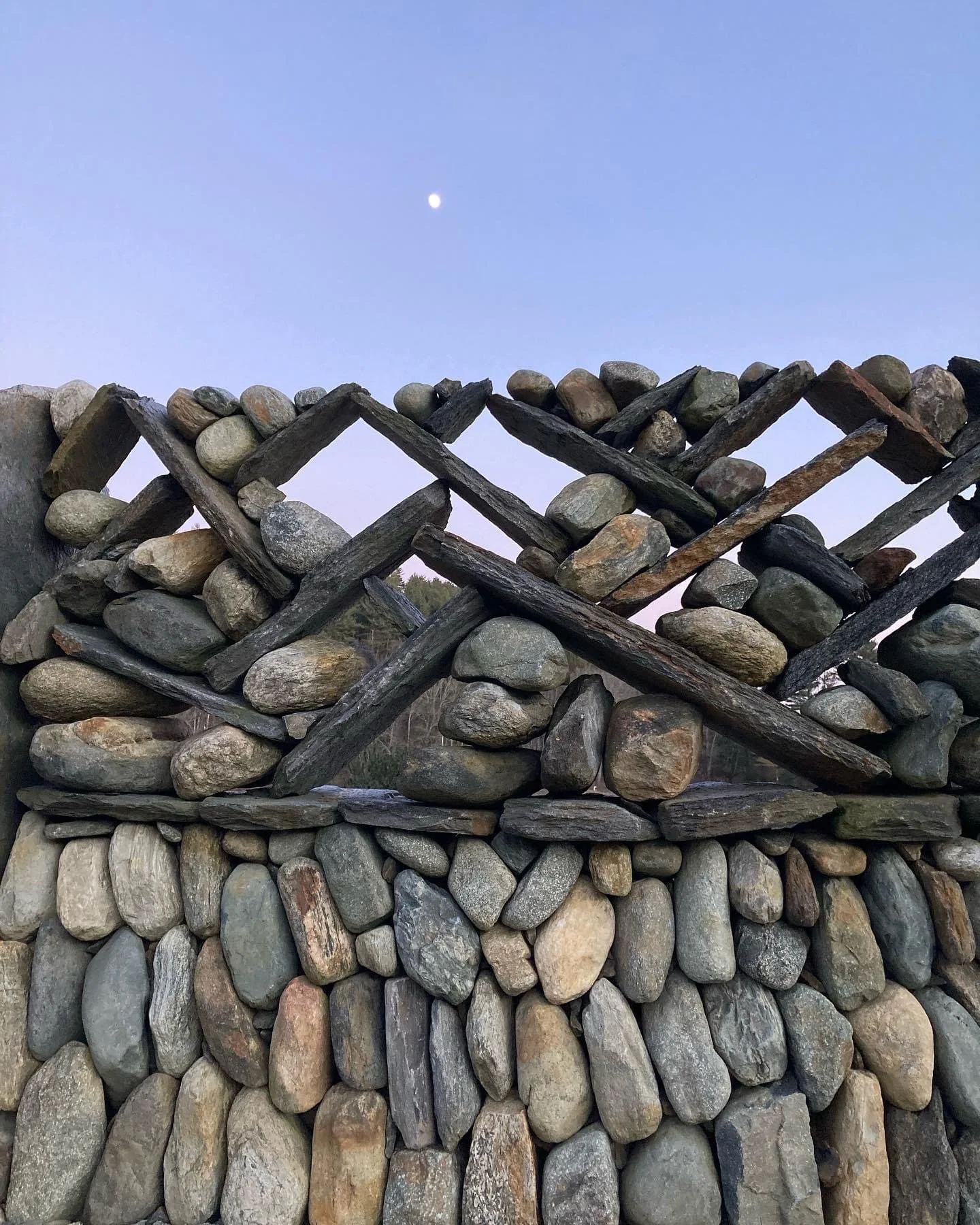
Lately I’ve been appreciating steadiness.
June 2024
This is the first of a two part series — Steadiness and Swiftness
On cultivating steadiness . . .
Lately I’ve been appreciating steadiness.
A few weeks ago, I was talking with my sister on the phone. We talk fairly often and we began this conversation by touching in on the weather and the news-that-sure-looks-bad . . . Then I blithely started asking her about the progress she was making on fixing up her apartment, her garden, and projects at work. She let me go on for a bit — then she gently but firmly stopped me in my tracks, “Lyeds, right now I’m just working on steadiness.” She took me right down with that one — humbled me beautifully.
What great pointing directions she gave me that morning! The value of steadiness has been showing up ever since.
Being steady— a steady presence, making steady progress, being a steadfast ally requires being able to manage our nervous system so that we can access our most resourceful selves. Holding steady within ourselves and on behalf of others is kind of a radical guiding star intention in a culture that privileges hastily made progress and being busy getting things done.
So I thought I’d share a few tiny-little-practices to cultivate steadiness:
Step outside for a few minutes in the morning. Locate a place near your doorway to stand and face towards the sun that rises every morning with remarkable consistency. Tune in to the rhythm of your heartbeat and the steady rising and falling of your breathing. Allow your breath to drop down towards your belly until each one is a full belly breath. Notice any impulse to rush into the day. Whisper to yourself, “There is time enough for this precious moment to be savored . . . “ Savoring, I’ve discovered has a steadying influence. (2 minutes, preferably barefoot)
Look for opportunities to be alongside big old trees whenever you can. Let them be the shoulder you can rely on, and the inspiration to attune to their steady presence.
Think of the people in your life who offer a steadying presence, furry friends and winged companions, too. Offer them some regard for that gift that often goes unnoticed.
Whenever you reach for banisters, railings, grab bars, gunwales on a boat, recognize that someone put them there to steady you. The world is full of them.
Consider the brilliance of the invention of the centerboard in a sail boat. Imagine yourself at the helm of a day-sailer in a fresh breeze— when the wind picks up heeling you over as you gain forward motion you have that centerboard to put down to stay balanced and centered. With this imaginary centerboard you can seize the opportunity that a fresh breeze offers and keep from taking on water, or tipping over altogether.
These are just suggestions. There are many ways to cultivate inner steadiness and foster steady relational fields. I’ve discovered that steadiness is achieved by showing up with a mixture of substantial-ness and the rhythms of routine. And then there is always my imaginary centerboard.
Let me know what you discover if exploring this inspires you.
And finally, a poem by Emilie Lygren
The News
Each morning we listen for what is breaking—
the sound of a thousand tragedies fills the air,
shattering that never stops,
headlines, a fleet of anchors tangled at our feet.
We watch, worried
if we turn away even for an instant,
it will all crumble the rest of the way.
Forget with me for a moment.
Take an unguarded breath.
Do it now, the world needs your attention here, too,
on the rise and fall of your shoulders,
the rustle of leaves outside the window,
the warm space between your gaze and mine.
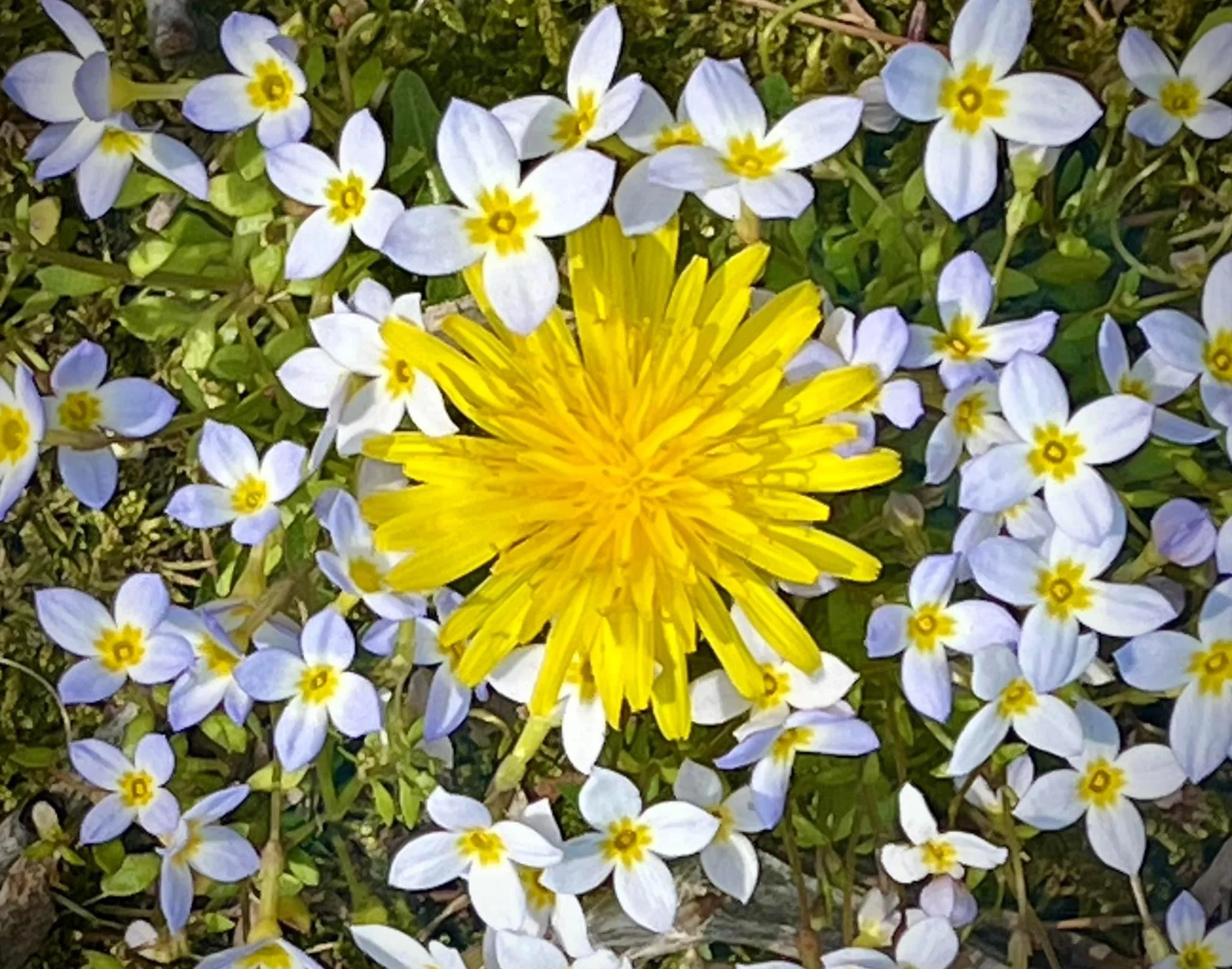
Spring Mudra - Elements of Wood and Wind
Continuing with my offering of Tai Chi Mudras that my teacher, Virginia Scholl, has been sharing with my Tai Chi class.
Spring Mudra – The Elements of Wood and Wind
Continuing with my offering of Tai Chi Mudras that my teacher, Virginia Scholl, has been sharing with my Tai Chi class.
Spring is the season of wood and wind according to Tai Chi Philosophy, it is also associated with waking up, pushing up and out from the depths, a renewed energy. A youthful masculine energy emerges at this time of year — grandiose and pushy at times! This is a time of new beginnings when life bursts forth in uninhibited joy, when hope returns and everything is growing towards the light.
There is incredible drive and determination available during this season of wood and wind. This energy can take us away with it, giving rise to impatience and impulsivity. Conversely it can be hard to meet, resulting in feeling overwhelmed and even a bit depressed in the presence of the all the greening and blooming. If we, like the trees around us, are well rooted deep in the earth and in our past, we can stand tall in the present moment and reach toward our visions for the future.
Practicing this Mudra supports me helps me to fully accept the invitation spring offers. I urge you to try following along with Virginia in this video. It takes only a few minutes, even if you slow it way down. It is a lovely way to begin or end your day
Whispering these words to yourself quietly as you learn the movements:
Holding these seeds in my hands and planting.
The roots push down, stems push up into, buds, and flowers.
Then falling back down to earth
to bring what is inside to the outside.
And standing in this present moment, I acknowledge
Where I have come from and where I am going
With strength and kindness to bring me home.
Here Virginia goes through the Spring Mudra 3 times, with the last in silence. To activate subtitles, click the CC square in bottom bar.

Accepting Winter's Invitation - Activating the Stillness
Breaking News: Winter is releasing its grip.
February 4th
Breaking News:
Winter is releasing its grip. Here we are, midway between the Winter Solstice and the Spring Equinox. On this archeoastrological day of Imbolc . . . you can trust that delicate awakenings are occurring in the deep.
I am continuing with my offering of Tai Chi Mudras that my teacher, Virginia Scholl, has been sharing with my Tai Chi class. Winter is the season of water according to Tai Chi Philosophy, it is also associated with going into the depths and with stillness. Practicing this Mudra helps me to accept the invitation that is inherent in winter. Especially, if you find this time of year difficult, I urge you to try following along with Virginia in this video. It takes only a few minutes, even if you slow it way down. It is a lovely way to begin or end your day.
Whispering these words to yourself quietly as you learn the movements:
May I rest in the stillness of winter
May I cherish my dreams and my intuition
Guide me from fear to courage
And teach me to look deep in the mirror of my soul
Here Virginia goes through the Winter Mudra 3 times, with the last in silence. To activate subtitles, click the CC square in bottom bar.
Turning Towards Next:
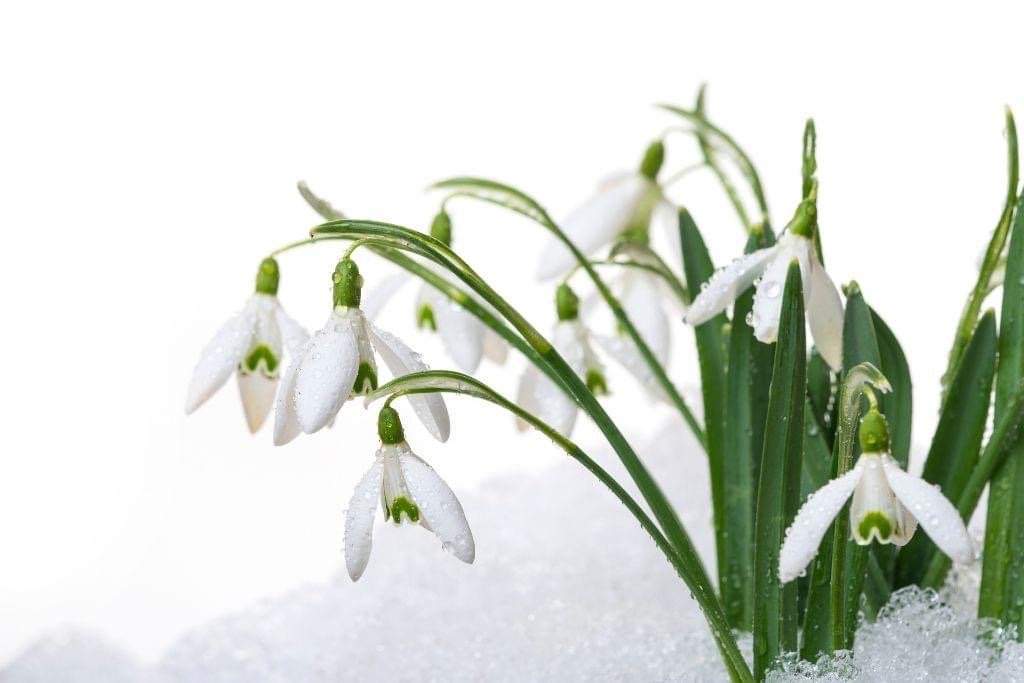
The resolutions of the calendar new year are shedding their grandiosity. This is a good time to gently turn into the rising energy of the year and see what is emerging in you and in your life. Gardeners pull out their seed catalogues — I find it is a good time give a few hours to turn towards what is next by consulting with the Wisdom Council. You can find those reflection questions by clicking here. Perhaps it is time to sort the seeds of your new years resolutions and decide which ones to nourish with your attention and energy?
Perhaps you feel some new stirrings and desires that are wanting to emerge...
The days are lengthening.
The sun is strengthening.
The energy is shifting, but it is very subtle at this threshold. It takes courage to stay with the intimate stillness of winter. It takes holding power, being a source of warmth for yourself and others . . . and sensing into messages that are gestating in the stillness of winter.
I hope you are wintering well!
Warmly, Lyedie
And please note: Next up is Spring!
Thanks to Elizabeth Ungerleider for her photo
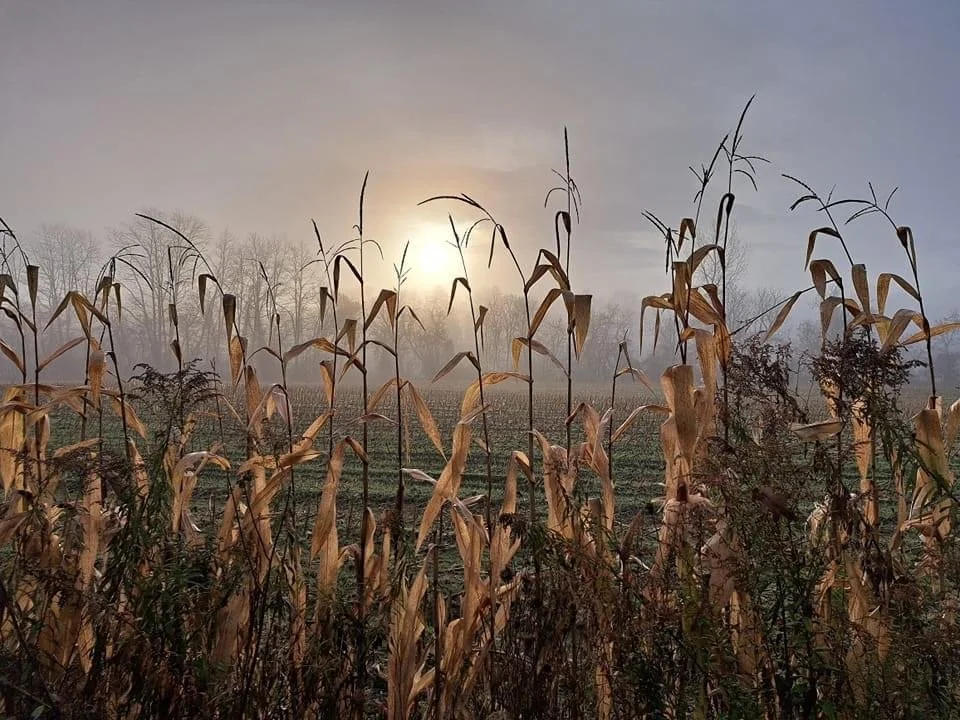
Beauty, Truth and Goodness on this fresh morning, in this broken world . . .
I’m writing to share the first in a series of my annual reflective writing practices with you.
it is a serious thing
just to be alive
on this fresh morning
in this broken world
- Mary Oliver

Good morning from my blue chair,
I’m writing to share the first in a series of my annual reflective writing practices with you. This November practice invites you to reflect back carefully over the year through the lens of Beauty, Truth and Goodness. On this fresh morning the world does seem broken and when I dropped into this writing practice myself, I found the brokenness as well as the wholeness — These are hard times to keep our hearts strong and open. So finding the beauty, truth, and goodness has become all the more compelling as we seek to steady ourselves and find a way to contribute somehow.
For those of you who have dropped into this practice in years past, you will see that I’ve added a new element this year — prompting you to look into both the beautiful and hard truths which are revealing themselves.
Here is the revised practice: Finding the Beauty, Truth and Goodness in the Year
Carve out some time to reflect on the last year in your journal, and then ideally to take a walk or a bath. Pulling out your calendar to jog your memory might be helpful. Then I suggest just softening your gaze back over the past year and responding to the prompts below. You can do this for the year in one sweep or take each season as I suggest below. The invitation here is to be responding to these prompts four times, beginning with the winter a year ago. (Could take you as long as an hour or so to complete . . . ) Significant milestones or intimate moments in your answers are all appropriate. I think you will find that specificity gives wonderful depth to the process.
For each of the seasons, Winter, Spring, Summer, Fall:
Describe a time that you experienced beauty.
In what way(s) were you the cause of something beautiful?
In what way(s) was a hard truth revealed to you?
In what way(s) did you reveal or speak a hard truth?
In what way(s) was a beautiful truth revealed to you?
In what way(s) did you reveal or speak a beautiful truth?
In what way(s) were you on the receiving end of goodness?
In what way(s) were you the cause of goodness?
Upon completion, give yourself a little time to let your responses settle in you. Take a walk or a bath, if you can, and take in the beauty, truth and goodness that you found when you put pen to page. You might want to capture some further reflections before moving into the fullness of your day or evening.
I’ll be posting my annual year end practice in December, which will give you an opportunity to look ahead and consider any reorientation, renewed commitments, or actions that all of this may inspire in you.
May we all find our way to contribute. May we all wage peace . . .
Warmly, Lyedie
Every morning you rise, I want you to remember this:
there are amazing things
to be a part of,
and fight for,
and feel,
because the world
will unlock hundreds
of doors when you
give this day
all the courage, love,
and intensity
you can.
Victoria Erickson (author, The Edge of wonder)
Photo credit goes to Gay Foster with gratitiude
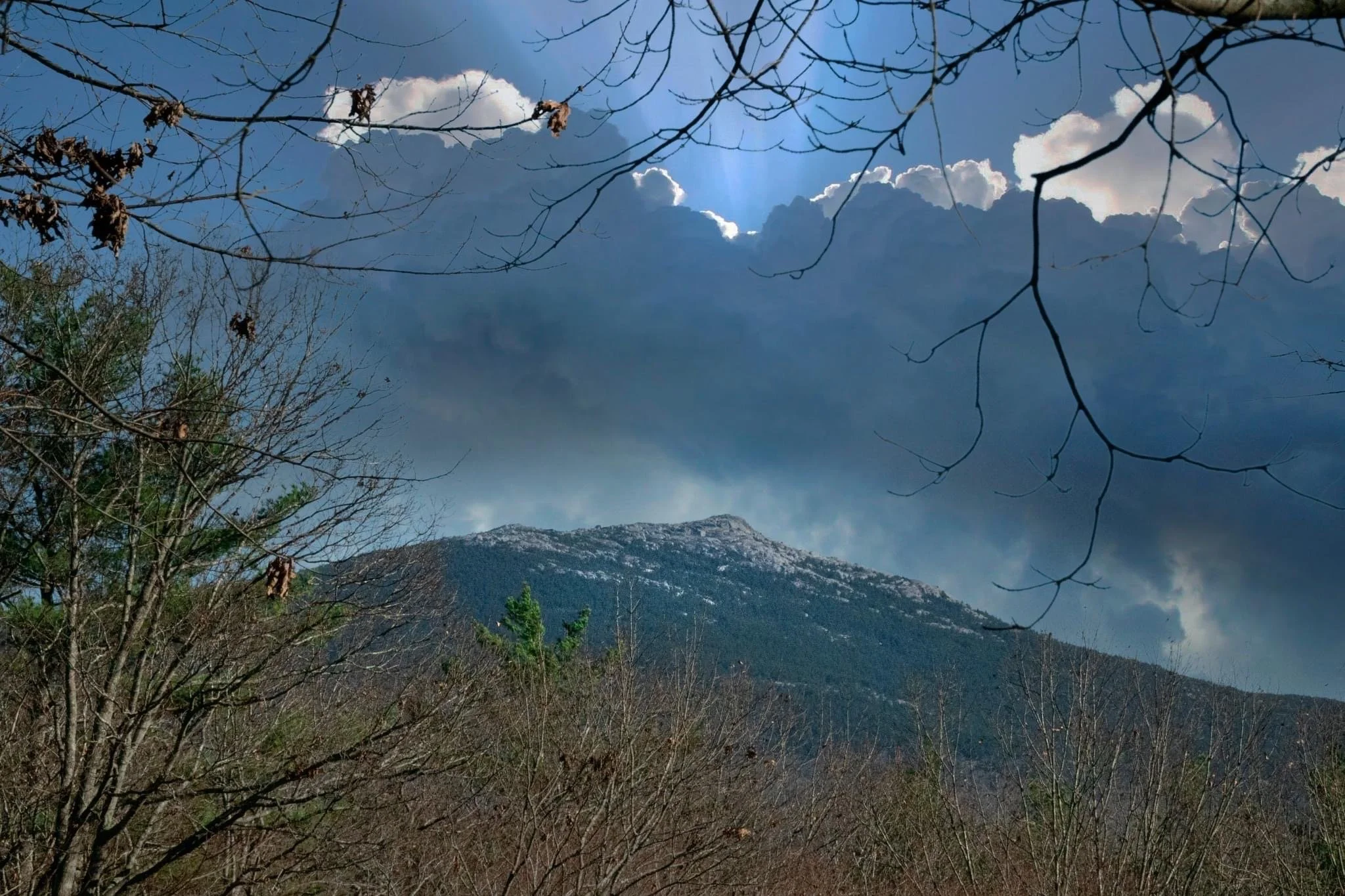
Activating Mountain Energy - Practices for invoking late autumn Grace
Here I am continuing with my offering of Tai Chi Mudras that my teacher, Virginia Scholl has been sharing with my Tai Chi class.
Here I am continuing with my offering of Tai Chi Mudras that my teacher, Virginia Scholl has been sharing with my Tai Chi class. Late Autumn is the season of Metal according to Tai Chi Philospohy, it is also associated with Mountain Energy. I’m struck by how this Mudra invokes a sovereign capacity that many of my clients are stepping into as they develop their ability to take leadership in their personal and professional lives. The sovereign capacity, as I define it here, is the ability to hold a vision through the ebbs and flows of time, to affirm self and others, to be deeply trustworthy.
So below you will find a video for the Metal/Mountain Mudra and a few sovereign building practices I’ve gleaned from practicing the Metal Mudra.
Here are a few practices to develop the sovereignty of metal / mountain energy in your daily life.
Endeavor to take a lesson from the trees — how they stand tall as they gently let go of their leaves - to relinquish that which has been brought to full harvest
Allow the sharp edged thoughts that arise in your mind to descend down into your heart where your compassion can soften and transform them
Look for the hidden treasures, even in these darkening times. And ask yourself if you’d be willing to receive these gifts
Look back out over the year as if you are on a mountain top. See all that you have received and all that you have lost from a heightened perspective that is also grounded by a wide base.
Invite yourself to trust that you are part of the great unfolding: Consider the time it took to form mountains, the time it took for the tree to form the leaves that are now drifting to the ground, the time it takes for grief to work its way through us.
Be the mountain in all its grace and sovereignty
To activate subtitles, click the CC square in bottom bar.
May the diamond clarity of mind
Descend to my heart
To reveal the treasures of my life
Accepting what I have received and what I have lost
And trusting what is invisible and what is hidden
Know that you are always eligible for grace . . .
More on Metal / Mountain Energy from my teacher’s teacher . . .
Of all the five element, perhaps it is Metal that we Westerners find most difficult to comprehend, The word usually evokes in us something rigid, sharp and uncompromising; something harsh, demanding or judgemental.
From a Chinese perspective, Metal is associated with the season of Autumn. It is a time of loss and grief, yet in its clarity and purity it brings us closest to the place of spirit and the work of bringing spirit into form. This is the abode of the sage, the Hermit and the Mentor, those who understand the lessons of receiving and releasing when experience turns into understanding. Autumn presides over all separations and asks us to turn inward, to examine what we have brought to full harvest, to decide what we need to keep and what we need to relinquish. It teaches us to know the balance between appreciating the beauty of life and mourning its loss. This is the time of year when we search for something uncorrupted; a time to turn inwards, a time to find the jewels, the treasures we hold within ourselves.
. . . Like the season itself, Metal spirit asks us to find what is of essential worth, what is of real value in our lives. Although its lessons are not easy ones, Metal’s spirit knows we are always eligible for grace. It teaches us to let go without giving up, without losing trust. It reminds us that with acceptance and surrender, we are able to let go of the old so that something new can be born.
Metal’s spirit knows we are always
Eligible for grace
It reminds us that we are never past healing
And never beyond hope
It has a purity that precludes judgement
And teaches us to trust our innate value
Metal asks us to find
What is of essential worth in our lives;
To understand the dynamic
Between appreciating the beauty of life
And mourning its loss
It is the holy grail
As well as the search for it
Cielle Tewksbury, November 2009
Activating Earth Energy - Practices for bringing strength to our compassion
I’ve found that life becomes distinctly more wonderful when we begin to work and play in accord with the seasons.
Life starts all over again
when it gets crisp in the fall.
~ F. Scott Fitzgerald
I’ve found that life becomes distinctly more wonderful when we begin to work and play in accord with the seasons. So I thought I’d share.
In Tai Chi the elements are closely associated with the seasons and the practice helps me find this accord. In the last few weeks my Tai Chi teacher, Virginia Scholl, has been attuning us to the transition from summer to fall by offering this Earth Mudra (see video below) to our small class. Surrounded by the bounty of autumn, we have been bringing in the earth energy I associate with heart centered warrior-ship. This energy, and the capacities that it gives rise to, are often needed by people who care deeply — Capacities like being centered, grounded, balanced, intentional in word and deed. This Mudra provides somatic support for bringing strength to our compassion. This is what I call grit.
Here are a few practices to develop earth energy in your daily life.
Endeavor to take on less and then stay with the projects you start.
Express yourself more clearly by saying what you observe, how it makes you feel and why, and what you would like to see happen. (Clean talk)
Listen to your own inner voices and take their messages seriously.
Lower your center of gravity so as to feel more centered in your self and be less thrown off balance by other people’s problems, needs, demands, or opinions.
Let the earth and the very substance of your body give you a sense of solidity; so that when you meet an obstacle, you can stay clear on your intention and work to find a way to solve the problem and move ahead.
Look for where the activities you are engaged in are generating results. Take a few moments to register these. Savor them and see them as your bountiful harvest. This will help you see the world as fertile ground for your good work.
Hold your ground. Feel your grit . . . :)
To activate subtitles, click the CC square in bottom bar.
Holding and being held by the earth
May I be centered, balanced, and rooted
And in my desire to nurture and care for others
May I remember to extend that same care to myself
Enjoy!
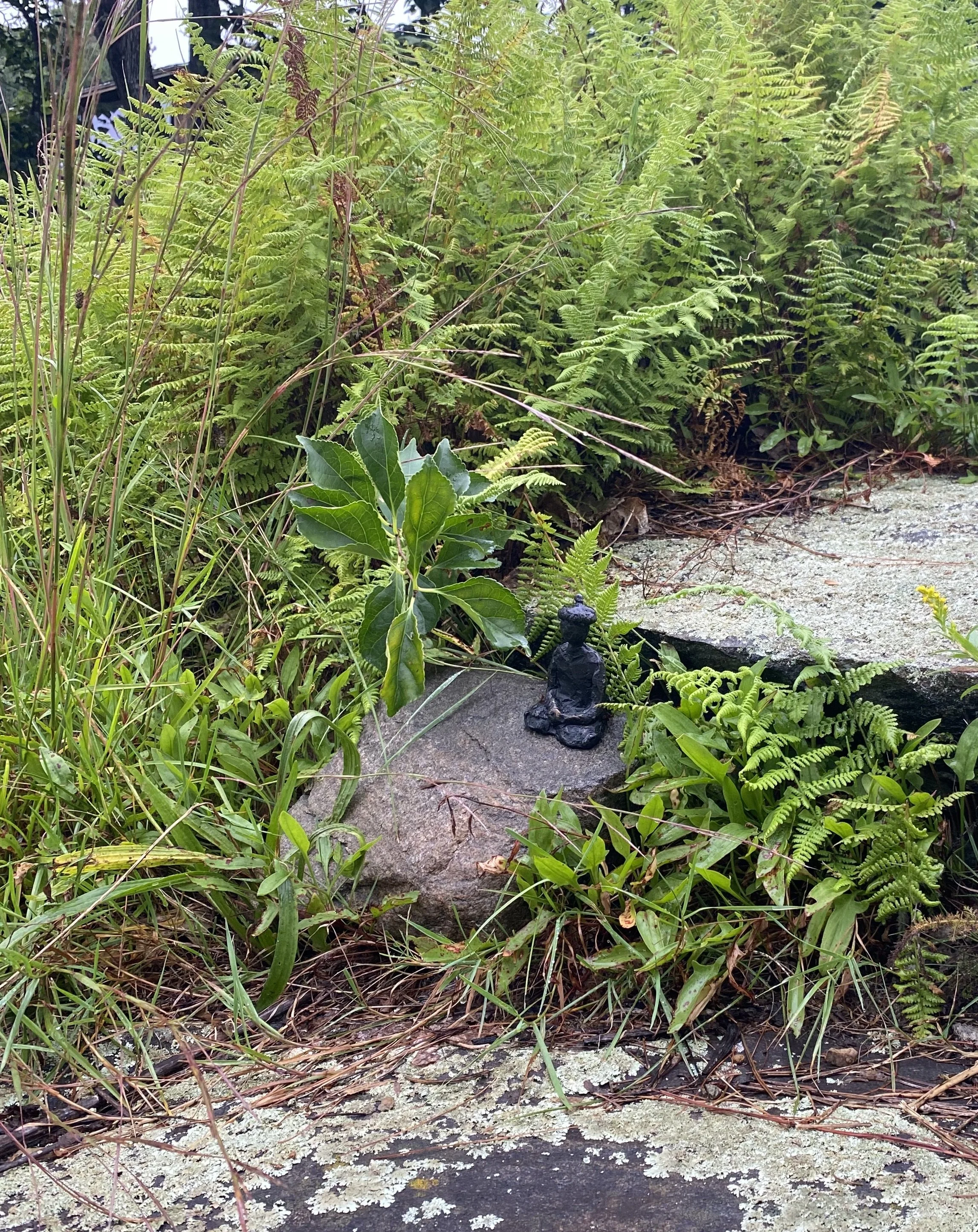
(Practices adapted from Tai Chi wisdom as written by Lorie Dechar; Bronze sculpture by Linda Hoffman)

Summer Solstice
Here we are in the fullest of fullness.
June 21st 10:57am in Putney, Vermont
Here we are in the fullest of fullness.
One of the great turnings.
May you find time to pause at the top of your breath in celebration.
May your dreams be blooming,
and the company you are keeping be kind, helpful, and inspiring.
I’m just grateful to be taking a little time away from calendar time to enjoy the languid lag that we all call summer . . . ☀️
Warmly, Lyedie
And here too is a poem by Tony Hoagland — a lovely nudge to pencil in “Sunlight.”
The Word
Down near the bottom
of the crossed-out list
of things you have to do today,
between "green thread"
and "broccoli," you find
that you have penciled "sunlight."
Resting on the page, the word
is beautiful.
It touches you
as if you had a friend
and sunlight were a present
he had sent from someplace distant
as this morning—
to cheer you up,
and to remind you that,
among your duties, pleasure
is a thing
that also needs accomplishing.
Do you remember?
that time and light are kinds
of love, and love
is no less practical
than a coffee grinder
or a safe spare tire?
Tomorrow you may be utterly
without a clue,
but today you get a telegram
from the heart in exile,
proclaiming that the kingdom
still exists,
the king and queen alive,
still speaking to their children,
—to any one among them
who can find the time
to sit out in the sun and listen.
by Tony Hoagland
Photo credit goes to Elizabeth Ungerleider
An Ode to the Clay Pot by My Kitchen Sink . . .
Elena brought a great prompt to our regular writing group a few weeks ago. She suggested that we write odes together.
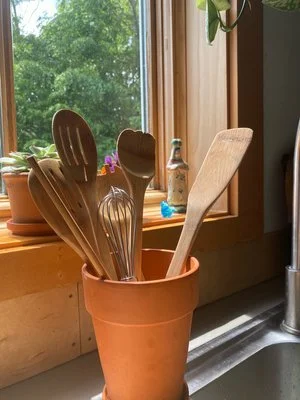
Elena brought a great prompt to our regular writing group a few weeks ago. She suggested that we write odes together. She described an ode as a poem or prose poem written to an ordinary thing that might need to be celebrated, and usually is not. Inspired by Elena’s suggestion, I dropped right in to writing about the clay pot by my kitchen sink. You could say that an ode brings the ordinary to extraordinary status. I urge you to try your hand at writing an ode or two — just to see what it opens up for you.
I had fun with this prompt and I’m struck by the sweet power of this form, which has both formal and informal interpretations. We spent 20 minutes writing together in long hand — here is a lightly edited version of what emerged from my pen that day.
The clay pot there by the sink is porous by nature. Flute shaped and open to the sky, she conceals an opening in her foot to release any overabundance of water. There too is her constant companion the terracotta dish to accept any overflow. (And she just took on a gender . . . )
Clay Pot is utilitarian, unadorned, a rich terracotta that deepens when she is wet. Her rim is a simple collar with a smooth lip. This one who sits on the edge of my kitchen sink has a cracked foot that is held together only because of her placement in the familiar of her dish. Created to receive soil and the roots of a plant, she has been commandeered to take on wooden spoons, spatulas, an occasional wet set of chopsticks. The kitchen scissors land here after a wash – rarely, very rarely, a sharp knife. (The household knife sharpener is scornful of such placement.) This Clay Pot is unusually tall, lanky even. She has accepted her plight near the faucet – alone.

Her line of descent would put her amongst others of her kind on a porch somewhere or nestled along a garden path. It was her tallness that attracted my attention, while I scanned the clay pot aisle at Agway, and I lifted her up and out of her original calling into this quiet occupation at my kitchen sink.
And now I realize that she is not so alone. Up across the sink, a wooden spoon is perched on the shelf edge – a kindred spirit – his elegant simple shape is untouched by a finish of any kind — whittled from cherry by loving hands. This poor chap has never fulfilled his purpose although the perch isn’t “decorative” as his presence is imbued with meaning that continues to unfold for me.
These two, clay pot settled on the drainboard longing for brown earth and roots pressing against her sides – wooden spoon wishing for that last caress of the finest sandpaper grit and thirsty for being dressed with an oil finish. These two keep each other company at my kitchen sink and contribute to the pleasure I take in being home.
The cracked angel has a twin, but that is another story.
There is a whole neighborhood here by my kitchen sink. As I wrap up this writing time, I’m seeing that they have “a life” of their own. Although I take great pleasure in my kitchen sink neighborhood, I’m seeing myself as a participant, not necessarily the center of this universe.
I wonder . . . Do they miss me when I close up the house and go?
And as I consider this little piece of writing, I wonder what it would be like to write it again without anthropomorphize-ing so much, or even at all . . .
Look for the Glimmers
Here is a little noticing practice for living in this gorgeous ruckus.
Here is a little noticing practice for living in the midst of this gorgeous ruckus.
As you go through your day look for the glimmers*. Your list may be long — filled with things to figure out, problems to solve, tasks to accomplish, people to get back to, groceries to shop for, but there’s always room for a glimmer. What constitutes a glimmer you might say . . .
A glimmer is the opposite of a trigger
A glimmer is a small moment of goodness, truth, or beauty
Glimmers inspire your thinking
Glimmers warm your heart
Glimmers cue a degree of safety, serve to regulate your nervous system
Glimmers can transform busyness into fullness. Each day brings with it hundreds of glimmers. Noticing glimmers is a powerful healing practice that adds up over time. Becoming a glimmer seeker will change your brain and your life
Remember to look for the glimmers. It is easy to forget until you make it a habit.
Warmly,
Lyedie
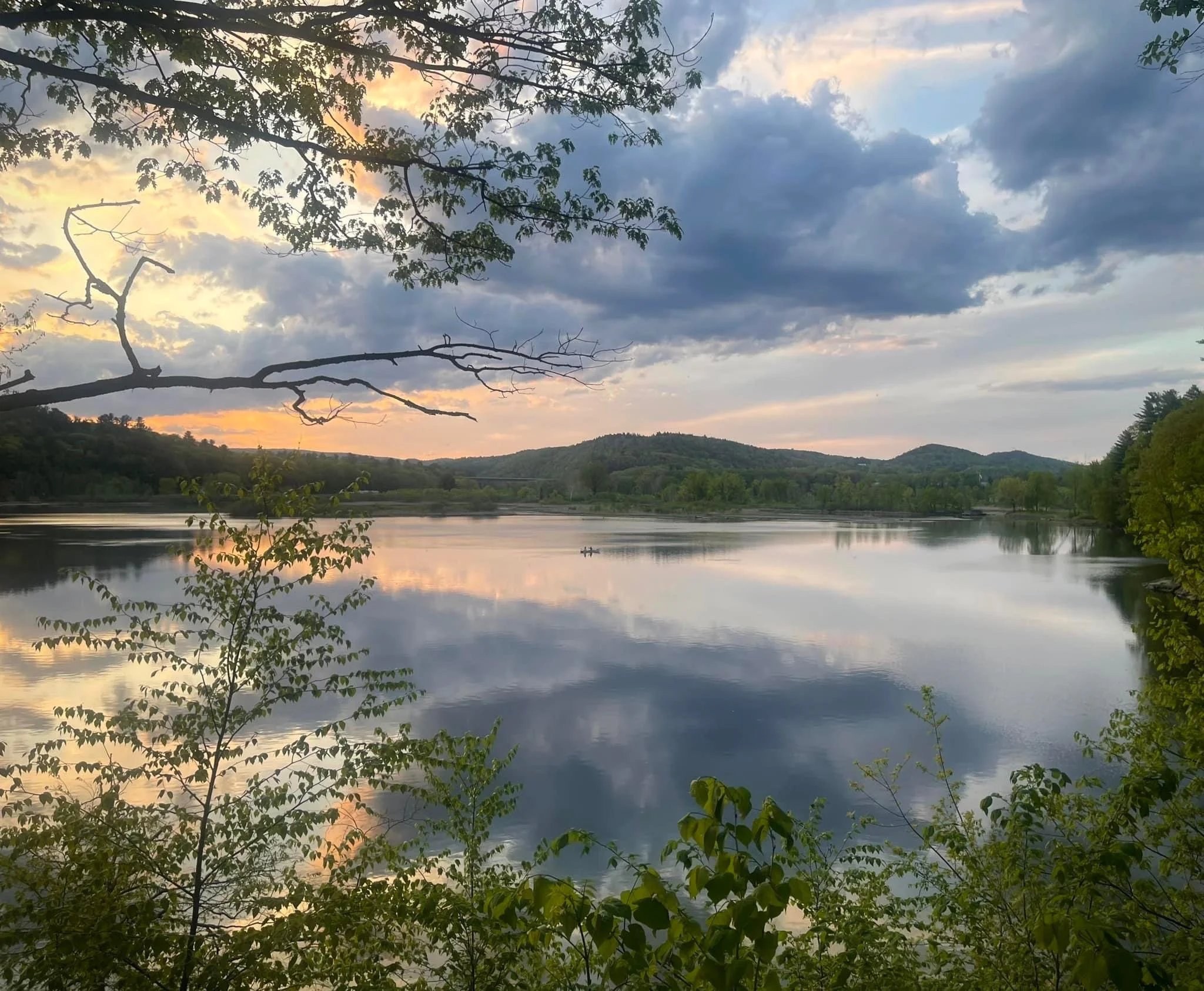
Photo by Elizabeth Ungerleider, with gratitude
* The concept of glimmers from Sarah Jackson, with gratitude

Turning Toward Next with Grace and Grit
As this year turns into the next one, I send you warm and light-filled greetings.
Hello, Lyedie here.
As this year turns into the next one,
I send you warm and light-filled greetings.
Lyedie
May you grow still enough to hear the small noises earth makes in preparing for the long sleep of winter, so that you yourself may grow calm and grounded deep within.
May you grow still enough to hear the trickling of water seeping into the ground, so that your soul may be softened and healed, and guided in its flow.
May you grow still enough to hear the splintering of starlight in the winter sky and the roar at earth’s fiery core.
May you grow still enough to hear the stir of a single snowflake in the air, so that your inner silence may turn into hushed expectation.
— Brother David Steindl-Rast
Click here to receive the gift of my annual year-end practice.
Where was the Beauty, Truth and Goodness in this tumultuous year?
I’m writing to share my annual reflective writing practice with you — Finding the Beauty, Truth and Goodness in the year.
Good morning,
I’m writing to share my annual reflective writing practice with you — Finding the Beauty, Truth and Goodness in the year.

Last week, the Gingko tree out in front of my office here in Putney was shining a brilliant yellow and then one morning when I came to work, she had shed her leaves creating a glorious circle of yellow in the bright green grass on the common. This is her autumnal habit, prompted by the first night that the temperature descends to precisely 29 degrees. My autumnal habit is to reflect back as I collect the leaves from the ground with a practice I developed that is inspired by a passage I found in Jean Yves Leloup’s translation of the Gospel of Mary Magdalene*. This late autumn reflection prepares me to turn towards next as the solstice and calendar year-end approaches.
Here is the practice: Finding the Beauty, Truth and Goodness in the Year
Carve out some time to reflect on the last year in your journal. Pulling out your calendar to jog your memory might be helpful. Then just soften your gaze back over the past year and respond to the prompts below for each of the four seasons. The invitation here is to respond to these six prompts four times, beginning with the winter a year ago. (Could take you as long as an hour or so to complete . . . ) Significant milestones or intimate moments in your answers are all appropriate. I think you will find that specificity gives wonderful depth to the process.
For each of the seasons, Winter, Spring, Summer, Fall:
Describe a time that you experienced beauty.
In what way(s) were you the cause of something beautiful?
In what way(s) was the truth revealed to you?
In what way(s) did you reveal or speak the truth?
In what way(s) were you on the receiving end of goodness?
In what way(s) were you the cause of goodness?
Upon completion, give yourself a little time to let your responses settle in you. I invite you to feel the interplay of these three fundamental threads in the tapestry of your life. Take a walk or a bath and take in the beauty, truth and goodness that you found when you put pen to page.
I’ll be posting my annual year end practice, Turning Towards Next, in December, which will give you an opportunity to look ahead and consider any reorientation, renewed commitments, or actions that all of this may inspire in you.
Enjoy, and may we all wage peace . . .
Warmly, Lyedie
November 11, 2022
Putney, Vermont
*(Click here to find that passage on the About page of my website)
Do you have the patience to wait
until your mud settles,
and the water is clear?
Can you remain unmoving
until the right action
arises by itself?
— Lao Tzu, Tao Te Ching
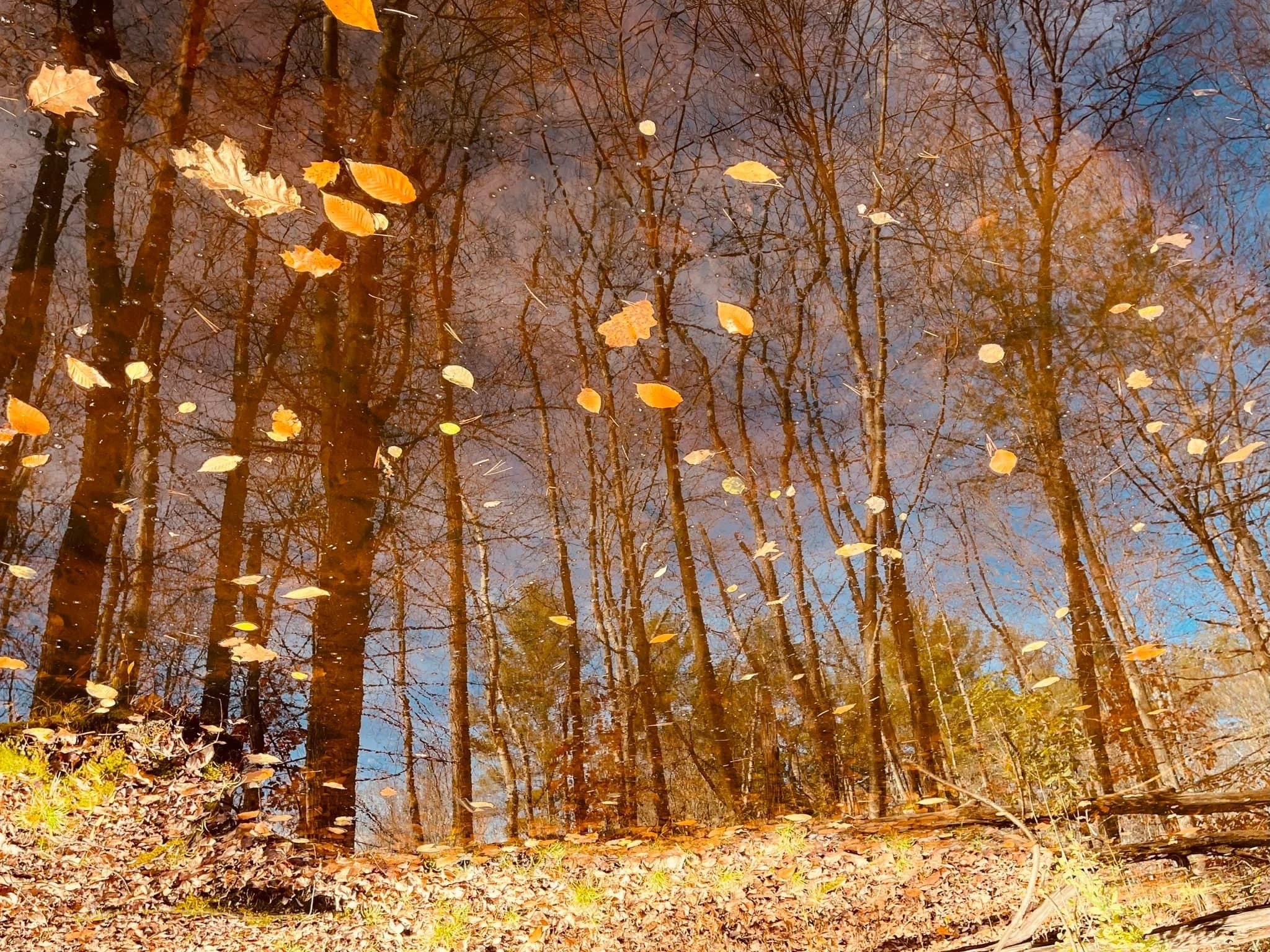
Photo credit: Elizabeth Ungerleider
- Being Resourceful
- Gratitude
- Morning Page
- Time Management
- Meditation
- Tai Chi Mudras
- Grace
- Women's Leadership
- Time
- Vitality
- Practices
- Visiting the Elements
- Rest
- Energy
- Radiance
- Listening
- Work
- Peace
- Integral Theory
- Poetry
- Seasons
- Communication
- Women
- Productivity
- Nature
- Activism
- Creative Process
- Attention
- one
- Citizenship
- Joy
- Entrepreneurship
- Balance
- Artists
- Habits